Your Signature Scent: Why Salons Should Smell Consistent
You know when you walk into a place and think, “Yep. This is them,” before anyone even says hello?
It’s not the wallpaper. It’s not the logo.
It’s the smell.
And I don’t mean “overpowering perfume cloud” or “vanilla cupcake air freshener from a motorway service station.” I mean a quiet, consistent scent that makes your salon feel like a single, intentional experience instead of a random room that happens to do beauty.
Because scent is sneaky. It goes straight past your logic brain and into memory.
Why scent consistency matters more than you think
Most clients can’t tell you the brand of your cleanser. They couldn’t describe your lighting either. But they can absolutely tell you how your space felt.
A consistent salon scent does three useful things:
First, it creates familiarity.
When something smells the same every visit, the brain relaxes. “I know this place.” That’s comfort, and comfort is what makes people rebook without overthinking it.
Second, it signals cleanliness.
Not actual hygiene (you still need actual hygiene), but the emotional cue of “this is cared for.” It’s the same reason crisp towels feel expensive even when they’re not.
Third, it makes your brand feel real.
Your Instagram can be flawless, but if the salon smells like last night’s hairspray and someone’s lunch, the fantasy collapses.
The tricky part: salons already have a smell
Even the nicest salon has background notes:
disinfectant
hot tools
nail products
hair colour
essential oils from the therapist next door
whatever the staff room is doing
So the goal isn’t “add fragrance.” The goal is control the baseline.
Before you even pick a signature scent, you need to win the boring battle: air.
Step one: fix the “invisible offenders”
This is where people get annoyed because it’s not glamorous, but it’s the difference between “signature scent” and “cover-up.”
Start with:
Ventilation during and after services (especially nails, colour, lash adhesives)
Bins emptied before they become a vibe
Textiles that don’t trap odours (towels, blankets, capes — wash and dry properly, don’t leave damp)
Toilet smell management (if clients pass it, it counts)
Staff room boundaries (warm food is lovely; warm food smell in the treatment room is not)
If your baseline air is messy, any scent you add will just mix into something weird.
What a signature scent should feel like
Here’s a simple way to choose: your scent should match your salon’s personality.
If your salon is clean, minimal, modern: think fresh, airy, lightly citrus or green.
If it’s cosy, warm, luxe: soft woods, gentle amber, subtle vanilla (subtle being the key word).
If it’s clinical/aesthetic: clean cotton, light herbals, “just showered” vibes — nothing sweet.
And if you do treatments where clients are sensitive (skin, lashes, PMU), go extra careful. Some people get headaches from strong fragrance, even if they love your work.
A signature scent should be noticed like good lighting: only when it’s missing.
The “introvert test”
Here’s my favourite filter:
If an introvert walks in on a bad day, does your salon smell make them relax… or feel trapped?
If it feels trapped, it’s too strong.
Keep it consistent without making it intense
Consistency isn’t about blasting fragrance. It’s about repetition.
A few practical rules:
Stick to one scent family. Don’t rotate between “tropical mango” and “fresh linen” depending on staff mood.
Use the same scent in the same zones (reception, hallway, retail), and keep treatment rooms gentler.
If you have multiple rooms, don’t let each room smell like a different universe.
If your salon has layers of scent competing, clients won’t describe it as “luxury.” They’ll describe it as “a lot.”
Don’t make the scent the star of the show
There’s a common mistake: people fall in love with a fragrance and then overuse it.
You want the scent to be a soft opener, not a punchline.
A client should never leave smelling like your diffuser unless they bought a product and chose to.
A small scent ritual clients will actually remember
This is the kind of detail that creates “I love that place” loyalty without you trying too hard:
Pick one moment that always smells good.
the hot towel
the hand cream at the end of nails
the finishing mist for hair
the aftercare balm
That tiny ritual anchors the experience. It’s subtle, but it sticks.
Make it inclusive and sensitive-skin friendly
You don’t need to turn your salon scent-free. But you do need to acknowledge that fragrance sensitivity is real.
Simple ways to handle it without being dramatic:
Offer a “low-scent appointment” option in booking notes.
Keep one room as your lightest-scent zone.
Avoid heavy aerosol fragrance sprays — they spike the air and linger.
Keep product scent choices consistent (if you change brands often, the salon smell shifts constantly).
If you’re unsure, pick lighter and cleaner. You can always add a touch more. Removing “too much” is harder.
Train your team (or it won’t stay consistent)
A signature scent dies the moment:
someone sprays perfume in the corridor
someone plugs in a different air freshener “because it’s nice”
staff bring strong fragrance products into the space
Make one simple rule:
Only the salon scent goes in the salon.
It’s not controlling. It’s branding.
The simple checklist for a consistent salon scent
You don’t need a shopping spree. You need a standard.
Clean baseline air (ventilation + bins + textiles)
One scent family, lightly used
Strong smells contained (staff room, toilet route)
One “scent ritual” moment per service
Low-scent option for sensitive clients
Team aligned on what’s allowed
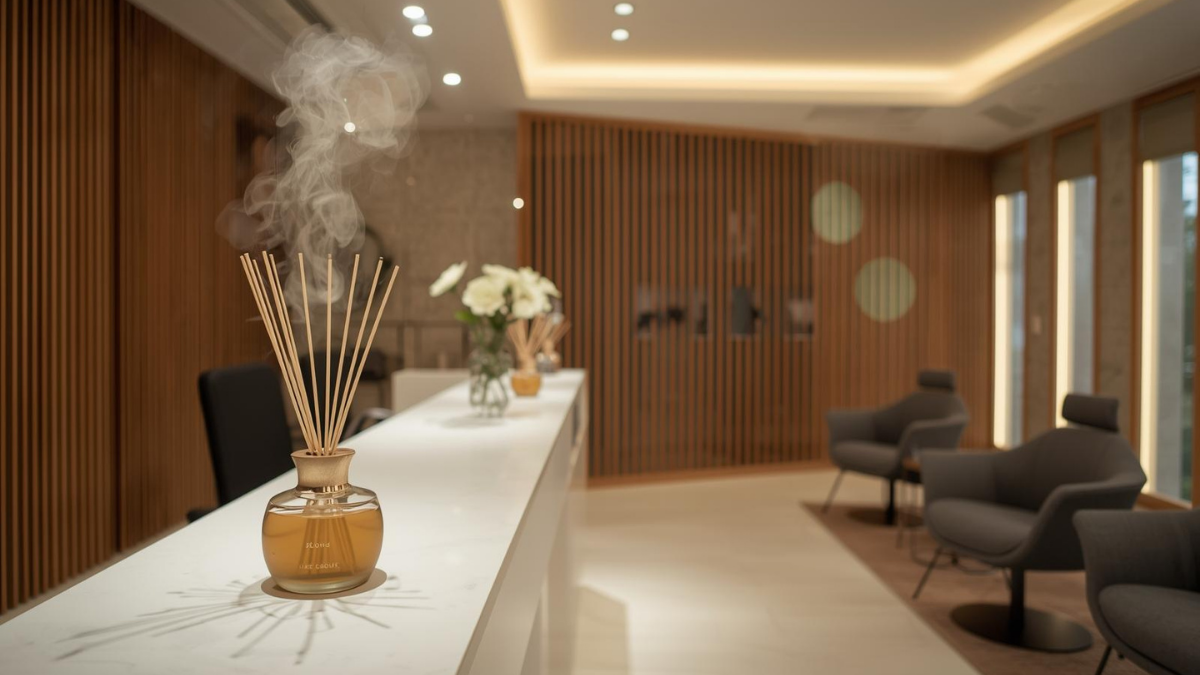
If you get this right, clients won’t say, “Wow, amazing diffuser.”
They’ll say, “I don’t know what it is… I just feel good when I’m there.”
That’s the point.