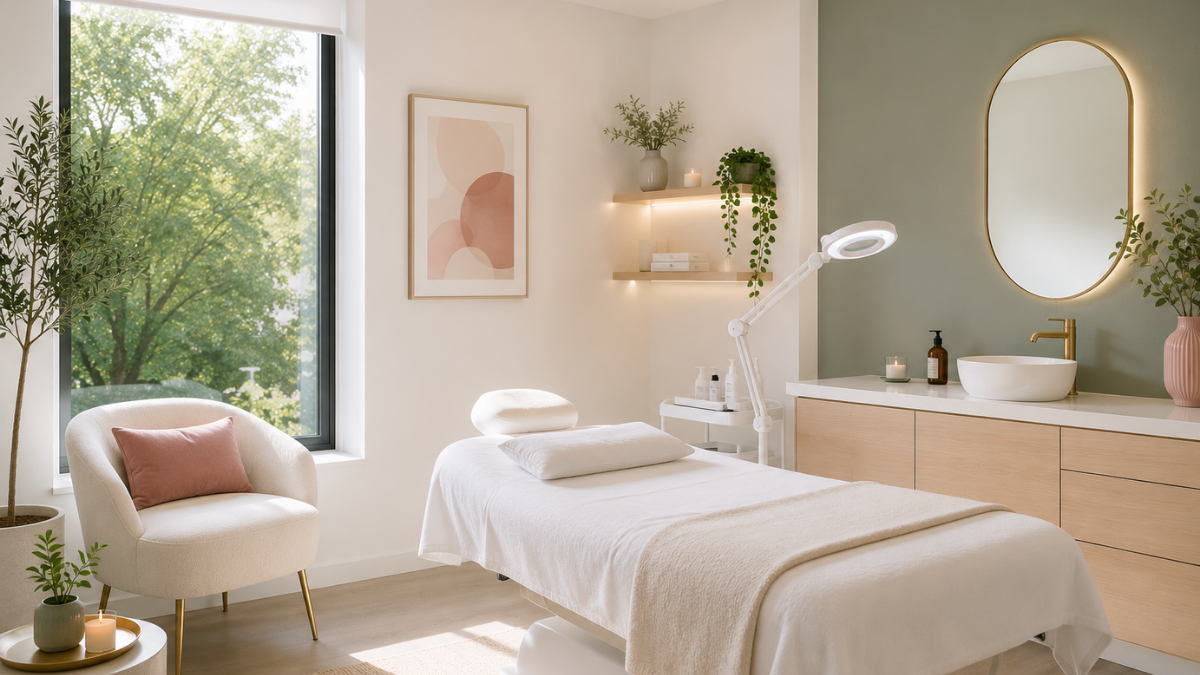
How to Make a Small Treatment Room Feel Bigger
3 min read
A small treatment room is not automatically a bad treatment room.
But a cluttered one feels stressful immediately.
Clients notice it fast.
Too much furniture.
Too many products visible.
No clear visual flow.
Equipment squeezed everywhere.
Suddenly the room feels busy before the treatment even starts.
The good news is that spaciousness is usually more about perception than square footage.
This is the biggest issue most treatment rooms have.
Not size.
Visual overload.
Too many colours.
Too many decorations.
Too many products left visible.
Too many small objects everywhere.
The eye never gets to rest.
Luxury spaces usually feel calmer because they remove unnecessary visual interruptions.
A crowded trolley instantly makes a room feel tighter.
So do overflowing counters and visible storage piles.
The more open surface space the room has, the larger it psychologically feels.
This does not mean empty.
Just controlled.
Clients relax faster when the environment feels organised instead of overfilled.
Harsh overhead lighting flattens small rooms quickly.
Softer layered lighting creates depth instead.
Wall lighting.
Warmer tones.
Gentler shadows.
Those details make the room feel calmer and visually wider without changing the actual space at all.
This surprises many salon owners.
Beautiful décor cannot compensate for visible clutter.
Boxes.
Extra stock.
Loose cables.
Overflowing shelves.
Those things shrink a room emotionally very quickly.
Closed storage usually creates a cleaner, more spacious feeling than constantly displaying every product and tool visibly.
One well-placed mirror can create openness.
Too many mirrors can make small spaces feel visually chaotic instead.
Placement matters.
The goal is light and depth, not visual overload.
Very aggressive contrast can make compact rooms feel tighter.
Softer tones usually create more breathing space visually.
That does not mean everything needs to become beige or white.
The important part is consistency.
Too many competing colours make small rooms feel busier than they are.
A lot of room clutter actually comes from workflow problems.
Paper forms.
Clipboards.
Scattered notes.
Printed policies.
Loose consultation sheets.
GlowForms removes a huge amount of that physical admin clutter by handling forms, consultation details, consent forms, and client information digitally before the appointment even begins.
That instantly creates a cleaner environment because the room no longer needs to carry unnecessary paperwork everywhere.
And cleaner spaces naturally feel larger.
Clients should not feel like they need to carefully navigate around furniture just to sit down comfortably.
Even beautiful rooms start feeling cramped when movement becomes awkward.
Good layout matters more than squeezing in extra furniture.
This is another common design mistake.
Too many tiny decorative items make rooms feel visually busy.
One calm focal point usually feels much more intentional.
Artwork. Lighting. Texture. A beautifully prepared treatment bed.
That creates atmosphere without overcrowding the room visually.
This part gets overlooked constantly.
A small room feels tighter when it sounds chaotic.
Echo.
Noise outside the door.
Loud equipment.
Constant interruptions.
Soft sound and controlled noise levels make compact spaces feel calmer and more comfortable immediately.
Not only physical spaciousness.
Clients should feel able to exhale when they enter the room.
That feeling comes from:
organisation
calmness
clear layout
soft lighting
reduced clutter
controlled atmosphere
Not square footage alone.
That is the difference.
Not overcrowded. Not improvised. Not visually exhausting.
Intentional.
And when systems like GlowForms remove unnecessary paperwork and admin clutter behind the scenes, it becomes much easier to create a treatment room that feels cleaner, calmer, and far more spacious without needing major renovations.

Gifts don’t need bows and big budgets. Use small, thoughtful touches—welcome kits, milestone notes, minis at the mirror—that feel personal and spark rebooks.

The right pre-booking questions save time, prevent mismatched appointments, and help new clients feel clearer, safer, and easier to guide from the start.
GlowForms reminders aren’t “don’t forget your appointment” nags. They’re polite nudges to finish intake forms before clients arrive—so you start on time and sta