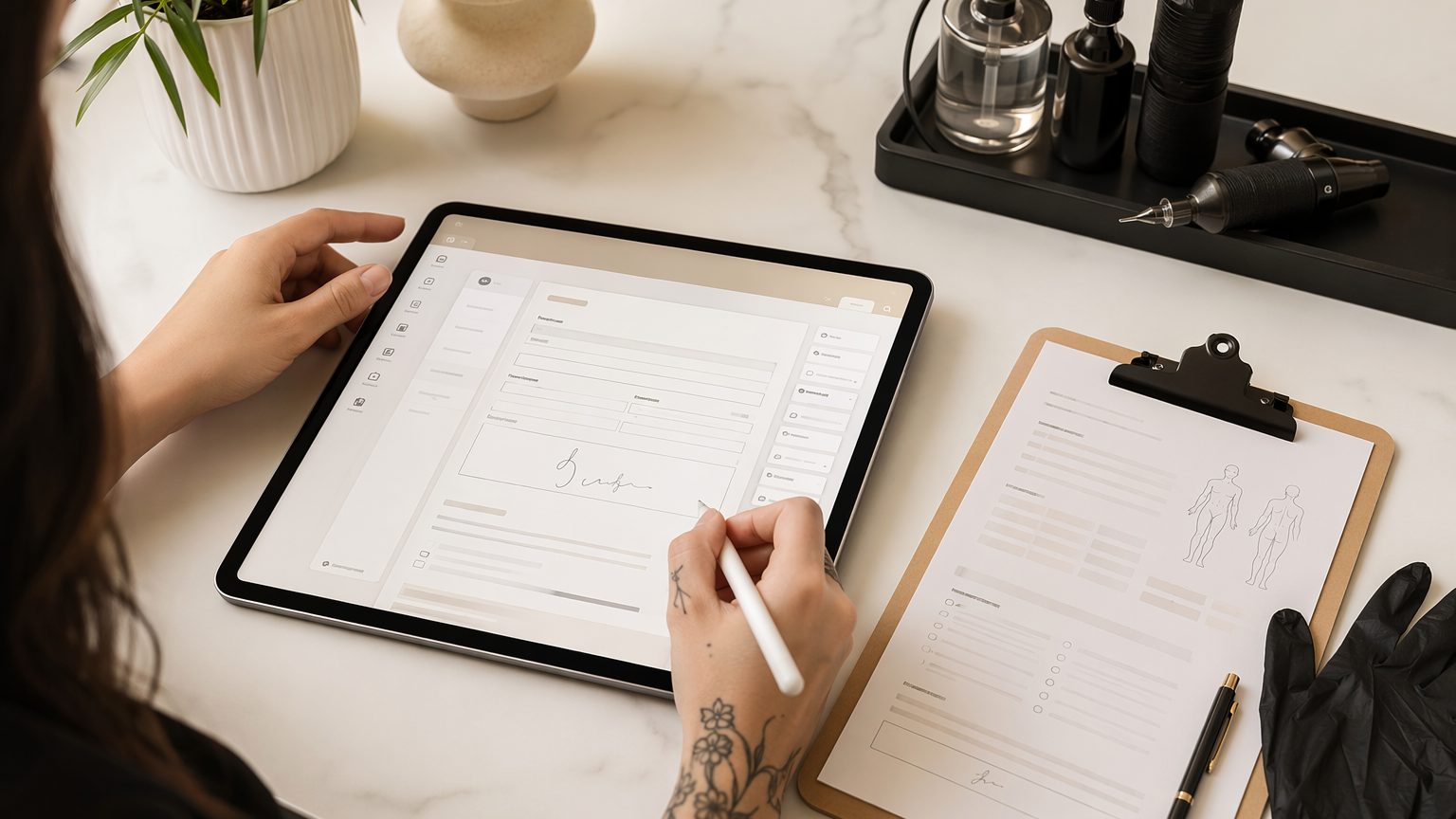
How to Create a Tattoo Consent and Aftercare Form for PMU and Tiny Tattoo Studios
For PMU artists, cosmetic tattoo studios, and tiny tattoo businesses, paperwork does more than collect signatures. A strong tattoo consent and aftercare form helps document informed consent, flag contraindications, and give clients clear healing instructions they can actually follow. When built well, it improves safety, reduces back-and-forth, and creates a smoother experience on mobile before and after the appointment.
Why PMU and Tiny Tattoo Studios Need a Combined Consent and Aftercare Form
PMU, fine line, cosmetic tattoo, and tiny tattoo services have unique documentation needs. These treatments often involve facial areas, delicate skin, color retention variables, and service-specific healing expectations. A generic tattoo waiver form usually misses key questions about prior PMU, skincare products, fillers, allergies, or healed result expectations.
A combined form solves two problems at once. First, it captures informed consent and service disclosures. Second, it delivers clear PMU aftercare instructions or tiny tattoo aftercare guidance in one easy place. That means fewer misunderstandings about healing, touch-ups, fading, or what clients should avoid after treatment.
For the studio, the benefits are practical: less admin time, better recordkeeping, and fewer repeated questions. A digital tattoo intake form also creates a better client experience, especially when clients can review and sign it from their phone before the appointment.
What a Tattoo Consent and Aftercare Form Should Accomplish
A good form has two core goals: document informed consent and provide simple aftercare instructions. It should clearly explain the service, potential risks, expected healing, and what the client is responsible for during recovery.
This protects both the client and the studio by setting expectations upfront. It should include signatures, dates, and service-specific acknowledgments, especially for PMU and cosmetic tattoo services where healed results vary by skin type, lifestyle, and aftercare compliance.
Most importantly, your client consent form for tattoo studio use should be easy to complete on a phone or tablet. If it feels confusing or too long, completion rates drop.
Core Sections to Include in a Tattoo Consent Form
Every PMU consent form or tiny tattoo consent form should include these essentials:
Client and service details
Collect full name, date of birth, phone, email, emergency contact, procedure type, placement, artist name, appointment date, and reference notes.
Medical and skin history
Ask about allergies, blood thinners, pregnancy, skin conditions, healing disorders, diabetes, autoimmune conditions, and recent skin treatments. For PMU, recent procedures can directly affect results and healing.
Lifestyle and contraindication questions
Include sun exposure, alcohol use, retinol use, Accutane history, recent waxing, chemical peels, laser treatments, or microneedling. These questions matter for both safety and pigment retention.
Consent statements
Cover risks, discomfort, healing variability, color retention, touch-up expectations, and when medical advice may be needed. Add a separate optional photo and media release rather than combining it with treatment consent.
Signatures
Include fields for the client, guardian if required, and artist or witness. A secure e-signature tattoo consent field makes digital completion much easier.
PMU-Specific Questions and Disclosures to Add
A permanent makeup consent form should go deeper than a standard tattoo form. Add procedure-specific disclosures for brows, lips, eyeliner, scalp micropigmentation, and beauty mark tattoos.
Ask whether the client has had prior PMU, laser removal, saline removal, pigment correction, or work over scar tissue. These factors can change the treatment plan and healing pattern.
Also include contraindications related to Botox, fillers, lash growth serums, chemical peels, eye sensitivities, and recent cosmetic treatments. For PMU, it is essential to state that pigment fading, undertones, and healed results vary by skin type and aftercare, and that touch-ups may be part of the normal process.
Tiny Tattoo Studio Considerations for Consent Forms
A tiny tattoo consent form should address issues specific to delicate, minimalist work. Ask about visibility, friction areas, and whether the client understands the increased risk of fading or blowout with very fine lines.
Include acknowledgment that tiny tattoos may age differently than larger pieces and may need touch-ups. You should also document stencil approval, final design size, and spelling verification for text tattoos.
Do not forget minimum age requirements, ID verification, and guardian consent where legally required.
What to Include in the Aftercare Section
Your tattoo aftercare form should give step-by-step instructions in plain language. Use bullet points or checklists so clients can scan it easily on their phone.
Include:
- How to clean the area
- What products to use or avoid
- When to avoid picking, swimming, sweating, sun exposure, makeup, or active skincare
- What is normal during healing versus what may need medical attention
- Studio contact details and touch-up policy
This section is especially valuable for PMU and facial services, where clients often need service-specific healing guidance.
How to Write Clear, Client-Friendly Form Language
The best mobile-friendly tattoo forms use short sections, simple wording, and clear checkboxes. Avoid overly technical or legal-heavy language that clients may skim past.
Define terms like “touch-up,” “contraindication,” and “healed result.” Be direct about risks and responsibilities without sounding alarming. A reassuring, professional tone builds trust and improves understanding.
How to Build the Form Step by Step
Start with a drag-and-drop builder and arrange sections in the order clients naturally complete them: personal info, service details, health questions, consent, aftercare, then signatures.
Use conditional logic so PMU clients see PMU-specific questions, while tattoo clients see tiny tattoo sections. Add required fields for ID confirmation, key disclosures, health history, and signatures. File upload fields are useful for reference images, previous work photos, or patch test records.
Before sending, test the form on mobile. A tattoo studio client intake process should feel fast and intuitive on a small screen.
Digital Features That Improve Intake and Recordkeeping
Digital forms do more than replace paper. With e-signatures, automatic date stamps, and searchable profiles, studios can quickly retrieve signed consents, aftercare acknowledgments, and service history.
Sending forms before appointments reduces front-desk bottlenecks and gives clients more time to answer carefully. Centralized PMU client records also help maintain consistency across artists or multiple locations, which is especially useful for follow-up visits and touch-ups.
Common Mistakes to Avoid
Studios often run into the same problems:
- Using generic tattoo templates that miss PMU-specific contraindications
- Making forms too long or hard to complete on mobile
- Combining optional media release with mandatory treatment consent
- Forgetting to update forms when services or policies change
- Storing signed forms in a way that is hard to search later
A clear, service-specific beauty business form is more useful than a one-size-fits-all document.
Best Practices for Keeping Forms Studio-Ready
Review forms regularly when you add new services, pigments, or aftercare protocols. Keep wording tailored by service type, but consistent in tone and branding. Work with local legal or compliance professionals to align your forms with regional requirements.
It also helps to train artists and front-desk staff on how to explain the form and document client questions. Version control matters too, so you always know which form was signed for each visit.
How GlowForms Helps PMU and Tiny Tattoo Studios Simplify Forms
GlowForms helps studios create professional digital consent and aftercare forms with an easy drag-and-drop builder. You can share forms before appointments, collect secure signatures, and give clients a smooth mobile-friendly experience.
Because records stay centralized and searchable, your team can quickly access consent history, service notes, and past forms without digging through paper files. For PMU and tiny tattoo businesses, that means less admin, better organization, and a more polished client journey.
Conclusion: Create a Safer, Smoother Client Intake Experience
A well-designed tattoo consent and aftercare form is essential for PMU and tiny tattoo studios. It supports informed consent, improves aftercare compliance, and helps keep client records organized and accessible.
Instead of relying on generic paperwork, build clear, service-specific, mobile-friendly tattoo forms that match the treatments you actually offer. If you want to simplify intake, collect signatures digitally, and keep every client record in one place, GlowForms can help you get there.