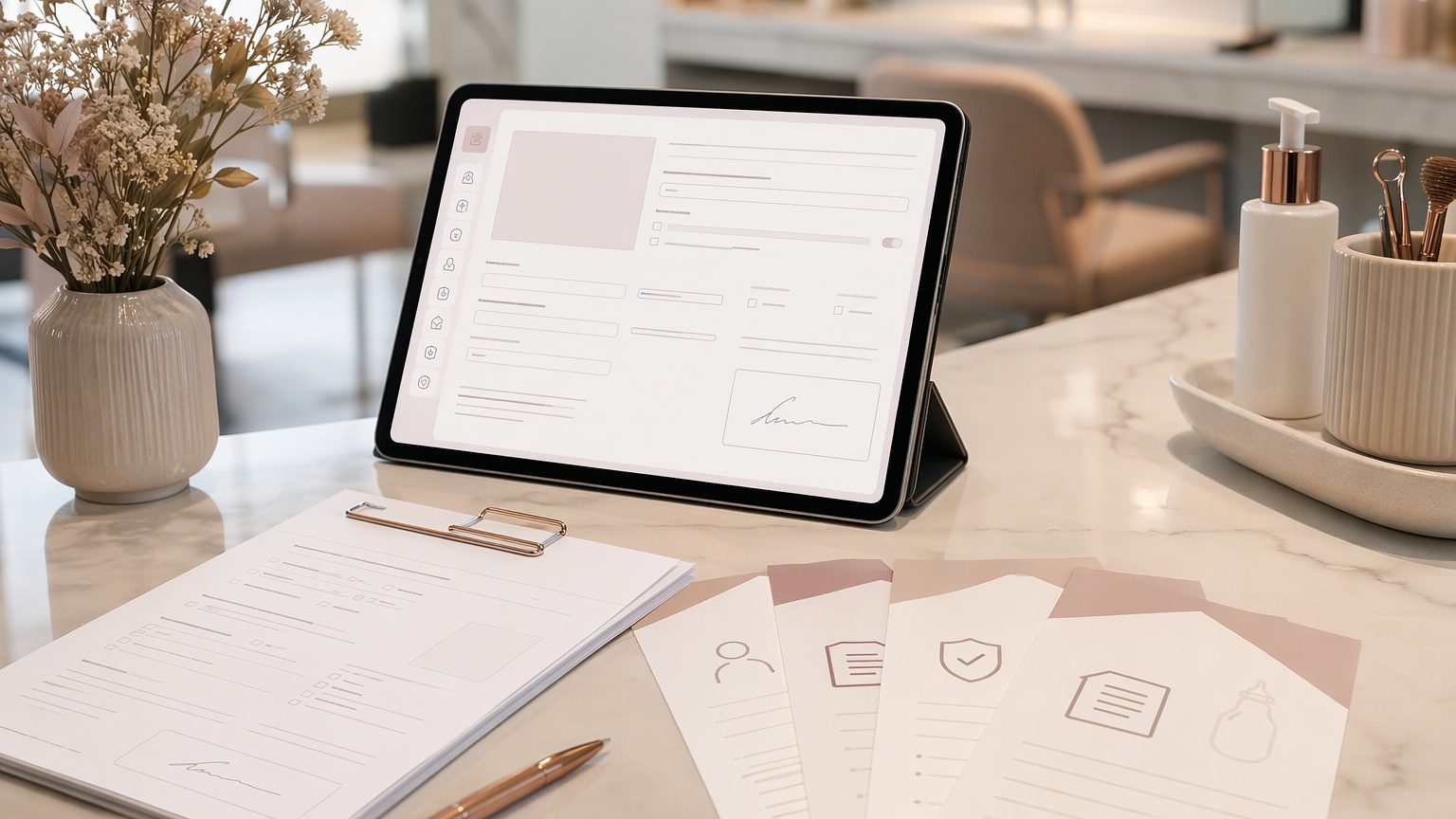
How to Create a Salon New Client Packet That Covers Intake, Consent, Policies, and Aftercare
6 min read
A well-designed salon new client packet does more than collect basic contact information. It helps you gather intake details, document consent, set clear expectations, and share salon aftercare instructions before or after the appointment. Done well, it creates a smoother first visit for clients and a more efficient workflow for your team.
Today, the best new client forms for salon businesses are digital, easy to complete on a phone, and tailored to the service being booked. Whether you run a hair salon, lash studio, esthetics practice, or nail business, a complete packet can improve communication, reduce front-desk delays, and keep client records organized.
A salon new client packet is a group of forms and documents sent to first-time clients before their appointment. It usually includes four key parts:
Instead of relying on paper forms at check-in, many salons now use digital salon forms to collect everything in advance. That means fewer rushed signatures, fewer missing details, and more time for an informed consultation.
A strong packet also helps standardize your process. Every staff member gathers the same essential information, and every client receives the same instructions and policy disclosures.
Without a consistent system, information gets missed. One client may disclose an allergy, while another forgets to mention a recent treatment or medication. A complete packet reduces those gaps and helps your team start appointments on time.
It also strengthens your salon client records. When intake forms, signed consents, policy acknowledgments, and aftercare notes are stored together, staff can quickly review important details during future visits.
For clients, that level of organization feels professional. It shows that your salon takes communication, safety, and service quality seriously.
Your salon intake forms should collect the essentials first: name, phone number, email, emergency contact, and preferred communication method.
From there, ask service-specific questions. A salon client intake form might include:
The most effective beauty business client forms are customized by service type. A hair salon may need bleach or color history, while a lash artist may need details about eye sensitivity or adhesive reactions. Estheticians may ask about active ingredients, and nail professionals may ask about infections or product allergies.
Keep forms concise and mobile-friendly. If possible, use conditional logic so clients only see questions that apply to their appointment.
Salon consent forms confirm that the client understands the service, possible risks, expected outcomes, and any limitations. These forms are especially important for services involving chemicals, adhesives, exfoliation, waxing, tinting, or anything that may trigger sensitivity.
Common consent topics include:
Use plain language instead of dense legal wording. Clients should be able to understand what they are agreeing to without confusion. Digital signatures and date stamps also make consent records easier to store and retrieve later.
Your salon policies help prevent misunderstandings and support a consistent client experience. New clients should review and acknowledge them before their first appointment.
Common policy topics include:
Keep this section short and scannable. Long blocks of text often get skipped. Clear policies, presented well, lead to fewer disputes and smoother communication.
Salon aftercare instructions are an important part of any new client packet, especially for services that require maintenance. Good aftercare supports better results, improves retention, and reduces preventable complaints.
Depending on the service, aftercare may include:
For some treatments, it also helps to include pre-appointment preparation alongside post-service care. Just make sure the guidance is specific to the booked service so clients are not overloaded with irrelevant information.
A clear structure makes the packet easier to complete. In most cases, this order works best:
Use short sections, simple instructions, and clean formatting. If you are sending mobile-friendly salon forms, test the full experience on a phone before rollout. A packet that is easy to complete in a few minutes is far more likely to be finished before the appointment.
Paper packets still work, but they are slower, harder to manage, and easier to lose. By contrast, digital salon forms let you send documents in advance, collect signatures, and keep everything searchable in one place.
Digital systems also make updates much easier. If a policy changes or you add a new service-specific consent field, you can update the form once instead of reprinting every packet. For growing salons, digital workflows are usually the better long-term option for maintaining accurate salon client records.
A salon new client packet should be thorough, but it should not feel overwhelming. One of the biggest mistakes is asking for too much unnecessary information.
Other common issues include:
Before launching, complete the packet yourself from the client’s perspective. If anything feels unclear, repetitive, or too long, tighten it.
One generic packet rarely works for every salon service. Hair, skin, lashes, brows, and nails all require different intake questions, consent language, and aftercare instructions.
A better approach is to create reusable templates by appointment category. Keep core business policies consistent, but customize intake, consent, and aftercare for each service type. Review your forms regularly as your menu, products, and procedures evolve.
A complete salon new client packet helps your business look more professional and run more smoothly. It gives your team the information they need, helps clients understand what to expect, and makes follow-up care easier to deliver.
If you are building or updating your client intake and consent forms, focus on clarity, service-specific details, and a simple digital experience. The best packet is one clients will actually complete—and one your team can rely on every time.
Gifts don’t need bows and big budgets. Use small, thoughtful touches—welcome kits, milestone notes, minis at the mirror—that feel personal and spark rebooks.

The right pre-booking questions save time, prevent mismatched appointments, and help new clients feel clearer, safer, and easier to guide from the start.

GlowForms reminders aren’t “don’t forget your appointment” nags. They’re polite nudges to finish intake forms before clients arrive—so you start on time and sta