How to Create a Salon Consultation Form for Color Services That Documents Hair History, Goals, and Corrective Service Risks
A strong salon consultation form for color services helps you document the starting point before you ever mix color. It gives you a clear record of hair history, service goals, sensitivities, and known corrective risks so consultations are more consistent and expectations are easier to manage. This is practical guidance for better intake and documentation, not legal or medical advice.
Why a color consultation form matters
Color work depends on context. A client may say they want to go brighter, cooler, or back to their natural shade, but the real plan depends on what is already on the hair, how the hair feels today, and what is realistic in one visit.
A good hair color consultation form supports better conversations because it captures both what the client tells you and what you observe. It also creates cleaner client records for future appointments, especially when a guest returns months later and cannot remember exactly what they used at home.
What a salon color consultation form should cover
A color consultation form for salons is more specific than a general intake form. It is used before single-process color, highlights, balayage, bleach services, glosses, toners, and color corrections.
Your general intake may cover contact information and basic policies. A color-specific form should go further. It should document:
- Client and appointment details
- Hair color history
- Current hair and scalp condition
- Desired result
- Corrective service risks
- Test records
- Service plan and maintenance
- Consent and signatures
The goal is not to make the longest form possible. The goal is a usable service record.
When salons should use one
Use a client consultation form for hair color before:
- First-time color appointments
- Major changes, like going much lighter or darker
- Vivid color or box dye removal
- Corrective color services
- Bleach or multi-process appointments
- Appointments where color history is unclear
If the outcome may depend on prior color, timing, or hair integrity, the form matters.
Core section 1: Client and appointment details
Start with the basics:
- Full name, phone, email
- Preferred contact method
- Consultation date and service date
- Stylist name
- Location or chair, if relevant
- Requested service in the client’s own words
- Whether the consultation was in person, by phone, or digital
This section helps tie the consultation to the right appointment and makes repeat visits easier to track.
Core section 2: Hair history form for color services
This is one of the most important parts of a hair history form for color services. Ask in plain language, because many clients do not know technical terms or formulas.
Include fields for:
- Last color service date
- What was done at that appointment
- Box dye use
- Glosses or toners
- Henna or metallic salt products
- Color-depositing masks
- At-home lighteners
- Previous bleach history and approximate timing
- Relaxers, perms, smoothing, or straightening services
- Home-care products that may affect buildup or tone
Simple prompts work best. “Have you used any box dye or at-home lightener in the last year?” gets better answers than jargon-heavy wording.
Core section 3: Current hair condition and scalp notes
Your salon color consultation checklist should not rely only on client memory. It also needs stylist observations.
Use quick checkboxes plus a notes field for:
- Porosity
- Elasticity
- Density
- Texture
- Breakage
- Visible damage
- Banding
- Scalp sensitivity or irritation
- Cuts or abrasions
- Extensions, wigs, or protective styles
This section matters because it affects timing, product choice, and whether the target result is realistic in one session.
Core section 4: Desired result and client goals
Ask what the client wants in everyday language. Then translate vague answers into specific notes.
Useful fields include:
- Desired shade or overall look
- Tone goals
- Brightness or depth
- Inspiration photo upload
- What they do not want
- Maintenance preference
- How often they are willing to come back
- Time or budget limits, if appropriate
A client saying “more natural” could mean softer contrast, less warmth, lower maintenance, or all three. Your form should help you pin that down.
Core section 5: Corrective service risks and expectation-setting
A color correction consultation form deserves its own section. This is where you document limitations and discuss what may affect the result.
Include notes that results may depend on hair history, current condition, and testing. Record practical risks such as:
- Uneven lift
- Warmth exposure
- Banding
- Limited lightening
- Extra service time
- Need for interim toning
- Multi-session planning
- Possible compromise to hair integrity
Avoid absolute promises. A better approach is to document what is possible, what may take more than one visit, and that the plan may change after strand testing or in-person assessment.
Core section 6: Allergy, sensitivity, and test records
A hair color consent form should include factual questions about previous reactions and testing history.
Add fields for:
- Prior reaction to color, lightener, toner, fragrance, or topical products
- Patch test offered, completed, or declined
- Strand test notes when needed
- Date, result, and initials for tests performed
Keep this section clear and professional. It is about documenting your process, not giving medical advice.
Core section 7: Service plan, maintenance, and home-care notes
Once the consultation is complete, the form should move into the plan.
Document:
- Proposed service approach at a high level
- Estimated maintenance schedule
- Rebooking window
- Whether gloss or toner maintenance is recommended
- Key aftercare notes your salon normally shares
- Future services if the result will be phased over time
This turns a one-time intake into an ongoing client record.
Core section 8: Consent, acknowledgment, and signature
Finish with acknowledgment fields that confirm:
- The client provided information to the best of their knowledge
- The service plan and limitations were discussed
- Maintenance needs and pricing range or estimate process were reviewed
- Relevant risks were explained
Add signature and date fields for the client and stylist if that fits your workflow. If you use before-and-after photos, keep photo consent and marketing usage as separate choices. If you serve minors, note that guardian consent requirements may vary by business and location.
How to make the form easy to complete
The best salon intake form for hair color is easy to finish on a phone. Keep it short, clear, and structured.
Use:
- Short sections
- Mostly checkbox or multiple-choice fields
- A few focused note boxes
- Mobile-friendly design
- Conditional logic for corrective-service questions
This saves time and gives you cleaner answers than one long open-text form.
Common mistakes salons make
Many salons lose useful information by:
- Using one generic form for every service
- Forgetting to ask about box dye, henna, or bleach history
- Documenting only the goal, not the starting point
- Hiding corrective risk notes in random free text
- Collecting signatures without recording what was discussed
- Keeping paper files that are hard to search later
Paper vs digital salon consultation forms
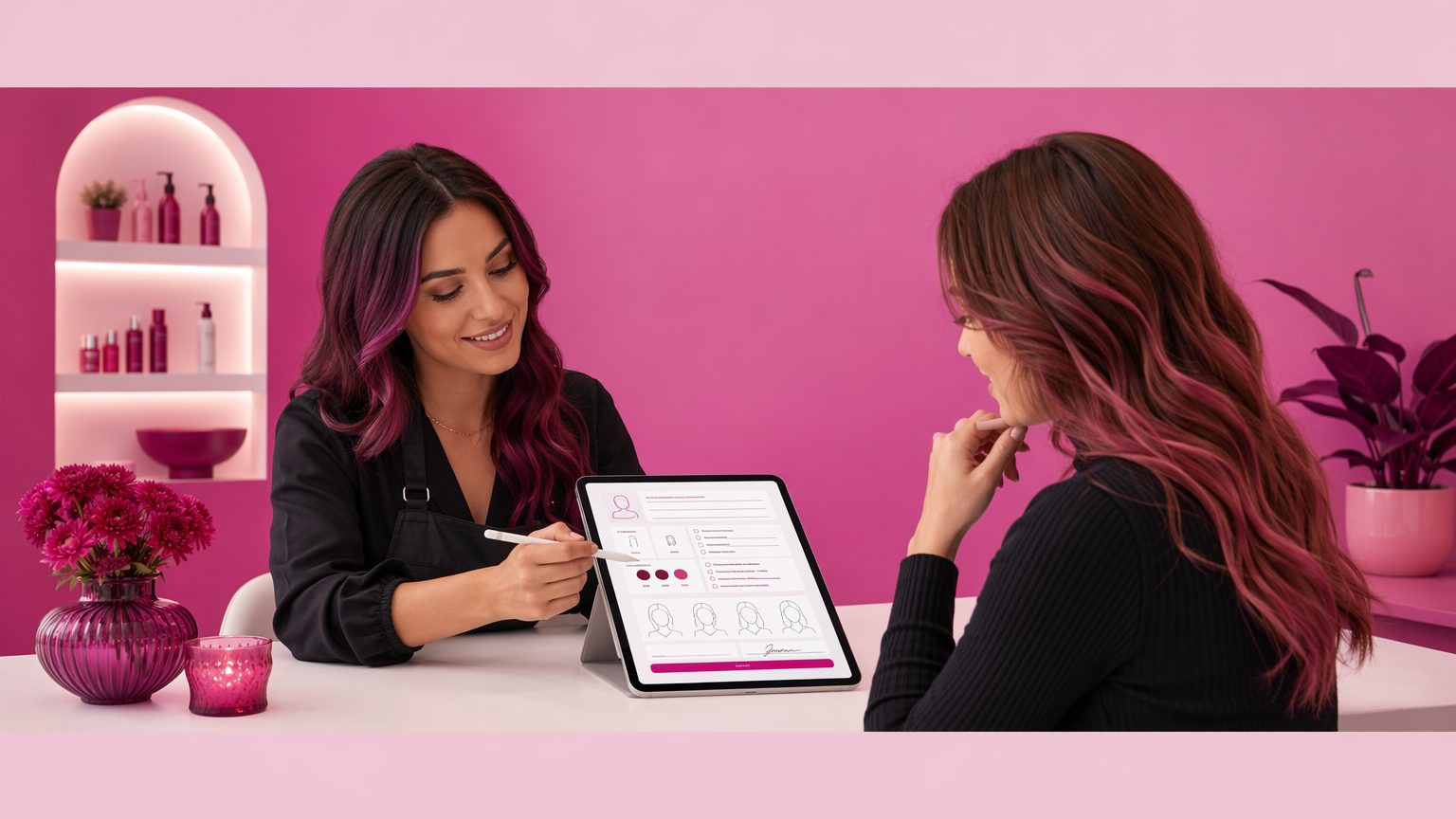
Paper forms can work, but digital salon consultation forms are easier to update, read, search, and store. They also make it simpler to collect signatures, upload inspiration photos, and keep everything attached to one client profile.
That matters even more for repeat color guests and corrective work. When you can quickly review a past salon consultation form for color services, you spend less chair time reconstructing history and more time planning the service.
Build a better color consultation workflow
A well-built color consultation form helps you document what matters before the service starts: hair history, current condition, goals, corrective risks, testing, the plan, and acknowledgment. That improves both the client experience and your internal workflow.
If you want a simpler way to create digital salon consultation forms, collect signatures, and keep color records organized in one searchable place, GlowForms can help you build a process that feels polished for both your team and your clients.