How to Create a PMU Consultation Form That Captures Contraindications, Brow Goals, and Touch-Up Expectations
A strong PMU consultation form does more than collect contact details before a brow appointment. It helps you set expectations early, gather the details you need for a better consult, and cut down on back-and-forth messages before the client arrives.
For brow PMU, three things matter most: contraindications, brow goals, and touch-up expectations. When your form covers those clearly, you can prep more confidently, spot answers that need follow-up, and make the consultation feel smoother for both you and your client.
What is a PMU consultation form?
A permanent makeup consultation form is the pre-service questionnaire you use to collect planning information before a PMU appointment. It is different from a PMU consent form, even though both are often part of the same client journey.
The consultation form helps you gather decision-making details before procedure day. That can include brow history, skin-related concerns, style preferences, and expectations around healing and touch-ups. While PMU forms may be used for brows, lips, eyeliner, or correction work, this post focuses on brow services.
Why brow PMU artists need more than a basic intake form
A generic beauty intake form usually is not enough for brow work. It may miss key details like previous microblading, brow tattoo history, shape preferences, or whether the client expects one session to do everything.
A more specific pmu brow consultation form helps you:
- review brow goals before the appointment
- keep previous answers in one searchable record
- gather photos and inspiration references
- flag follow-up questions before booking or confirming
- create a more polished client experience
In other words, your brow consultation form is not just paperwork. It is a communication tool.
Section 1: Contraindications to include on a PMU consultation form
When collecting health-related information, keep your wording factual and tied to consultation review. Your goal is not to diagnose. Your goal is to gather details that may affect timing, prep, healing, or whether a discussion is needed before proceeding.
Your pmu intake form can include questions about:
- pregnancy or breastfeeding status, if relevant to your studio policies
- skin conditions near the brows, such as irritation, rashes, eczema, psoriasis, or active breakouts
- allergies or sensitivities to pigments, latex, topical products, numbing agents, or aftercare products
- use of retinoids, exfoliating acids, acne medications, or other products that may affect the skin barrier
- recent peels, laser treatments, microneedling, facials, or brow-area procedures
- blood-thinning medications or supplements, where relevant to your process
- prior PMU, microblading, brow tattooing, saline removal, or color correction history
- anything else the client believes may affect healing or eligibility
You can also add a short note that some answers may need to be discussed before booking or before the appointment moves forward.
This is where many microblading consultation form templates fall short. They ask broad questions, but do not leave enough room for context. A short open-text field helps clients explain what a checkbox cannot.
Section 2: Brow goals your consultation form should capture clearly
Great PMU results start with clear communication. Clients often say they want “natural but noticeable” or “just better brows,” but that can mean very different things from one person to another.
Your pmu brow consultation form should help turn vague preferences into specific design goals. Ask what they want to improve, such as:
- fullness
- symmetry
- definition
- sparse areas
- tail shape
- less time filling in brows each morning
Then ask about preferred style. For example:
- soft and natural
- more defined makeup look
- hairstroke effect
- powder effect
- combination style
It also helps to ask how they currently fill in their brows and what they like or dislike about the result. That gives you clues about thickness, arch, tail length, front softness, and overall shape.
A good microblading intake form uses a mix of checkboxes and short answers. That keeps the form easy to complete while still giving you nuance. If possible, include an image upload field for inspiration photos and a section for technician notes after mapping or the in-person consult.
Section 3: How to document touch-up expectations before the first appointment
Touch-up expectations are one of the biggest communication gaps in PMU. If clients do not understand the healing process or how touch-ups fit into the service, confusion can start before the first session is even over.
Your permanent makeup consultation form should include prompts that confirm the client understands:
- healed results will look different from day-one appearance
- fading and healing vary from person to person
- aftercare can affect retention
- more than one session may be needed depending on the case
You can also ask whether they are booking for an initial session, annual refresh, correction, or color boost. If they have had PMU before, ask how many sessions were needed and whether they had healing or retention concerns.
If touch-up timing or missed-window policies are part of your standard process, include those as acknowledgements only if they are clearly part of your workflow. Keep the language practical. Avoid guarantees. The form should support an informed discussion, not promise a specific outcome.
The best structure for a PMU consultation form
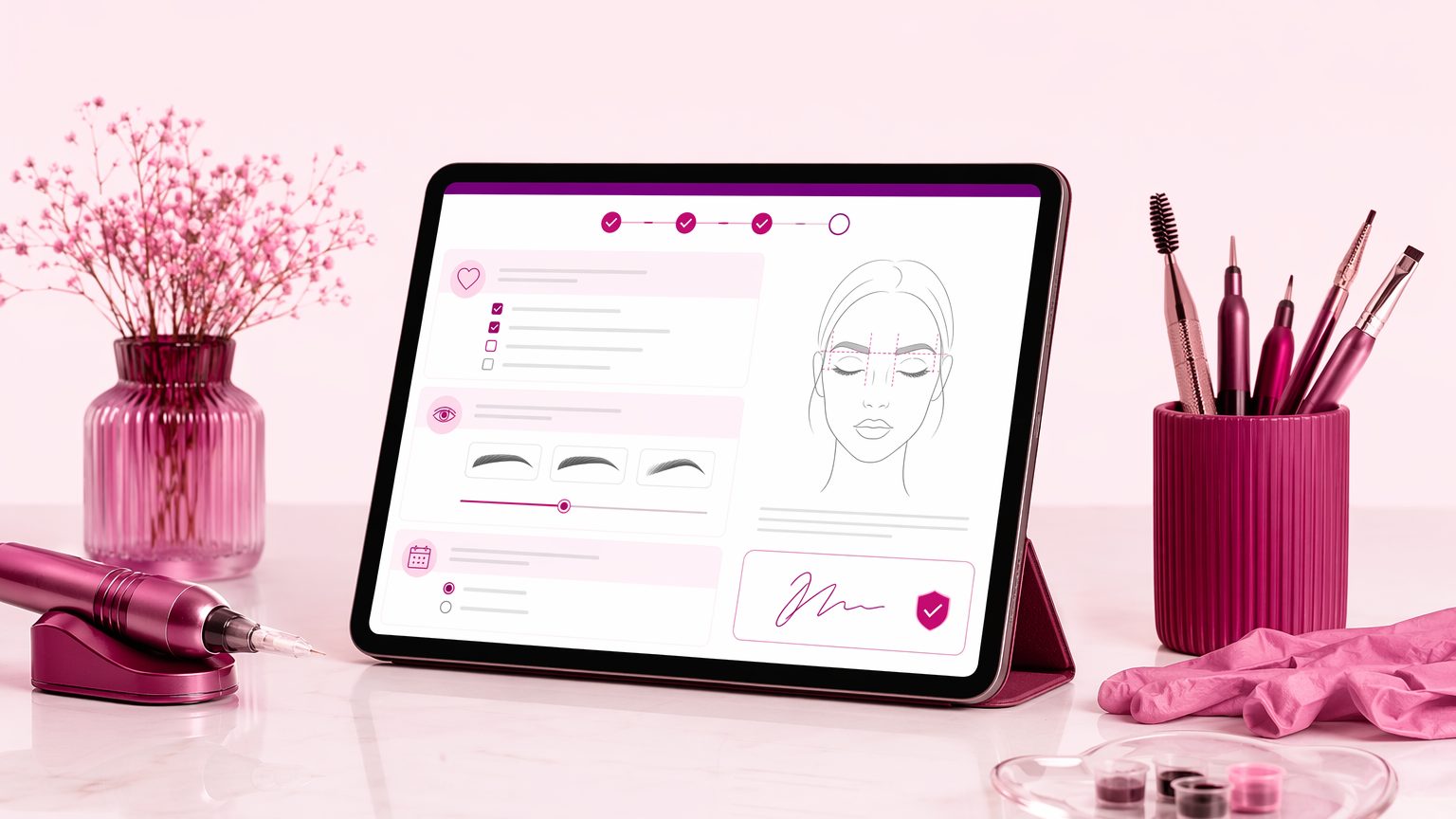
A clean structure makes your form easier to complete and easier to review. A practical layout looks like this:
- client basics
- service requested
- brow and PMU history
- pmu contraindications and skin-related questions
- brow goals and design preferences
- touch-up expectations
- photo consent, if used
- signature and date
If you use digital beauty intake forms, conditional logic can help a lot. For example, if a client says they have previous brow tattoo work, you can show follow-up questions only then. That keeps the form shorter and more mobile-friendly.
Common mistakes to avoid
Many forms become harder than they need to be. Watch for these common issues:
- using a generic intake instead of a brow-specific form
- mixing consultation questions and pmu consent form language together without clear separation
- forgetting to ask about previous PMU or brow tattoo history
- asking broad health questions without explaining why follow-up may be needed
- leaving out inspiration photo fields or artist notes
- not documenting touch-up understanding before the first appointment
- making the form too long or frustrating to complete on a phone
Example fields to include in your PMU brow consultation form
If you are building or updating your form, start with these essentials:
- full name and contact details
- service type requested
- previous PMU or brow tattoo history
- skin or product sensitivities near the brow area
- current skincare or medications that may affect the appointment
- recent treatments performed near the brows
- desired brow style and shape preferences
- daily makeup habits and inspiration references
- healing or retention concerns from past services
- understanding of touch-up timing and healed-result expectations
- open notes section
- signature and date, if part of your consultation flow
How digital PMU consultation forms improve client experience and recordkeeping
Digital forms make the whole process easier. You can send the pmu consultation form before the appointment, review answers ahead of time, and walk into the consult better prepared.
They also make recordkeeping cleaner. Instead of sorting through paper, you can pull up past answers, signatures, photos, and updates from one searchable client file. For busy artists, that matters. It saves time, supports better communication, and helps the appointment feel more organized from start to finish.
Conclusion: Build a PMU consultation form that supports better brow consultations
A good pmu consultation form should clearly capture contraindications, brow goals, and touch-up expectations. That gives you better information before the appointment, supports more informed conversations, and helps you keep cleaner client records without overcomplicating the process.
If you want a simpler way to build digital PMU and microblading consultation form workflows, GlowForms helps beauty professionals create mobile-friendly forms, collect signatures, and keep client records organized in one place.