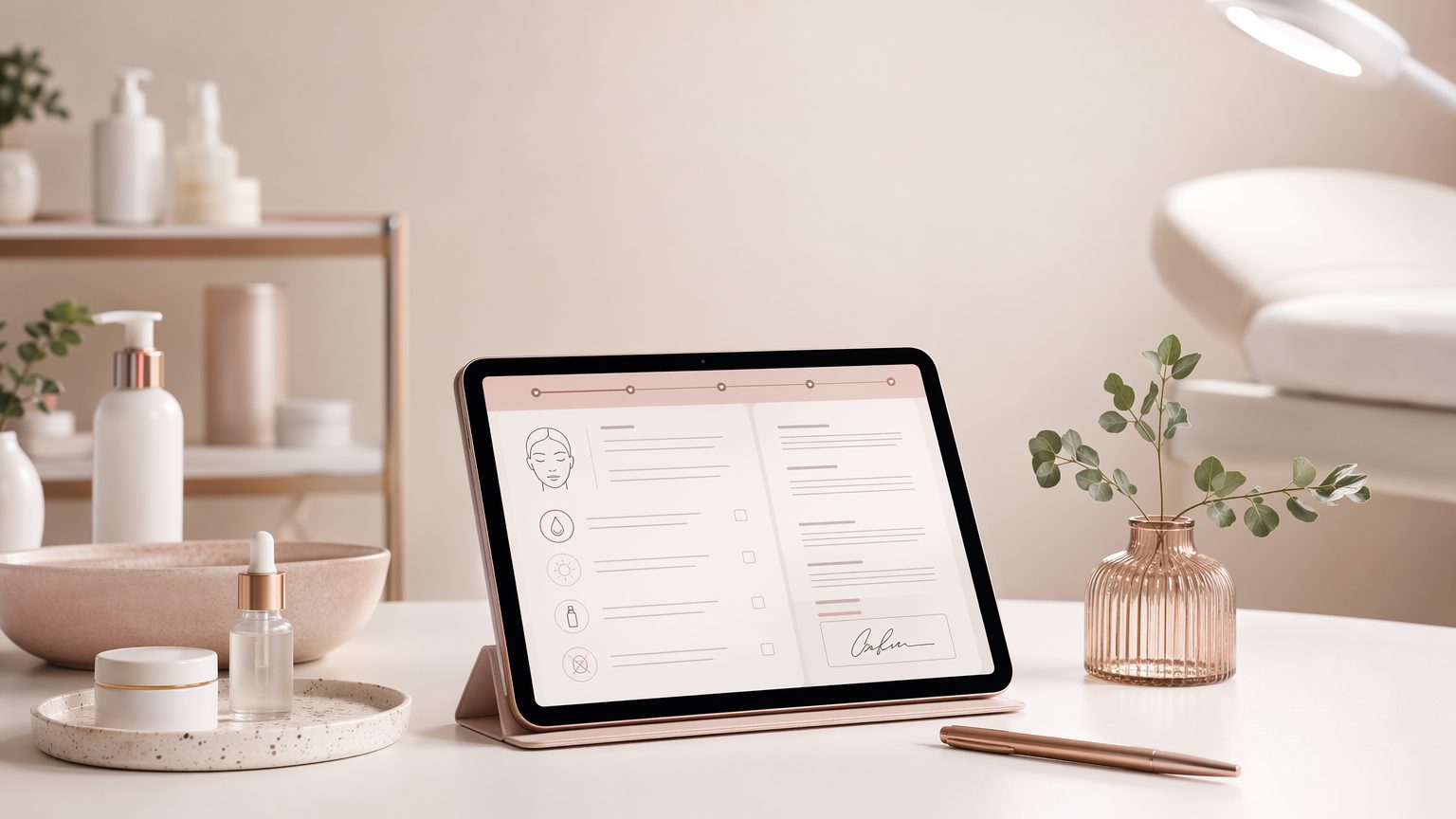
How to Create a Microneedling Aftercare Form Clients Can Actually Follow
A good microneedling aftercare form does more than document instructions. It helps clients remember what to do once they get home, when verbal directions are easy to forget.
For beauty businesses, aftercare is part of the service experience. If your instructions are clear, easy to scan, and simple to revisit on a phone, clients are more likely to follow them. That means fewer confused texts, more consistency between providers, and a smoother experience after every appointment.
Why your microneedling aftercare form matters
Your aftercare form is not just extra paperwork. It is a practical communication tool.
Clients often leave an appointment thinking they will remember everything, then later wonder: Can I wash my face tonight? Can I work out tomorrow? When can I wear makeup again? Clear written microneedling aftercare instructions reduce that confusion.
A strong form also helps your team stay consistent. Instead of each provider explaining aftercare a little differently, you have one organized resource that supports your standard process. That matters whether you are building out esthetician forms, updating beauty business forms, or moving from paper to paperless salon forms.
What a good microneedling aftercare form should accomplish
A useful form should help clients quickly understand:
- what to do right away
- what to avoid over the next few days
- what is normal
- when to contact your studio
It should also break expectations into time frames, like the first 24 hours, the next 48 hours, and the first week. That format is easier to follow than one long paragraph.
Use plain language. Skip overly clinical wording unless it is truly necessary. Most clients are reading this on their phone while multitasking, so your client aftercare form should feel simple, direct, and easy to reuse as your protocols evolve.
Start with the treatment details clients need to remember
At the top of your form, include a short treatment summary clients can review at a glance.
Include:
- treatment date
- provider name
- service performed
- product notes or provider-specific instructions
- a brief reminder that aftercare may vary based on skin sensitivity and service details
This is especially helpful if you offer multiple microneedling forms for different service variations. It also creates cleaner records when paired with your microneedling consent form and intake documents.
Include a clear timeline clients can actually follow
The easiest format is time-based.
First 24 hours
Put the most important restrictions first. This is when clients are deciding what they can do that same day, like cleansing, sweating, sun exposure, or applying products.
Days 2 to 3
Add the next set of instructions in bullet points. This helps clients know when they can slowly return to parts of their usual routine.
First week
Use this section for ongoing reminders, especially around sun care, skincare actives, and anything else your protocol pauses temporarily.
Keep each section short. Mobile-friendly bullets work better than dense paragraphs, especially for post-treatment care.
List the most important aftercare instructions in plain language
Your microneedling aftercare instructions should be action-focused. Start sentences with words like:
- Use
- Avoid
- Wait
- Contact us if
That wording is clearer than vague advice.
Depending on your studio protocol, your form may cover:
- gentle cleansing instructions
- hydration or moisturizer guidance
- practical SPF reminders
- temporary pauses on makeup
- temporary pauses on exfoliation or active ingredients
- temporary pauses on heat-related activities
Keep the wording simple. For example, “Avoid direct sun and wear SPF as directed” is easier to scan than a long explanation filled with technical terms.
Add an easy-to-scan avoid section
A dedicated “avoid” section can make your form much easier to follow.
Group similar items together and use bullets or checkboxes. That might include things like:
- intense workouts or sweating
- saunas, steam rooms, or hot tubs
- direct sun exposure
- picking or scratching the skin
- harsh skincare products
The key is clarity, not completeness for its own sake. If the list gets too long, clients may stop reading. Focus on the most important restrictions they are actually likely to run into at home.
Explain normal responses versus reasons to reach out
A calm, well-written section here can reduce unnecessary worry.
You can include a short note on common short-term responses clients may notice, such as temporary redness or sensitivity, if that matches your standard guidance. Then separate that from reasons they should contact your studio.
Keep this section:
- short
- easy to find
- written in calm language
- aligned with your normal escalation process
Make your preferred contact method obvious. Do not bury it in fine print. If a client has a question, they should know exactly how to reach you.
Keep the form short, readable, and mobile-friendly
Most clients will open your form on their phone, not print it.
That means your layout matters as much as the wording. Use:
- short sections
- bold subheads
- bullets
- white space
- simple visual dividers if they improve clarity
Avoid long walls of text. The best digital client intake forms and aftercare forms are designed for quick reading, not for looking formal on paper.
Use acknowledgement fields without adding friction
If it fits your workflow, add a simple acknowledgement that the client received and reviewed the aftercare instructions.
You may also include signature and date fields. Just keep it light. Repeating the same acknowledgement several times makes the form harder to complete without improving the client experience.
If you send forms digitally, completion should feel fast and intuitive. That is true for aftercare forms, microneedling consent form templates, and other beauty business forms your team uses every day.
Common mistakes to avoid
Even a well-designed form can miss the mark if the content is hard to use.
Watch for these common problems:
- instructions that are too vague
- wording that is too long or too clinical
- important restrictions buried in the middle
- verbal aftercare with no written copy
- generic templates that do not match your service flow
- outdated instructions after your protocol changes
The best esthetician forms are the ones your clients can actually follow in real life.
A simple structure you can use
If you want a clean starting point, build your form in this order:
- Treatment summary
- What to do today
- What to avoid for the next few days
- Product and skincare reminders
- When to contact us
- Acknowledgement and signature
The exact wording should match your studio’s process and professional judgment. The goal is not to make the form longer. It is to make the right information easier to follow.
How digital forms make aftercare easier for beauty businesses
Digital forms make aftercare simpler for both clients and staff. You can send the form right after the appointment, making it easier for clients to revisit instructions later from their phone.
For your team, digital records are easier to search, update, and keep organized. Instead of reprinting paper copies every time your protocol changes, you can update one template and use it across the business. That is one reason many studios move from paper files to salon intake software and connected paperless salon forms.
If you want a better way to manage microneedling forms, client signatures, and organized digital records, GlowForms helps beauty businesses create mobile-friendly forms that are easy for clients to complete and easy for teams to manage.