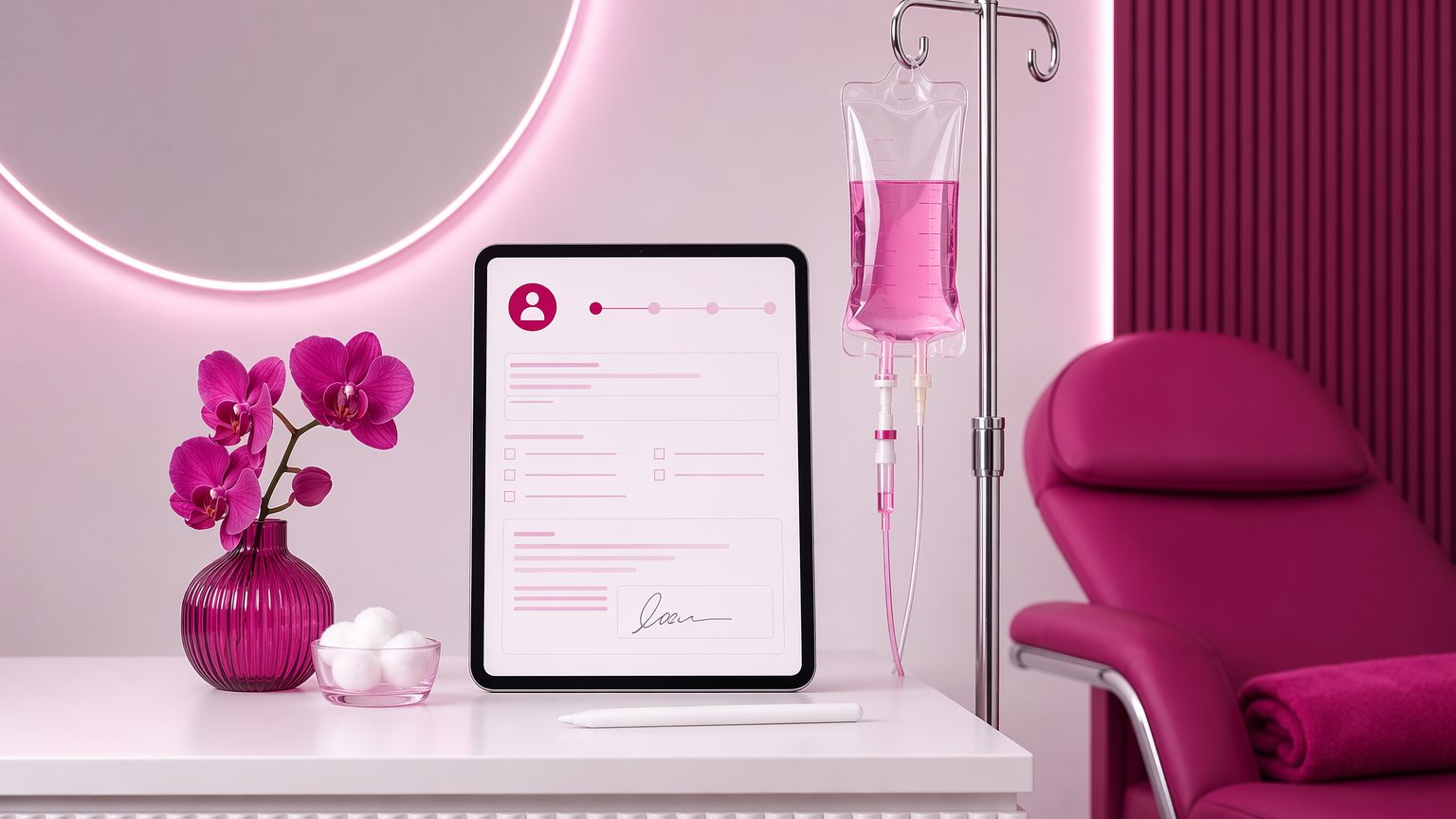
How to Create a Med Spa IV Therapy Consent Form That Covers Health History, Risks, and Treatment Policies
An IV therapy consent form does more than collect a signature. In a med spa, it helps you document what the client is requesting, screen for relevant health concerns, explain the service in plain language, and keep treatment records organized.
A strong med spa IV therapy consent form also makes appointments smoother. Clients can complete key questions before they arrive, staff can review responses faster, and providers have a clearer starting point for screening and discussion. The goal is not just paperwork. It is informed consent, cleaner records, and a better client experience.
Your form should cover four essentials: health history, treatment details, known risks, and office policies. Because documentation expectations can vary, have your form reviewed for your local requirements and provider standards. This article is practical guidance, not legal advice.
What an IV Therapy Consent Form Should Accomplish
A good iv infusion consent form should:
- Document that the client understands the treatment they are requesting
- Capture health information relevant to screening
- Record disclosed risks, side effects, and limitations
- Confirm the client had a chance to ask questions
- Acknowledge office policies that affect the appointment
That is the core of informed consent for IV therapy. It should be clear, readable, and specific to your workflow.
Start With Basic Client and Appointment Information
Every iv therapy intake form should begin with the basics:
- Full legal name
- Date of birth
- Phone number and email
- Emergency contact name and phone number
- Date and location of service
- Provider or supervising staff member
- The IV therapy selected, plus any add-ons if your practice offers them
This sounds simple, but it matters. If a client chooses a hydration drip, a vitamin add-on, or a different formula after review, your record should show exactly what was discussed and provided.
Include a Thorough Health History Section
The health history section is where your iv therapy health history form does the most work. Keep it mobile-friendly by using checkboxes with a short field for details.
Ask about current medical conditions relevant to your screening process. Depending on provider standards, that may include heart, kidney, liver, blood pressure, or metabolic concerns. Also include:
- Medication, vitamin, adhesive, latex, and ingredient allergies
- Current medications and supplements
- Recent treatments or procedures
- Pregnancy or breastfeeding status, if relevant to your intake process
- Prior reactions to needles, injections, infusions, or similar therapies
- Recent illness, dehydration, fainting, dizziness, or other concerns
Avoid long walls of text. A clean yes-or-no format helps clients answer accurately on their phone and helps staff review forms quickly.
Describe the Treatment in Plain Language
Your med spa treatment consent form should explain what IV therapy is without turning into a sales pitch. Keep it simple: the client is receiving fluids and selected ingredients through an IV, and the exact formula should be recorded in the chart.
State what the appointment generally involves, such as screening, preparation, administration, and observation as appropriate to your process. If the provider adjusts the formula before treatment, include space for notes. Focus on documenting what is being provided and what the client is agreeing to, not making outcome claims.
List Risks, Side Effects, and Limitations Clearly
A dedicated risk section is essential in any med spa consent form. Use plain language, not dense technical wording.
Examples of risks and side effects may include:
- Discomfort at the insertion site
- Bruising, redness, or swelling
- Dizziness or lightheadedness
- Nausea
- Other known treatment-related risks identified by your clinical protocols
Also state that the client experience can vary and that no specific outcome is promised. Your iv therapy consent form should confirm that the client understands both common disclosed risks and the possibility of less common or unknown risks discussed by the provider.
Add Contraindication and Eligibility Acknowledgments
This section should confirm that the client answered health questions truthfully and completely. It should also explain that treatment may be postponed or declined based on symptoms, health history, or provider judgment.
Useful acknowledgments include:
- I have provided complete and accurate health information
- I understand withheld information may affect treatment decisions
- I understand final eligibility is determined by the qualified provider or practice
A checkbox plus signature makes this easy to review later.
Document Consent, Questions, and Policies Separately
The actual consent statement should be clear and specific to the IV therapy service. It should confirm that the client:
- Understands the nature of the treatment
- Reviewed disclosed risks and limitations
- Had the opportunity to ask questions
- Agrees to proceed
Then add signature and date fields, plus provider or witness signatures if your practice uses them.
For iv therapy treatment policies, avoid hiding everything in one paragraph. If you include cancellation terms, late arrival rules, payment responsibility, package terms, or refund limitations, break them into separate policy acknowledgments with checkboxes. That makes the form easier to understand and easier to enforce consistently.
Include Photo and Communication Permissions Only If Needed
If your practice takes progress photos, use a separate photo consent section. Keep internal chart documentation separate from any marketing or social media permission. Do the same with appointment communication consent.
This matters because unrelated permissions should not be bundled into the main med spa IV therapy consent form. A client should be able to consent to treatment without feeling confused about photos or promotional use.
Make the Form Easy to Complete on Mobile
The best digital intake forms for med spas are easy to finish before the appointment. That means:
- Short sections with clear headings
- Simple yes-or-no questions
- Checkboxes and dropdowns instead of long paragraphs
- Obvious required fields
- E-signature support
- Searchable records for staff on the day of service
If clients struggle to complete the form on their phone, they are more likely to leave blanks or wait until check-in, which slows down the visit.
Common Mistakes to Avoid
A weak iv therapy consent form usually has one of these problems:
- Vague treatment descriptions
- Missing medication, allergy, or medical history questions
- One confusing signature block for consent, marketing, and payment terms
- A generic template that does not match the practice’s actual services
- Outdated wording after services or policies change
- Relying on the signed form alone instead of verbal review and provider screening
The form should support the conversation, not replace it.
Review and Update Your Form Regularly
Revisit your form whenever your ingredients, services, workflow, or office policies change. Ask providers and front desk staff where clients get stuck or skip fields. Check whether documentation expectations in your area have changed. Use version control so staff know they are using the latest form, and test the form on a phone every so often to make sure it still feels easy to complete.
Conclusion: Build a Consent Form That Is Clear, Complete, and Practical
A strong med spa IV therapy consent form should cover health history, treatment details, disclosed risks, and business policies in a format clients can actually complete. That supports informed consent, better documentation, and a smoother appointment from start to finish.
If you want to make that process easier, digital intake tools like GlowForms can help your med spa collect signatures, organize records, and keep consent forms simple for clients to complete before their visit.