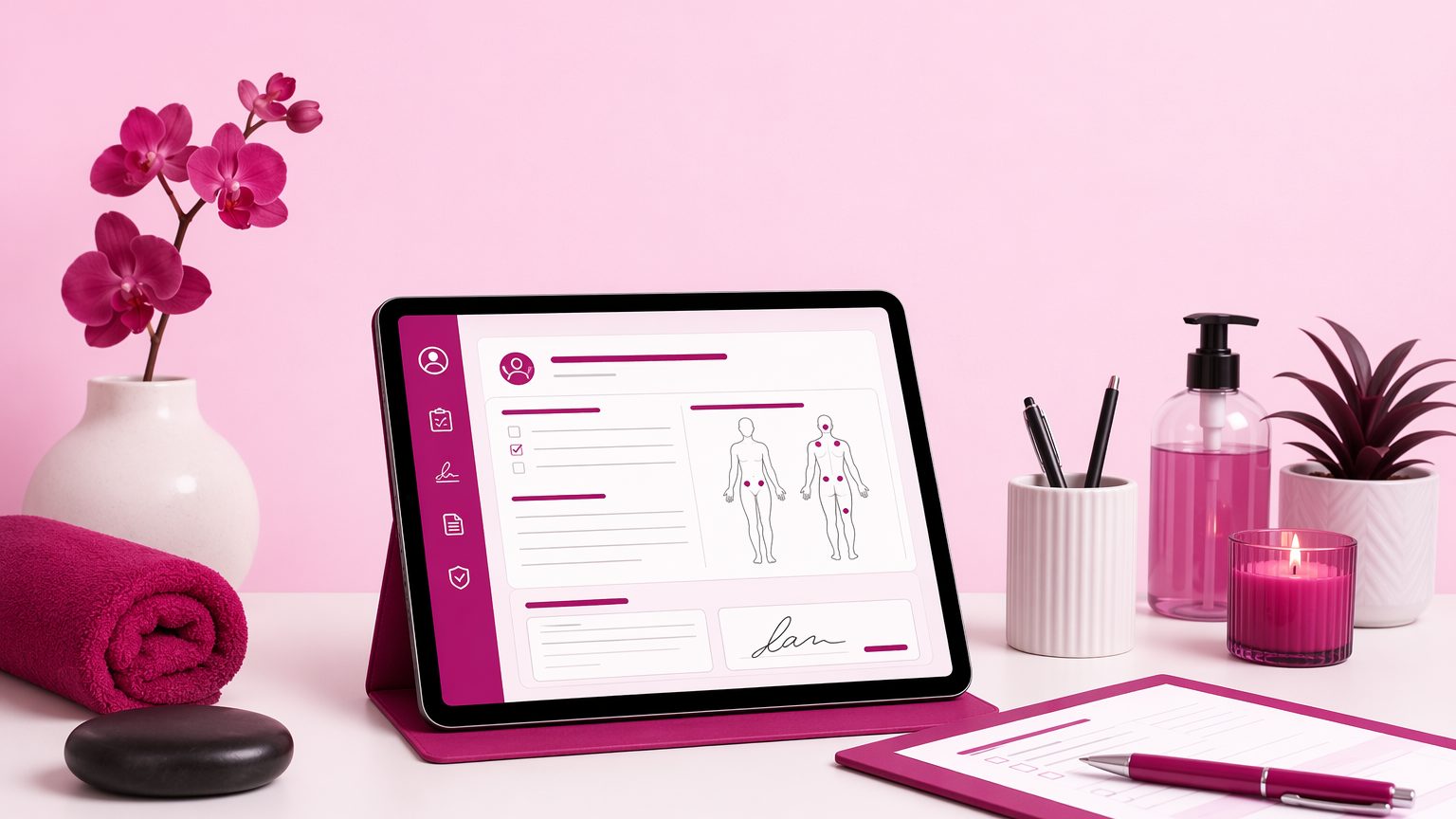
How to Create a Massage Client Progress Notes Template for Follow-Up Visits
7 min read
Follow-up appointments can blur together quickly in a busy practice. A clear massage client progress notes template helps you see what changed since the last session, tailor treatment, and review client history without guessing. If your notes tend to say only “upper back tension,” it may be time for a better system.
This guide explains what to include in follow-up notes, how to organize a practical massage treatment notes template, and how digital client intake and recordkeeping can support a smoother, more professional experience from the first form forward.
Massage progress notes are the records you complete for visits after the initial intake and first session. They focus on what changed over time and what happened at each return appointment.
It helps to separate a few related documents:
A good massage client progress notes template captures the client’s update, the areas addressed, techniques used, response to treatment, and the plan for next time. These notes do not need to sound overly clinical. They just need to be consistent, factual, and easy to review.
A massage therapy progress notes template is especially useful for clients who return regularly or are working through an ongoing concern. That may include:
For solo therapists, a template creates consistency on busy days. For teams, it helps everyone document in the same style. In both cases, it makes follow-up visits easier because you can quickly review what the client reported last time and what approach you used. It also helps the client experience feel more polished, because you can start the appointment with context instead of asking them to repeat basic information.
Keep your notes within your scope. Focus on what the client shared, what you observed, what work was performed, and how the client responded.
A useful massage treatment notes template should be detailed enough to support quality care without slowing down your workflow.
Start with the basics:
These details anchor every note and make records easier to sort later.
This is the heart of follow-up documentation. Record what changed since the previous session, such as:
Note which areas you prioritized and why. This adds context and helps you spot patterns across multiple visits.
Document the methods you used in clear, repeatable language. This section is a key part of any massage treatment notes template because it shows what you actually did during the session.
Record how the client responded during treatment, including sensitivity, pressure tolerance, relaxation, and any adjustments made during the session.
Summarize any notable changes by the end of the appointment. Then note aftercare discussed and what to reassess at the next visit.
The best notes are useful and efficient. If your template takes too long, you are less likely to complete it right away.
A practical massage client progress notes template often combines:
Organize the form in the same order you naturally think through a session:
This structure keeps your documentation clear and makes records faster to review before follow-up visits. When your forms and records are organized this way digitally, it is also easier to move from pre-appointment intake to in-session documentation without a disjointed client experience.
Here is a simple format you can adapt for your practice:
To save time, add common prompts such as:
A repeatable layout like this can function as both a massage client progress notes template and a simple massage treatment notes template for everyday follow-up visits.
Strong notes are usually simple notes written clearly. A few habits make a big difference:
Write useful detail instead of vague phrases. For example:
> Client reported neck tension after travel; tolerated moderate pressure well; requested focus on shoulders.
That is more helpful than writing “Client tense but better.”
Distinguish between what the client said and what you observed during the session. This keeps your documentation accurate and professional.
Use the same wording and format from visit to visit whenever possible. Consistency makes trends easier to spot and improves team communication.
Write notes soon after the session while details are fresh. Waiting until later often leads to gaps or overgeneral notes.
Even experienced therapists can end up with notes that are hard to use later. Watch for these common issues:
A clear template prevents most of these problems by making the essential fields easy to complete every time.
Paper notes can work, but they often create friction. Files can be misplaced, handwriting may be difficult to read, and reviewing history takes longer than it should.
Digital systems can offer practical advantages, especially when paired with client intake forms completed before the appointment:
For beauty and wellness businesses that want a smoother start to each visit, digital intake and records can help create a more professional handoff from the client’s pre-appointment information to the service itself. Platforms like GlowForms are designed around that intake-first experience, helping businesses collect client information digitally before the appointment so records are easier to organize and review.
A strong massage client progress notes template helps you track change over time, stay organized, and make follow-up visits more personalized. The best template is simple, repeatable, and easy to complete right after the session.
If you are refining your documentation process, start with a clear massage treatment notes template and consider pairing it with digital client intake so records are easier to review before the appointment and the overall client experience feels more seamless from the start.

Gifts don’t need bows and big budgets. Use small, thoughtful touches—welcome kits, milestone notes, minis at the mirror—that feel personal and spark rebooks.

The right pre-booking questions save time, prevent mismatched appointments, and help new clients feel clearer, safer, and easier to guide from the start.

GlowForms reminders aren’t “don’t forget your appointment” nags. They’re polite nudges to finish intake forms before clients arrive—so you start on time and sta