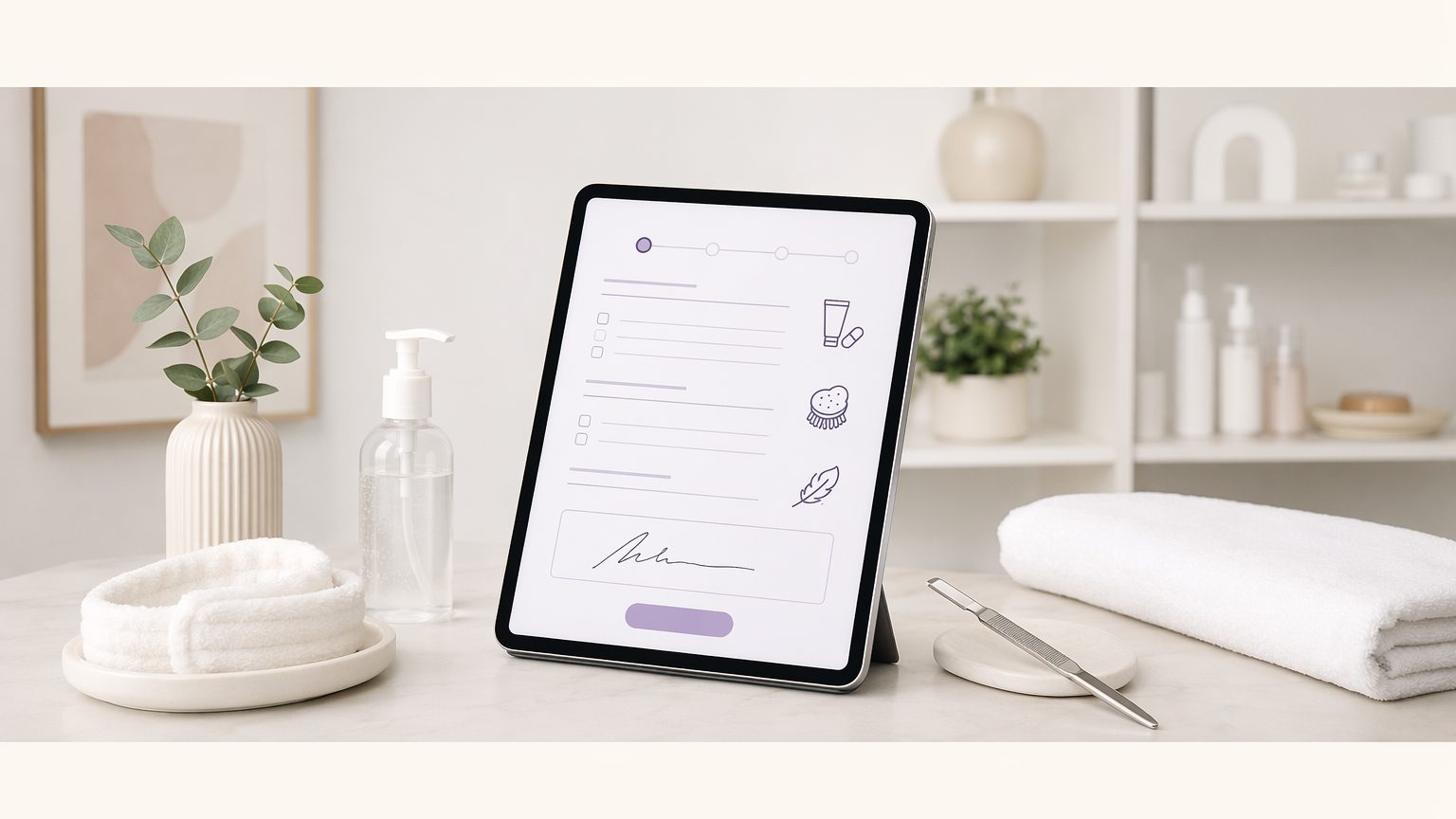
How to Create a Dermaplaning Consent Form That Screens for Acne Medications, Recent Exfoliation, and Skin Sensitivity
7 min read
Dermaplaning can leave skin smoother, brighter, and better prepped for product absorption. But because it removes dead skin and vellus hair with a surgical blade, pre-treatment screening is essential. A strong dermaplaning consent form helps identify risk factors before the appointment, reduces avoidable irritation, and gives providers better documentation for safer treatments.
For salons, studios, and medspas, the right form also improves operations. It cuts down on miscommunication, helps staff review records quickly, and creates a more professional client experience from the start.
A well-designed consent form for dermaplaning should do more than collect a signature. It should confirm informed consent, screen for contraindications, and document whether the client is a good candidate for treatment.
The best dermaplaning intake form combines consent and health-history questions in one workflow. It should be easy to complete on a phone, simple for staff to scan before the service, and structured to flag high-risk answers early.
Start with basic identifying details:
Then add appointment-specific details such as treatment date, provider name, and treatment area. Include a final acknowledgment stating that the client answered truthfully and will notify the provider if anything changes before the appointment.
One of the most important parts of a retinol dermaplaning consent workflow is medication screening. Ask clear yes/no questions about current or recent use of:
Also ask about over-the-counter acne and resurfacing products, including retinoids, benzoyl peroxide, salicylic acid, and exfoliating acne treatments. If the client answers yes, use conditional logic to reveal follow-up fields for medication name, strength, frequency, and the date it was last used.
These questions matter because acne medications and strong actives can increase irritation, weaken the skin barrier, and raise the risk of skin injury during dermaplaning. A focused acne medication screening form helps providers decide whether to proceed, modify, or postpone.
Recent exfoliation is another major concern. Your recent exfoliation intake form section should ask about:
Also include home-care questions about AHAs, BHAs, scrubs, exfoliating pads, masks, and at-home peels used within the past 7 to 14 days. Checkboxes work well here because they are fast and easy to complete. Always request the date of the most recent treatment or product use.
This helps identify whether the skin barrier may already be compromised, which can affect whether dermaplaning is appropriate that day.
A strong skin sensitivity consent form should ask whether the client has:
Also screen for current issues in the treatment area, such as sunburn, open lesions, active acne breakouts, cold sores, cuts, rashes, or irritation. Ask about known triggers too, including fragrance, adhesives, latex, metals, topical products, or environmental factors.
A pain or sensitivity scale and a short free-text field for past reactions can add useful context. These answers help determine whether treatment should be adjusted, delayed, or avoided altogether.
Your list of dermaplaning contraindications should be clear and visible. Common red flags include active infection, inflamed acne, compromised skin barrier, recent aggressive exfoliation, and certain medication use.
Include an acknowledgment that failure to disclose relevant information may increase the risk of adverse effects. It is also smart to add a provider-only review section where staff can approve, flag, or defer treatment after reviewing the form. Final wording should align with your service protocols and local regulations.
Every beauty treatment consent form for dermaplaning should explain:
Potential side effects should be disclosed, including redness, dryness, tightness, sensitivity, temporary irritation, and minor nicks. State that results vary and cannot be guaranteed. Then include consent to proceed, acknowledgment of risks, and the client’s opportunity to ask questions before treatment.
Finish with signature fields for the client and provider, plus the date and time of signing. This is especially important for esthetician consent forms and medspa consent form workflows.
Include a section confirming that the client understands aftercare instructions, including sun protection and temporary avoidance of harsh products. You can also ask the client to agree to pause certain active ingredients before treatment if instructed and acknowledge that failure to follow aftercare may affect results or increase irritation. A checkbox for receiving written aftercare by email or SMS is helpful.
For structure, keep sections short, use plain language, and avoid combining multiple risks into one confusing question. Put high-risk screening questions before the signature section so staff can review them first. Use required fields only for critical information, and rely on conditional logic so follow-up questions appear only when relevant. Since many clients complete forms on their phones, mobile-friendly design is a must.
Here are sample prompts you can adapt:
“I understand the nature of dermaplaning, its potential risks and side effects, and that results may vary. I confirm that I have answered all questions truthfully and consent to treatment.”
Have final language reviewed by a legal or compliance professional before use.
Avoid vague questions like “Do you use acne products?” without naming ingredients or medication types. Do not skip date-based questions, because timing matters for retinoids and exfoliation. Avoid generic templates that are not tailored to dermaplaning-specific risks. And if your team still relies on paper, remember that paper forms are harder to search, update, and review across providers.
Digital client intake forms make this process much easier. They can use conditional logic, required acknowledgments, and e-signatures to improve completeness. Searchable records help teams review medication disclosures and skin history before repeat visits. Sending forms before the appointment also saves front-desk time and supports consistency across providers or locations.
GlowForms helps beauty businesses create professional, mobile-friendly digital client intake forms with drag-and-drop fields, signatures, and organized client records. That means faster intake, better documentation, and a smoother client experience.
Before you publish your form, make sure it covers acne medications, recent exfoliation, skin sensitivity, contraindications, informed consent, signatures, and aftercare acknowledgment. Test it internally to confirm the questions are clear and the logic works correctly. Review it regularly as protocols, products, and regulations change.
A strong dermaplaning consent form protects both the client and the business. If you want a faster way to build polished, searchable intake workflows, GlowForms can help you create forms that support safer treatments and more efficient operations.

Gifts don’t need bows and big budgets. Use small, thoughtful touches—welcome kits, milestone notes, minis at the mirror—that feel personal and spark rebooks.

The right pre-booking questions save time, prevent mismatched appointments, and help new clients feel clearer, safer, and easier to guide from the start.

GlowForms reminders aren’t “don’t forget your appointment” nags. They’re polite nudges to finish intake forms before clients arrive—so you start on time and sta