How to Create a Chemical Peel Consent Form That Sets Clear Expectations and Screens for Contraindications
7 min read
A well-built chemical peel consent form does more than collect a signature. It helps clients understand the treatment, alerts providers to safety concerns, and creates a cleaner, more professional intake process. For salons, med spas, and estheticians, strong documentation supports both client care and day-to-day organization.
A clear chemical peel consent form protects both the client and the provider. It explains what the treatment involves, outlines realistic outcomes, and documents that the client understands the risks, benefits, and aftercare requirements.
Written consent also improves client education. When clients review possible side effects, downtime, and chemical peel contraindications before their appointment, they arrive better prepared and less likely to feel surprised by normal post-treatment reactions.
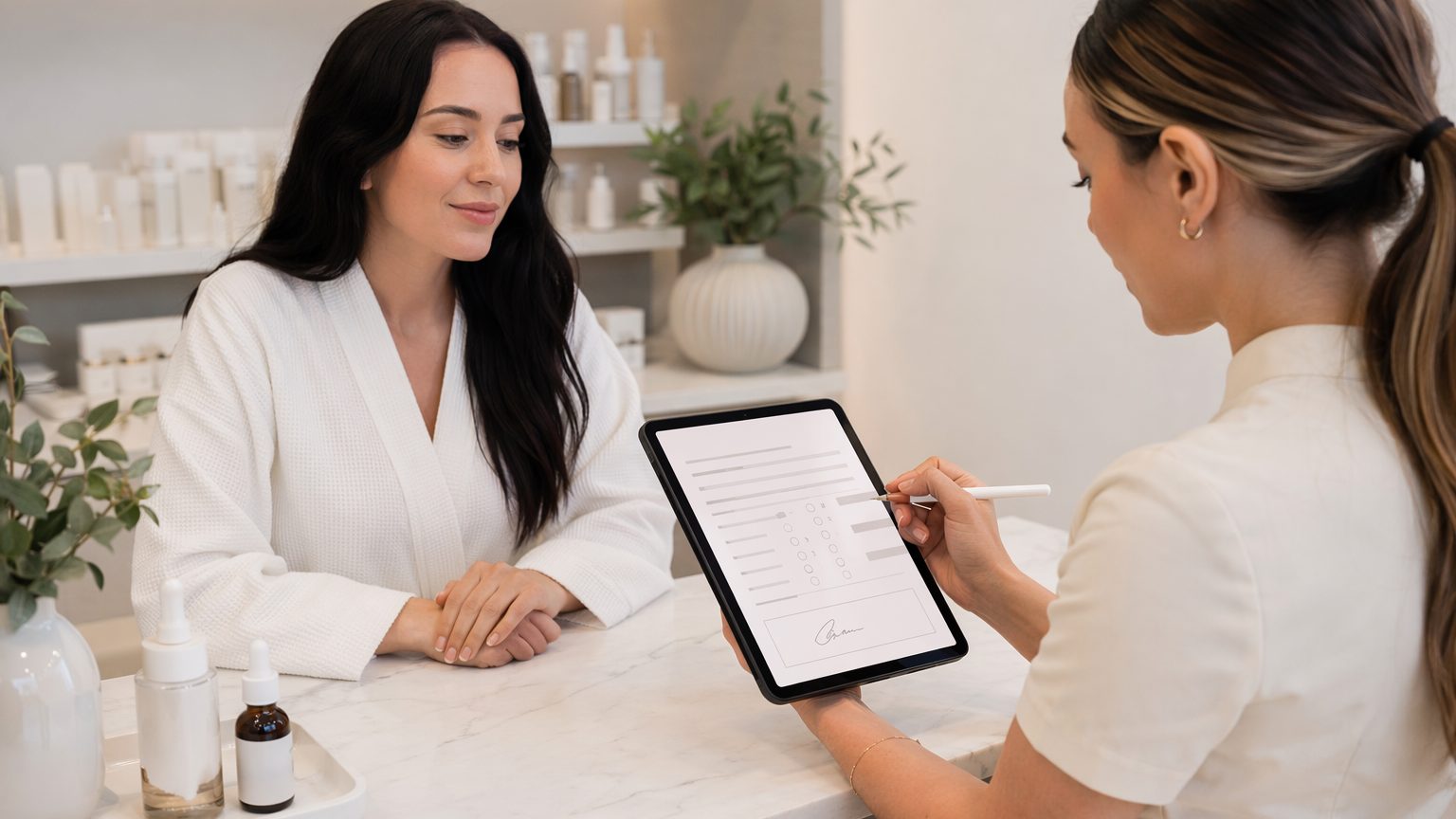
Just as important, a polished skin treatment consent form strengthens the client experience. Organized, professional intake shows that your beauty business takes safety seriously. And when you use digital consent forms for salons, clients can complete them on their phones, signatures are easier to capture, and paperwork errors are reduced.
Your chemical peel intake form should do four things well:
If the form only says “I consent,” it is not doing enough.
Start with the basics. Include required fields for:
Then collect appointment-specific details:
Required fields matter here. Incomplete forms create delays and make it harder to assess whether the service is appropriate.
A strong beauty business client intake workflow should screen thoroughly for health history that may affect treatment safety or healing. Ask about:
Also ask about prior peels, laser services, waxing, threading, dermaplaning, or exfoliation within the past several days or weeks. These details can directly affect whether treatment should proceed.
Your form should clearly list chemical peel contraindications so clients can self-report accurately. Common red flags include:
It is also smart to ask specifically about prescription exfoliants and active products such as AHAs, BHAs, tretinoin, hydroquinone, and bleaching agents.
Add a provider review section at the end of the screening area. That gives the esthetician or provider space to determine whether treatment should be approved, modified, postponed, or declined.
One of the most important jobs of esthetician consent forms is expectation-setting. Explain what the client may feel during treatment, such as tingling, stinging, warmth, or frosting depending on peel depth.
Then describe normal short-term reactions, including:
Be direct that results vary based on skin type, condition, treatment strength, aftercare compliance, and whether the client completes a recommended series. No provider should guarantee a specific outcome. Make it clear that improvement may be gradual and that downtime can affect makeup use, workouts, social plans, and sun exposure.
Every chemical peel consent form should explain both common and less common risks in plain language.
Common side effects may include redness, dryness, swelling, peeling, and temporary sensitivity. Less common but important risks include post-inflammatory hyperpigmentation, hypopigmentation, scarring, infection, and cold sore reactivation.
State clearly that complications are more likely when clients do not disclose contraindications or fail to follow aftercare. This supports informed decision-making and strengthens treatment transparency.
A strong chemical peel aftercare consent section helps protect results and reduce avoidable complications. Include pre-care instructions such as stopping retinoids, strong exfoliants, depilatories, and certain active products before treatment. You may also want clients to confirm sun protection, hydration, shaving guidance, and avoidance of recent hair removal.
Aftercare acknowledgements should cover:
Require clients to confirm that failure to follow pre-care and aftercare instructions may affect results and increase risk.
Many providers benefit from adding optional before-and-after photo consent. Be specific about whether images are for internal records only or may be used for marketing under a separate authorization.
It is also helpful to request permission to communicate by SMS or email about preparation instructions, follow-up care, and appointment reminders. Keep marketing consent separate from treatment consent for clarity and compliance.
Your signature section should include language confirming that the client:
Capture the client signature, date, and provider signature. For minors, include a parent or guardian signature and relationship to the client where legally appropriate.
The best digital consent forms for salons are easy to complete on a phone. Use short sections, checkboxes, clear labels, and conditional logic so clients only see relevant questions. Apply required fields to medical history and contraindication screening, and use e-signature fields with automatic date stamps.
Most importantly, store completed forms in a centralized, searchable client record. That makes it easier to review history before future appointments and maintain a professional documentation process. Review templates regularly as your protocols, products, and legal requirements evolve.
Avoid these frequent issues:
GlowForms makes it easier to build a chemical peel intake form that fits your services and protocols. With a drag-and-drop builder, beauty businesses can create customized esthetician consent forms, send them digitally before appointments, capture signatures, and keep every record in one searchable place.
That means less back-and-forth, fewer missing details, and a smoother client experience from intake to follow-up.
A strong chemical peel consent form should educate, screen, document, and set expectations clearly. When your form covers risks, contraindications, pre-care, aftercare, and informed consent, you create a safer and more professional treatment process.
Review your forms regularly, customize them for your products and protocols, and move to digital workflows where possible. If you want a faster, cleaner way to manage consent and records, GlowForms can help you create mobile-friendly intake forms that save time and keep your client files organized.

Gifts don’t need bows and big budgets. Use small, thoughtful touches—welcome kits, milestone notes, minis at the mirror—that feel personal and spark rebooks.

The right pre-booking questions save time, prevent mismatched appointments, and help new clients feel clearer, safer, and easier to guide from the start.

GlowForms reminders aren’t “don’t forget your appointment” nags. They’re polite nudges to finish intake forms before clients arrive—so you start on time and sta