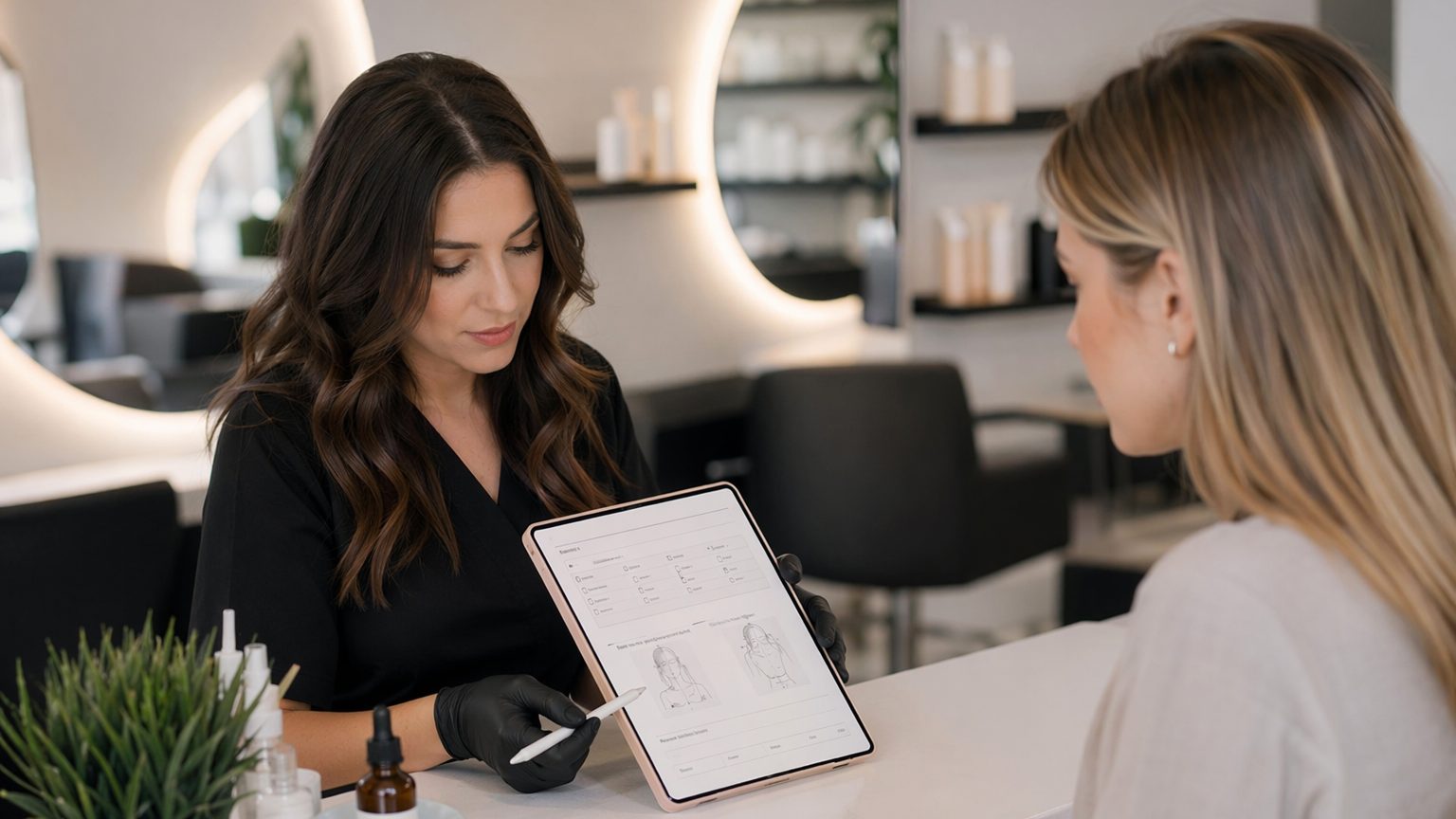
How to Build a Salon Client Allergy and Patch Test Form That Reduces Risk
A salon client allergy and patch test form is one of the most important records your team can use before carrying out services that involve tint, dye, adhesives, wax, or active skincare products. A strong form helps your team capture the information needed to assess suitability, record patch test outcomes where relevant, flag concerns before treatment starts, and keep client records organized so future appointments are safer and more consistent.
For salons offering hair color, brow or lash tinting, waxing, lash services, or advanced skincare, a clear allergy and patch test form can improve preparation, support safer service decisions, and help future appointments feel more personalized without relying on memory alone.
Why allergy and patch test forms matter before the appointment begins
A lot of useful salon information needs to be gathered before a service starts. Clients may already know they have reacted to tint, wax, adhesives, fragrance, or skincare ingredients in the past, or they may mention that a previous patch test was negative, positive, or inconclusive. If that information is not captured, the team may miss avoidable risks or waste time trying to confirm details at the treatment chair.
That is why allergy and patch test forms matter. When a stylist or technician can review a short, accurate summary of relevant sensitivities and testing history before the appointment, they can work with more consistency and better judgment. That may affect whether the service can go ahead, what products they prepare, how they set expectations, and what they confirm before beginning.
Just as importantly, a structured intake process helps the salon deliver a more joined-up experience. Clients notice when your team remembers previous reactions, checks patch test records properly, and uses that information to make the next visit smoother.
Focus on relevant risks and next steps, not just basic client details
A salon client allergy and patch test form should support two practical goals:
- Help staff understand whether there are any relevant sensitivities, previous reactions, or patch test requirements before the service
- Create a consistent record of what was disclosed, what testing was carried out where relevant, and what should be repeated, updated, or reviewed next time
This makes allergy and patch test forms different from a general service note. A general record may cover the appointment as a whole. An allergy and patch test form is about gathering information before treatment begins, including reaction history, product sensitivities, patch test details, and service-specific suitability checks linked to color, tint, adhesives, waxing, or skincare services.
They should also fit into a repeatable workflow. Every staff member should know when the form is completed, what level of detail is expected, how patch test outcomes are documented, and where future staff can review the summary quickly.
Start with essential client and appointment details
Keep the first section simple and practical. Include:
- Full name
- Phone number
- Email address
- Date of birth
- Appointment date
- Service type
- Assigned staff member
- Date of previous visit, if relevant
You may also want to note whether the client is new, returning, or seeing a different team member than usual.
Ask only for information your team truly needs. Required fields are useful, but too many can make the form feel slower than it should.
Capture allergy history, sensitivities, and patch test status
Vague records often lead to weak decisions. Instead of writing only “no issues reported,” record the details that matter before the service begins.
For example, an allergy and patch test form can cover:
- Previous reactions to hair color, tint, adhesives, wax, or skincare products
- Known allergies or sensitivities to fragrance, dyes, adhesives, latex, or active ingredients
- Past patch tests and their outcomes
- Areas of past discomfort, irritation, or swelling
- Things the client specifically wants to avoid
- Whether the client has used the product or had the service before without issue
Also record whether the client reported any reactions to salon treatments, cosmetics, or topical products in the past. Previous reactions can reveal patterns that may affect future services even when the next appointment seems routine.
Depending on the services your salon offers, it can also help to note:
- Eczema, psoriasis, or dermatitis
- Asthma
- Sensitive or reactive skin
- Recent skin treatments
- Medications that may increase sensitivity
These prompts should match the specific services you provide and the products used in those services. Use plain language and simple answer formats where possible. Short prompts and checkboxes can help staff record details consistently without turning forms into long paragraphs.
Use the form to support safer booking and preparation
The most effective salons do not treat allergy and patch test records as a last-minute checkbox. They use them as a working reference for whether a patch test may be needed, how much time should be allowed, what product concerns should be reviewed, and what should be confirmed before the appointment begins.
That preparation may include questions such as whether the client has had the service before, whether they have reacted to similar products, whether a patch test has already been completed, what the result was, and whether any changes since the last appointment could affect suitability. Even short clarifications can improve planning and reduce surprises.
This approach improves consistency. Instead of relying on memory or informal verbal updates, staff can review the written record first and then make targeted decisions based on what the client has already disclosed.
Record patch test details properly
If your salon wants stronger consistency and clearer records, good documentation matters. You need enough detail for staff to understand what was tested, how the client responded, and what should happen before the next service.
Include fields for:
- Service planned
- Product or product category involved
- Patch test required or not required, where relevant
- Patch test date
- Test location
- Outcome or client-reported response
- Reactions noted
- Advice given
- Recommended next steps
It is also worth noting which staff member carried out or reviewed the patch test and whether the client was cleared to proceed, needed further review, or should postpone the service. Leave room for follow-up notes so your team can quickly pick up where the last appointment ended.
This part of the record should be easy to scan later. If a client returns months later, staff should be able to review the appointment history quickly without hunting through notes.
Include acknowledgment and internal review fields
Client records should be clear, not cluttered. The allergy and patch test area should make it easy to capture what the client disclosed, what the staff member reviewed, and any important care advice discussed before the service.
It can also help to confirm that the client understood the agreed next steps and any realistic expectations around patch testing, service suitability, or when the salon should be informed of changes.
For a clean record, include:
- Allergy and patch test summary
- Key recommendations
- Service-specific advice
- Date
- Staff name or confirmation field
A staff acknowledgment can be especially helpful. It shows that the disclosed information, patch test outcome, and next actions were reviewed.
Structure the form for readability
One of the easiest ways to improve consistency is to break allergy and patch test records into short, logical sections. A good layout might look like this:
Client details
Basic identification, contact information, appointment date, and service type.
Allergy and sensitivity history
Previous reactions, known sensitivities, and relevant concerns based on the planned service.
Patch test details
What was tested, when it was tested, outcome, and any follow-up required.
Recommendations and staff notes
Service suitability, preparation advice, and internal observations.
Short sections feel easier to complete than one long page of text. If you use digital forms, templates and dropdowns can help even more by standardizing how staff enter repeated details.
Avoid common allergy and patch test form mistakes
Many salons run into problems not because information is missing, but because the records are too weak to be useful. Common issues include:
- Writing notes that are too vague to help before the next visit
- Recording sensitivities inconsistently across staff members
- Leaving out what product or service the patch test related to
- Failing to review previous allergy or patch test records before the appointment
- Storing important details only in personal memory or informal messages
The best setup is specific, readable, and practical in real appointments. It should help staff make decisions, not create extra confusion.
Why digital records make patch test tracking and workflows easier
Allergy and patch test forms become much more useful when they are stored in a searchable client profile. Digital forms let staff review previous disclosures, sensitivities, patch test outcomes, and follow-up recommendations before every new appointment.
That improves continuity across the team and reduces the chance of missed information. It also saves time. Instead of digging through paper files, staff can access the right record in seconds.
For growing salons, digital recordkeeping also supports consistency. Timestamps, centralized notes, and standardized templates make it easier to maintain a clear process across multiple staff members and repeat visits. For brands like GlowForms, that means forms that are easy for clients to complete, simple for staff to review, and organized in one place so your workflow stays efficient.
Review and update your form templates regularly
Your allergy and patch test records should evolve as your services change. If you introduce a new color line, wax, adhesive, or skincare treatment, update your form prompts to match.
It also helps to review how the form fits your day-to-day workflow. If people frequently skip a section, misunderstand a prompt, or staff regularly need information that is not being captured, that is a sign the template needs work. Regular reviews can keep the records aligned with your current services and how your team actually operates.
Final thoughts
Salon client allergy and patch test forms are most effective when they support clear communication before the appointment begins. They help your team capture relevant sensitivities, document patch test outcomes properly, and make more informed decisions about upcoming services.
When the record is easy to complete, easy to review, and built into a consistent workflow, it becomes more than admin. It becomes part of a safer and more professional client experience.
If you are building digital salon forms and want a smoother way to collect allergy information, track patch test history, and keep client records organized, GlowForms can help you create simple, professional forms that support faster workflows and clearer records.