Designing a Signature Treatment You're Known For
The fastest way to spot a salon without a signature?
Their menu reads like a supermarket aisle. Thirty options. Slightly different names. No clear “this is what we’re best at.” Clients end up booking the wrong thing, you end up explaining everything, and nobody remembers why they should come back to you specifically.
A signature treatment fixes that.
Not because it’s “exclusive” or “premium.” But because it’s memorable, repeatable, and easy to recommend.
You want clients saying:
“Book her for the one that fixes your brows.”
or
“Go there for the facial that calms everything down.”
That’s the goal.
What a signature treatment really is
It’s not:
a catchy name slapped on a standard service
a complicated protocol you can’t deliver when you’re tired
something only works on “perfect” clients
A signature treatment is:
a clear outcome (what changes after)
a specific client type (who it’s for)
a repeatable method (how you get the outcome every time)
a sellable story (why it’s different)
If you can’t explain it in one sentence, it’s not a signature. It’s a menu item.
Start with the one problem you’re already solving
Most signature treatments are hiding in plain sight.
Think about the clients you secretly do your best work on. The ones where you finish and think, “Yes. Nailed it.”
What do they usually want?
brows that look fuller but not drawn on
lashes that last because retention is the real flex
skin that feels calm, not “stripped and shiny”
nails that don’t chip because you prep properly
makeup that looks like them, just upgraded
Pick one problem you can solve reliably.
Not five. One.
Build the treatment around an outcome, not a list of steps
Clients don’t buy “double cleanse, enzyme, mask.” They buy:
“my redness is down”
“my lashes look awake”
“my brows finally have shape”
“I look polished without trying”
So write your outcome like this:
“When you leave, you will look/feel ______.”
Examples:
“Your brows will look fuller and lifted, but still believable.”
“Your skin will feel calmer and more even, without that tight post-facial sting.”
“Your lashes will look curled and defined, even with no makeup.”
Now you’ve got something you can sell without a lecture.
Make it deliverable on your worst day
Here’s where people mess it up: they design a signature treatment for their best day.
The day they slept well, the schedule had buffers, the client arrived early, and nobody asked for an emergency squeeze-in.
Design it for your worst day.
back-to-back appointments
your hands are tired
your brain is full
someone’s running late
That means:
fewer steps, done beautifully
no fussy add-ons that change every time
built-in timing that actually fits your calendar
A signature treatment should feel like your “home base,” not your biggest risk.
Add one “only here” element
This is the part that makes it yours.
It can be:
your mapping method (brows, PMU, shape work)
your retention prep routine (lashes)
your calming protocol order (skin)
your finish technique (nails)
your consultation style (quiet appointment option, clear choices, preference lock-in)
One differentiator is enough. You don’t need a circus.
When you can say “we do it this way because…”, you’ve created meaning.
Name it so people can book it without feeling stupid
A signature treatment can have personality. It just can’t be confusing.
Use the two-name rule:
Plain service name first. Brand name second.
Examples:
Brow Lamination — The Lifted Natural
Lash Fill — The Retention Reset
Calming Facial — The Barrier Reset
Clients understand what it is. Google understands what it is. Your staff understand what to click in the system.
And you still get to own a name.
Write a description that sells in one breath
Here’s a template that works because it’s human:
What it is. Who it’s for. What you’ll leave with.
Example:
“Calming Facial — The Barrier Reset is for skin that’s reactive, tight, or over-exfoliated. You’ll leave looking more even and feeling comfortable, not raw.”
No jargon. No ingredient flexing. Just clarity.
Price and timing: protect your future self
I’m not going to throw numbers at you, but I will say this:
Signature treatments often deserve:
a slightly longer slot (so you can deliver the outcome without rushing)
a pricing structure that reflects the expertise, not just the products
a rebooking rhythm built into the experience
If the treatment is meant to “fix” something, plan it as a series option as well. Not pushy. Just honest:
“For best results, I recommend X visits spaced Y apart.”
If rules vary by region around claims, keep it safe: talk about comfort, appearance, and maintenance rather than guaranteed medical outcomes.
Build the experience around one repeatable flow
This is what makes a signature treatment consistent across staff and busy seasons.
A simple flow you can teach:
Quick consult: preference + boundary
Your signature method step (the “only here” part)
Finish + reveal
Aftercare in one line
Rebook suggestion that matches the treatment’s rhythm
When the flow is consistent, your team stops improvising. And clients stop getting different experiences depending on who’s on.
Use GlowForms to make the signature actually scalable
This is where it becomes more than a nice idea.
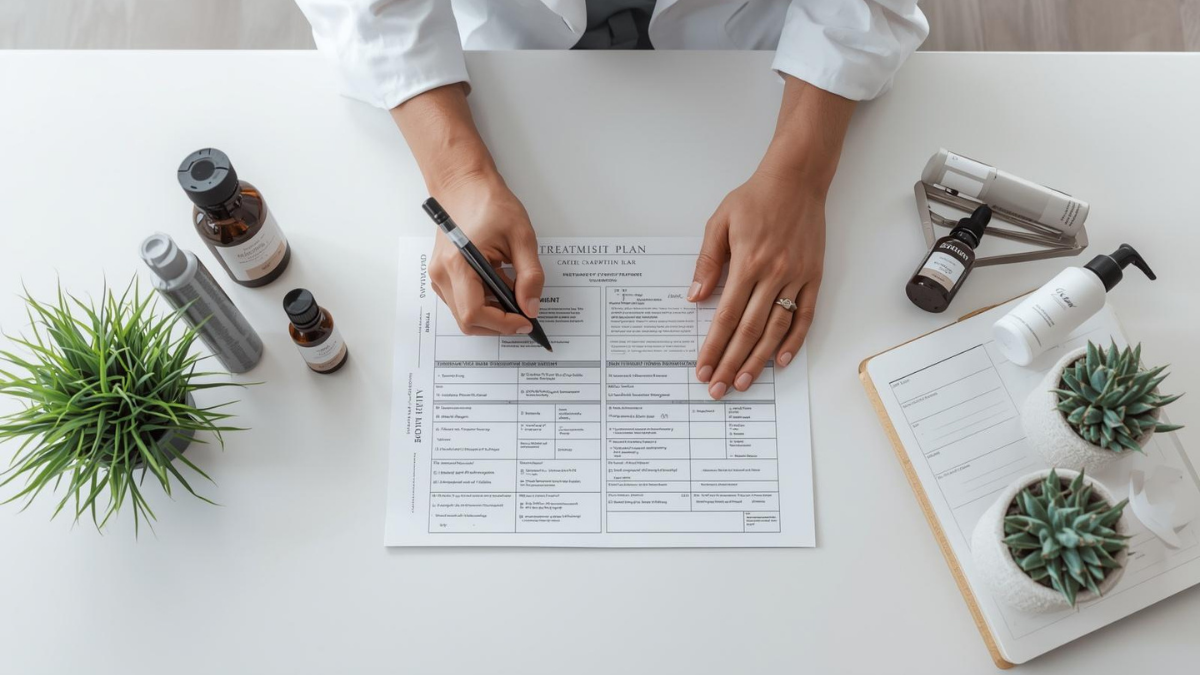
A signature treatment grows when your intake is tight:
ask the few questions that affect the protocol
collect photos if helpful (skin concerns, lash line, brow history)
record sensitivities and products (actives, meds, adhesives)
keep notes that carry forward so the second visit feels effortless
GlowForms helps because the intake can be mobile-first and finished before they arrive, which means the appointment starts with clarity instead of paperwork.
And if you’re building a signature treatment, clarity is the whole thing.
The tell that you’ve nailed it
You’ll know it’s working when clients start using your words.
Not “I booked a facial.”
“I booked your Barrier Reset.”
Not “I’m getting my brows done.”
“I’m getting that lifted natural one.”
That’s when you’re not just providing a service. You’re building a reputation.