3 Ways to Make Your Waitlist Feel Like VIP Access
A client asks for a Saturday lash refill.
You are fully booked.
So you say, “I can add you to the waitlist,” and they reply with a tiny thumbs-up emoji that somehow feels disappointed.
That is the problem with most waitlists.
They sound like a soft no.
A little administrative holding pen.
A place where good clients go to be quietly forgotten.
But a waitlist can feel completely different. Done well, it can make a client feel chosen, looked after, and just close enough to the front of the line that they stay excited instead of wandering off to another salon.
Here are three simple ways to make your waitlist feel less like “maybe later” and more like VIP access.
1. Give the waitlist a reason to exist
“Want to join the waitlist?” is fine.
But it does not feel special.
Try making the waitlist sound like a real part of your client experience, not a backup folder you check when someone cancels.
For example:
“You can join my priority cancellation list for this week. I check it before I post any openings publicly.”
That one sentence changes the whole feeling.
Now the client is not just waiting. They are getting first look.
You can do this for:
Last-minute appointment openings
New treatment launch spots
Patch test availability
Seasonal service dates
Bridal or event prep slots
Model call opportunities
The trick is to be specific.
A “waitlist” feels vague. A “priority cancellation list for March facial appointments” feels useful.
And please, do not make people message you three times just to get on it. Send one clean link, let them fill in what they want, and keep the details somewhere you can actually find later.
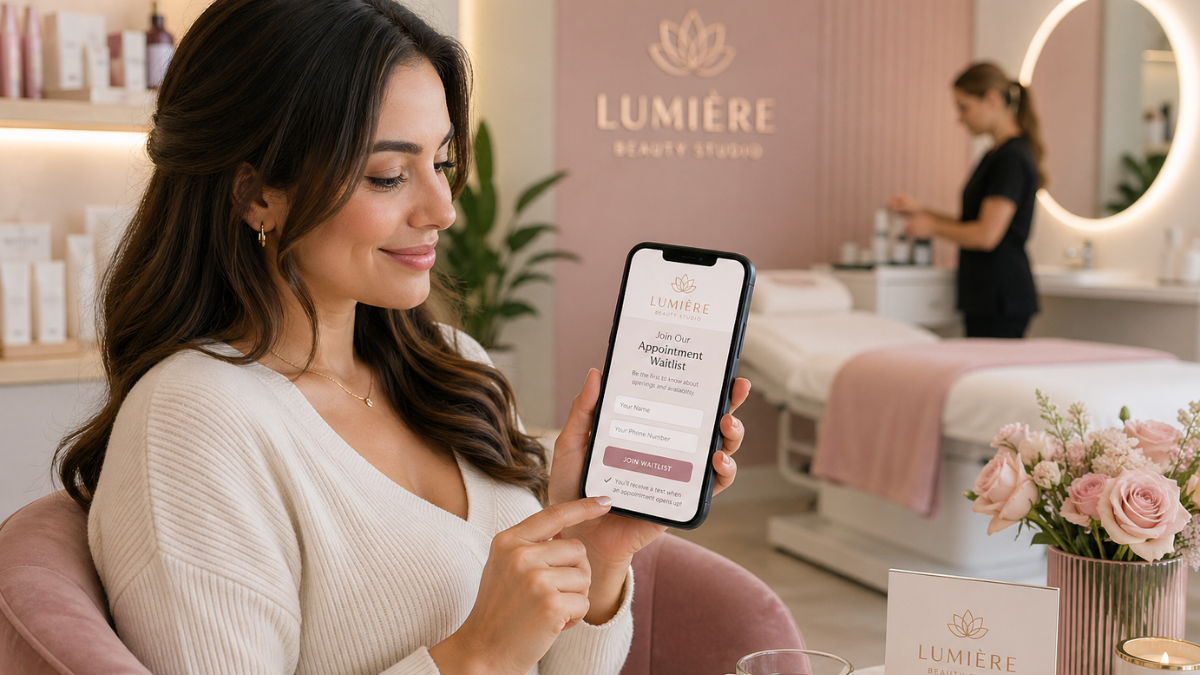
This is where digital forms help. Glow Forms lets beauty professionals create branded, mobile-friendly forms that can be shared by link, email, QR code, or website button, with completed forms stored in a searchable client database.
That means your waitlist form can ask the questions you actually need:
What service are you waiting for?
What days work best?
Are you open to last-minute appointments?
Have you had this treatment before?
Do you need a patch test first?
No screenshots. No buried DMs. No sticky note on the desk that says “Emma lashes???”
2. Make the client feel like you know what they want
Here is where people usually screw it up.
They add someone to a waitlist with almost no context.
Then an appointment opens, and they send a rushed message:
“Hey, I have 2pm tomorrow free. Want it?”
Maybe the client does. Maybe they works nights. Maybe they needed brows, not lashes. Maybe they cannot do school pickup time. Maybe they needed a patch test first and now the slot is useless.
A better waitlist collects preferences upfront.
Not too many. Just enough.
Think of it like a mini consultation before the appointment exists.
For a lash artist, that might be:
Full set or infill?
Preferred style?
Any sensitivities or allergies?
Best days and times?
How much notice do you need?
For an aesthetics studio, it might be:
Treatment interest
Previous treatment history
Medical considerations
Preferred practitioner
Urgency level
For a nail salon, it could be:
Natural nails, BIAB, gel, extensions
Design level
Flexible with tech or specific tech only
Appointment length needed
This makes the client feel understood before they even get a slot.
It also saves you from offering the wrong gap to the wrong person.
A 45-minute cancellation is perfect for a simple brow tidy. It is not perfect for someone wanting a full PMU consultation. When your waitlist has proper details, you are not guessing while half-standing at reception between clients.
You are matching.
That feels polished.
And the client can tell.
3. Keep the waitlist warm without making it annoying
Silence makes a waitlist feel dead.
Too many messages make it feel desperate.
You want the middle.
A client should know three things after they join:
They are on the list.
What happens next.
How they will hear from you.
That can be as simple as a confirmation message:
“Thanks, you are on our priority list for Saturday facial cancellations. If a suitable slot opens, we will contact you by text before posting it publicly.”
That is calm. Clear. Professional.
You can also add a little polish:
“Tip: if you are hoping for a last-minute slot, keep an eye on your messages on Thursday and Friday. That is when most changes happen.”
Now the client feels like they know the system.
They are not sitting there wondering whether you forgot them.
For higher-demand treatments, you can make it feel even more intentional:
“Waitlist clients get first access to new appointment releases before they go on Instagram.”
That is VIP energy without being cheesy.
Just be honest. If you only check the list once a week, say that. If you contact clients in order of flexibility rather than signup time, say that too.
People can handle clear rules.
What they hate is feeling ignored.
A waitlist is still part of your brand
Your waitlist is not separate from the client experience.
It is the client experience.
Especially for someone who has not booked with you yet.
If the waitlist is messy, slow, and vague, they assume the appointment might be the same. If it is clean, branded, and easy to complete from their phone, they feel like they are dealing with a real business that has its act together.
That matters.
Not in a dramatic “this will transform your salon forever” way.
In a very practical way.
The client who feels looked after while waiting is more likely to stay interested, reply quickly, accept a cancellation, and come in already trusting you a little.
So do not treat your waitlist like an apology.
Treat it like the first velvet rope.