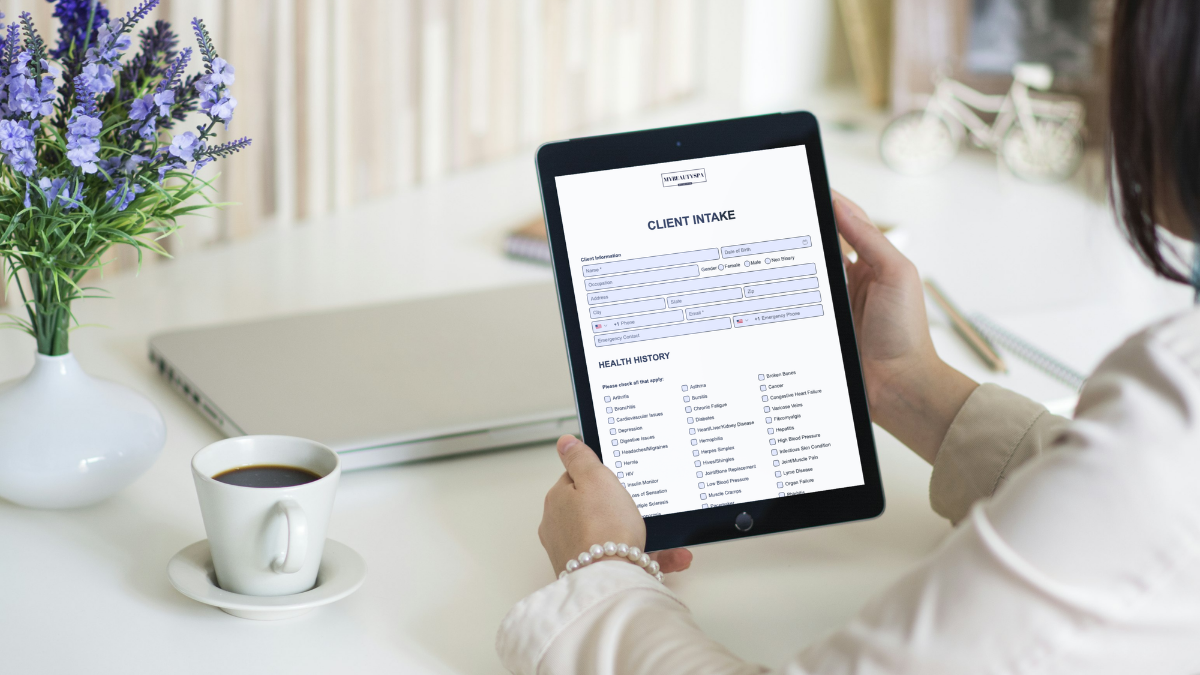
Why Branded Forms Matter More Than You Think
7 min read
A client books a £120 facial.
Your Instagram looks beautiful. Your treatment room is calm. Your website has soft colours, nice photos, and the kind of wording that makes everything feel considered.
Then the client gets a plain form that looks like it was copied from a dentist’s office in 2009.
Tiny text. No logo. No warmth. No connection to your brand at all.
It is not a disaster.
But it does something small and annoying.
It breaks the spell.
Because forms are not separate from your client experience. They are part of it. And if your forms feel clunky, cold, or random, your business feels a little less polished before the client even walks through the door.
Before the treatment, before the mirror selfie, before the warm towel or aftercare card, there is usually a form.
Consent form. Intake form. Medical history form. Patch test form. Consultation form.
It might not feel exciting to you because you see these forms every day. But to a new client, that form is part of their first impression.
They are thinking, even if they do not say it:
“Does this place seem organised?”
“Do they know what they are doing?”
“Is my information being handled properly?”
“Does this feel like a serious business?”
Branding helps answer those questions quietly.
A form with your logo, colours, clear wording, and a smooth mobile layout tells the client, “Yes, this is us. Yes, this is intentional. Yes, you are in the right place.”
A generic form says, “We found this somewhere.”
Maybe that is unfair.
But clients notice signals, not intentions.
Nobody wakes up thrilled to complete a consent form.
That is fine. The goal is not to make paperwork magical.
The goal is to make it feel easy, clear, and like it belongs to the experience they already chose.
A branded form can turn a cold little task into something that feels more natural:
“Before your appointment, please complete your Glow Skin Studio consultation form.”
That feels better than:
“Fill out this form.”
Small difference. Real difference.
Especially when the form opens cleanly on their phone, uses your logo, and matches the rest of your business.
Glow Forms lets beauty professionals create mobile-friendly digital forms for consent, intake, consultation, medical history, treatment records, patch tests, policies, aftercare, and more. Forms can include your logo and brand colours, then be shared by email, link, QR code, or website button.
That means the admin does not feel bolted on.
It feels like part of your salon.
Clients do not only judge your business when something glamorous happens.
They judge it in the boring moments too.
When they book.
When they read your policies.
When they fill out their medical history.
When they sign consent.
When they ask where their information goes.
That is where trust is either strengthened or quietly weakened.
If your form looks messy, outdated, or badly formatted, a client may start wondering what else is messy behind the scenes.
Is that fair? Not always.
But it is human.
A clean branded form gives the opposite feeling. It suggests that you care about the details. That you have a system. That you are not making it up as you go.
For treatments involving allergies, skin reactions, patch tests, medical history, or long-term records, that matters even more.
The client needs to feel beautiful, yes.
But they also need to feel safe.
Here’s where people usually screw it up.
They put so much care into the visible parts of the brand, then let the admin look completely different.
The website is soft beige.
The Instagram is elegant.
The studio smells like eucalyptus and expensive laundry.
Then the form arrives with a random blue header, ugly default font, and wording that sounds like a tax office wrote it during a power cut.
That mismatch is jarring.
Your brand does not stop at your logo wall.
It shows up in every small handoff:
The booking confirmation
The intake form
The consent form
The patch test record
The aftercare instructions
The follow-up message
The consultation notes
You do not need to make everything dramatic.
You just need consistency.
Same business. Same tone. Same level of care.
This is especially useful if you are solo, newly opened, or working from a small studio.
A polished form can make your business feel more established without pretending to be bigger than it is.
You do not need a huge reception desk or a team of staff to look professional.
You need a process that feels clear.
Imagine two lash artists.
One sends a plain message:
“Can you answer these questions before your appointment?”
The other sends:
“Please complete your lash consultation and consent form before your appointment. It only takes a couple of minutes and helps me check allergies, sensitivities, and your preferred style.”
The second one feels more professional before the client has even seen the lashes.
Not because it is fancy.
Because it is organised.
That is the kind of branding people trust.
A form that looks familiar is less suspicious.
If a client clicks a link and sees your logo, your colours, and your business name, they are more likely to feel comfortable completing it.
If they click a random-looking form with no branding, some people will pause.
“Is this the right link?”
“Where is this going?”
“Is this safe?”
That hesitation can lead to ignored forms, late forms, half-completed forms, or clients arriving without anything done.
Then you are back to rushing through questions at the start of the appointment.
Branding does not fix every admin problem.
But it removes one tiny bit of doubt.
And tiny bits of doubt are exactly what make client admin feel harder than it needs to be.
Branding is not just colours.
It is also how your form sounds.
A cold form says:
“Declare all contraindications prior to service.”
A better form says:
“Please tell us about any allergies, sensitivities, medication, recent treatments, or medical conditions that could affect your appointment.”
Same purpose.
Much more human.
You can still be professional without sounding like a legal document wearing heels.
Your form should sound like your business on its most clear, calm, grown-up day.
Not too cute. Not too stiff. Just clear.
For example:
Instead of: “Failure to disclose relevant information may result in adverse outcomes.”
Try: “This helps us choose the safest treatment for you. Please answer honestly, even if you are unsure whether something matters.”
That kind of wording builds trust.
And yes, it is branding.
A beautiful form that misses key information is not a good form.
The point is not just to make admin look nice.
The point is to make it easier for clients to give you the information you need.
So before worrying about colours, check the basics:
Is the form easy to complete on a phone?
Does it ask the right questions for the treatment?
Is optional consent separate from required treatment consent?
Can the client understand what they are agreeing to?
Can you find the completed form later?
Does it create a proper record if something goes wrong?
This is where paper gets messy fast.
A form might look fine on a clipboard, then disappear into a drawer, get filed under the wrong name, or become impossible to search when a client comes back six months later.
With Glow Forms, completed forms are stored digitally in a searchable client database, which helps beauty businesses keep client records organised instead of scattered across paper piles, PDFs, inboxes, and screenshots.
That is not just a branding win.
That is a sanity win.
A branded form will not save a bad treatment.
It will not make a rude welcome feel warm.
It will not replace skill, hygiene, training, or good client care.
But it does support all of those things.
It tells the client, “We thought about this part too.”
And that matters more than people admit.
Because clients are not only paying for the treatment result. They are paying for the feeling that they are in capable hands.
A branded form is one of the smallest ways to create that feeling.
Small, yes. But not pointless. Your forms are not just admin.
They are your brand, asking important questions before the treatment begins.
Make them look like they belong to you.
Luxury in beauty is rarely about expensive décor. Small details, smoother systems, and thoughtful client care create a far more premium experience.
Gifts don’t need bows and big budgets. Use small, thoughtful touches—welcome kits, milestone notes, minis at the mirror—that feel personal and spark rebooks.

The right pre-booking questions save time, prevent mismatched appointments, and help new clients feel clearer, safer, and easier to guide from the start.