Renting a Room vs. Opening a Studio: Pros, Cons & Surprises
A lot of beauty businesses reach the same awkward crossroads.
You’ve outgrown the spare corner, the mobile setup, or the chair you rent a few days a week. Clients are coming back. Your work is better. Your confidence is up. And now the question gets louder:
Do I rent a room somewhere else, or do I open my own studio?
It sounds like a business decision. And it is. But it’s also a lifestyle decision, a stress decision, and a “what kind of day do I actually want to live inside?” decision.
Because these two paths can both look exciting from the outside while feeling very different once you’re in them.
I’ve seen people assume opening a studio is the obvious “next level” move. Sometimes it is. Sometimes renting a room is the smarter move by miles.
Here’s the honest version.
Renting a room: the lower-risk step that teaches you a lot
Renting a room is usually the cleaner first jump.
You get your own space. More privacy. More control over the client experience. Less noise. Less waiting around someone else’s timetable. You can start building something that feels like your brand without carrying the full weight of a standalone business premises.
That’s the appeal.
And for a lot of solo beauty professionals, it’s a very good move.
The pros of renting a room
The biggest benefit is usually lower pressure.
You are not carrying the full cost and responsibility of an entire studio. You’re stepping up, but not all the way.
That often means:
lower overhead than a full studio
faster setup
less money tied up in furniture, fit-out, and monthly expenses
a simpler way to test demand in a new area
more privacy and professionalism than a shared chair or mobile setup
It can also help you refine how you work before you go bigger.
You learn what clients actually care about in a private space. You learn what treatments perform best. You learn how much storage you really need, what your turnaround times feel like, and how much control you actually want over the environment.
That learning matters.
The cons of renting a room
Here’s the catch: a rented room still comes with someone else’s rules wrapped around it.
You may not control:
the entrance experience
reception standards
noise outside your room
opening and closing times
branding across the wider space
who else works there
how polished the overall business looks
That mismatch can get annoying fast.
Your treatment room might be beautiful, but if the front desk feels chaotic or the waiting area looks tired, the client still experiences all of it as one visit.
That’s one of the first surprises people run into.
Another one is that renting a room can feel “temporary” longer than expected. You think it’s the next step for a year, and suddenly you’ve been there three years, working around limitations you’re quietly fed up with.
Not always a disaster. But it happens.
Opening a studio: more freedom, more pride, more weight
Opening your own studio gives you the thing most beauty professionals crave after a certain point: control.
You choose the look. The layout. The pacing. The atmosphere. The music. The policies. The branding. The standards. The tiny details clients remember without even realising they noticed them.
That kind of control is powerful.
It can also be expensive, tiring, and weirdly emotional.
The pros of opening a studio
The best part is obvious: it is yours.
You can build the experience exactly how you want it.
That means:
your branding is consistent from the door onward
your client journey feels more intentional
your business looks more established
you can shape policies and systems around how you actually work
there is room to grow into retail, team members, or extra services later
For some clients, a studio also signals permanence. It can make your business feel more serious, more trusted, and more premium.
And yes, that can influence pricing confidence too.
When the full environment matches the quality of your work, it becomes easier to position yourself properly.
The cons of opening a studio
Now the less glamorous bit.
A studio is not just more freedom. It is more responsibility in every direction.
More rent. More bills. More setup costs. More admin. More pressure to fill the diary consistently. More things to fix when something goes wrong.
And the money pressure hits differently when the room is fully yours.
A slow week in a rented room is annoying. A slow week in your own studio can feel personal.
That’s not me being dramatic. It’s just how overhead works.
Then there’s the invisible workload: cleaning standards, stock, signage, client flow, paperwork, records, policies, forms, maintenance, all the unphotogenic bits that suddenly belong to you.
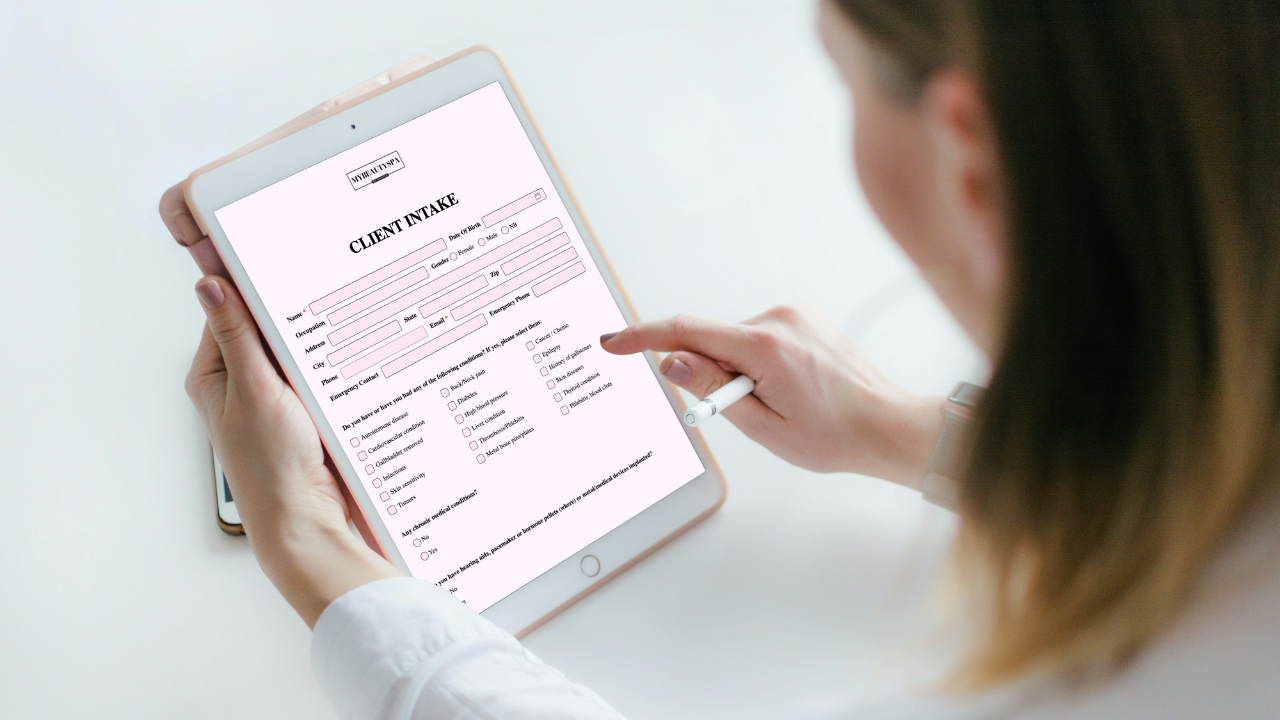
This is where having clean systems matters more than people expect. Glow Forms is built for beauty professionals who want the business to feel more organised and professional without adding tech headaches, replacing paper forms and random PDFs with branded digital intake, consent, consultation, medical history, treatment record, patch test, and policy forms in one searchable system. For a studio owner, that matters because the more of the experience you control, the more obvious messy admin becomes.
The surprise nobody talks about enough: space changes your confidence
Here’s something I’ve noticed.
The space you work in changes how you present yourself.
A rented room can make some people feel focused and scrappy in a good way. Lean. Capable. Not overextended.
For other people, it keeps them playing smaller than they need to.
A studio can make some people step up beautifully. Better boundaries. Better pricing. Better systems. Better brand presence.
For other people, it becomes a pressure cooker they moved into too early.
That’s why this decision is not really about which option looks more impressive on paper.
It’s about which setup your current business can actually carry well.
What renting a room teaches you before a studio
This is why I often think rented rooms are underrated.
They show you the truth.
Not the fantasy version of running your own space. The real one.
You get clearer on:
how many clients you can realistically attract
which days are consistently strong
whether your pricing supports private-space overhead
how much admin you create for yourself
whether your branding and client process actually feel solid enough to scale
That last one matters a lot.
If your booking flow is messy, your consultation process is inconsistent, or your records live in too many places, a bigger space won’t fix that. It usually just makes the cracks more obvious.
Glow Forms is designed around exactly those pain points for salons, spas, estheticians, nail techs, lash artists, PMU artists, massage therapists, and similar beauty businesses, with mobile-friendly digital forms, QR code sharing, email links, website buttons, branded customisation, and a searchable client database. It is positioned to help beauty owners look more serious and stay organised without needing an agency or IT person.
That kind of system matters in either setup. But it matters even more when you are trying to grow into a space that feels polished.
The money question is not just “Can I afford it?”
People ask this the wrong way all the time.
They ask, “Can I afford to open a studio?”
The better question is: Can my current business support a studio without making me resent it?
Those are not the same thing.
You might technically be able to scrape it together. Deposit, furniture, paint, lighting, signage, stock, first month, backup month.
But if the cost means you say yes to every awkward booking, undercharge, skip days off, and panic every time there’s a cancellation, the studio is now running you.
That’s not freedom. That’s a prettier cage.
A rented room often gives you more breathing room while you strengthen pricing, retention, and systems first.
And honestly, breathing room is underrated.
Client experience matters in both setups
Clients do not only judge the treatment. They judge the whole shape of the experience.
How easy it was to book.
Whether your forms felt professional.
Whether they knew what to expect.
Whether the space felt calm.
Whether you looked organised.
Whether the follow-up felt clear.
That is true whether you rent a room or run a studio.
The difference is that in a studio, every weak point is yours to solve. In a rented room, some of them belong to the building or business around you.
That can be frustrating. It can also be a relief.
If you want more control over the administrative side without making the process complicated, Glow Forms supports branded forms, logo and colour matching, mobile completion, secure searchable records, and sharing by QR code, link, email, or website embed. That helps beauty businesses create a cleaner first impression and smoother check-in flow, which matters whether you are working from one private room or a full studio.
Which option suits which stage?
There’s no universal answer, but here’s the shape of it.
Renting a room usually makes more sense when:
you are moving out of a shared or mobile setup
you want more privacy without huge overhead
you are still refining your service mix
you want to build confidence before taking on a full premises
your bookings are growing, but not predictably packed yet
Opening a studio usually makes more sense when:
your demand is steady enough to support the extra cost
your pricing can carry the space
you are ready to own the full client experience
you want a stronger brand presence
you are thinking beyond just “a room for me” and toward a fuller business setup
Notice what’s not on that list: ego.
That part is worth watching.
Opening a studio because it looks like the “proper” next move is how people end up overcommitted. Renting a room because you’re scared to be seen properly can hold you back too.
You want the choice that fits the business, not the one that flatters your identity for five minutes.
The best choice is the one that leaves you room to work well
That’s really it.
Not the flashiest one. Not the one that sounds bigger at dinner. Not the one other people in the industry post about.
The right move is the one that lets you do good work, stay organised, protect your energy, and build something sustainable.
For some beauty professionals, that is a rented room with tight systems, low stress, and a polished client experience.
For others, it is a studio they are fully ready to grow into.
Both can work.
But they solve different problems.
And if you choose with clear eyes instead of pure ambition, you usually end up in a much better place.