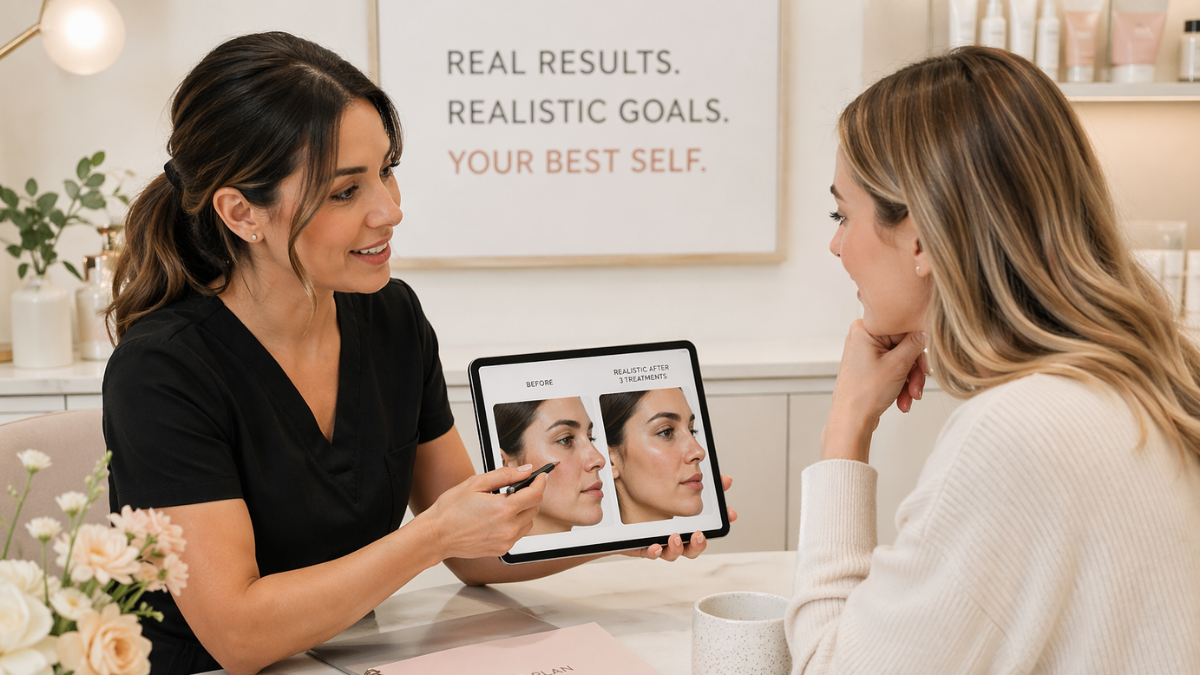
How to Handle Clients Who Bring Screenshot Expectations
7 min read
The phone comes out before you’ve even fully started the consultation.
“I want this exact look.”
Maybe it’s a wispy lash set from Instagram. Maybe it’s glossy chrome nails shot under studio lighting. Maybe it’s healed PMU brows photographed two weeks after the appointment, filtered, edited, and cropped so tightly you can’t even see the real skin texture.
And now the pressure is sitting in your lap.
This is where a lot of beauty professionals get trapped. Not because they can’t do good work, but because they try to be agreeable too early. They nod, say “yes, we can do something like that,” and only later realize the client heard, “yes, I can recreate that exact screenshot.”
That gap is where complaints start.
Let’s be honest. Clients bringing screenshots is normal. It can actually help.
The problem is when the screenshot turns into a promise.
A reference photo shows preference. It does not show skin condition, natural lashes, previous work, undertones, healing behavior, face shape, pain tolerance, maintenance habits, or how much editing was slapped on the original image before your client saved it.
I’ve seen this go wrong in tiny ways and expensive ways.
A lash client brings a dense, dramatic set, but her natural lashes can’t safely hold that weight. A nail client wants a shape that looked gorgeous on long, narrow fingers and ends up hating it on her own shorter nail beds. A PMU client shows a healed result from someone with different skin, different previous pigment, and different aftercare habits.
The smart move is to treat the screenshot like a conversation starter, not a finish line.
You do not need to be rude. But you do need to be clear.
Something as simple as this works:
“That’s a great reference for style, but your result will be based on your features, your starting point, and what’s safe for your treatment today.”
That sentence does a lot of work.
It tells the client you’re listening. It keeps you positioned as the professional. And it quietly removes the idea of an exact clone.
Here’s where people usually screw it up: they soften the truth so much that it stops being useful.
They say “we’ll try our best,” which sounds polite but leaves too much room for fantasy. Better wording is specific wording.
Try this instead:
“I can absolutely use this as inspiration. What I want to do first is show you what will translate well for you, what may need adjusting, and what I wouldn’t recommend.”
That’s calm. Clear. Professional. No drama.
Clients handle limitations much better before the service than after it.
So don’t just explain the difference. Point to it.
If you’re a lash artist, explain what their natural lash health can support. If you’re doing brows, talk about skin type, previous pigment, and healing. If it’s nails, talk shape, length, lifestyle, and durability. If it’s facials or advanced aesthetics, talk timeline. A screenshot often shows a final result, not the path to get there.
This is also why consultation forms matter more than people think. When you collect goals, concerns, treatment history, allergies, and notes before the appointment, you walk into the conversation with context instead of guessing. Tools built specifically for beauty professionals make that easier by letting you send branded, mobile-friendly consultation and consent forms before the visit, then keep the completed forms and treatment records in one searchable place.
That matters because memory is sloppy. Records are not.
A spoken conversation helps. A written one protects you.
This is the part many busy salon owners skip because it feels “too formal.” Then a client says, three days later, “That’s not what I asked for,” and now you’re arguing with a screenshot and your own foggy memory.
You want a clean paper trail. Or better, a digital one.
Your consultation or consent form should give you space to record things like:
the client’s goal
the realistic outcome discussed
any limitations you explained
the agreed approach for today’s appointment
That way, if the client showed you a mega-volume lash photo but you agreed on a softer set because of lash health, that choice exists somewhere outside your head.
And here’s the catch: written notes are not just for worst-case scenarios. They also make you look organized, thoughtful, and hard to rattle. Clients feel safer when the process looks solid.
A screenshot can still be useful when you break it into parts.
Don’t respond to the whole image like it’s one giant yes or no. Pull it apart.
Maybe the client likes the overall shape but not the density. Maybe she likes the color tone but not the finish. Maybe she likes how soft the brow front is, but the saturation through the tail would heal badly on her skin. Once you isolate what she actually likes, the conversation gets easier.
You stop debating the image and start designing the treatment.
That’s the shift.
Instead of “Can you do this exact look?” the appointment becomes “Which parts of this look are right for you?”
That’s a much better question.
This sounds obvious. It isn’t.
A lot of professionals say yes because they want to avoid awkwardness at check-in. But the awkwardness doesn’t disappear. It just moves.
It moves to the reveal.
It moves to the follow-up message.
It moves to the refund request.
It moves to the review you now have to respond to.
There is nothing professional about overpromising.
Sometimes the right move is:
“I wouldn’t be comfortable promising that result from where we’re starting today.”
That sentence has saved a lot of unnecessary mess.
Clients may not love hearing it in the moment, but serious clients usually respect honesty. And the ones who punish honesty often would have punished imperfect results too.
Some screenshot expectations are really healing expectations.
That’s especially true with brows, skin treatments, PMU, peels, and anything where the “final” look changes over days or weeks. A client sees a polished online photo and assumes that’s what they should see immediately.
So spell it out.
Tell them what today’s result will look like.
Tell them what will settle.
Tell them what may fade, soften, flake, swell, or shift.
Tell them when they should judge the real outcome.
Then send that information properly instead of hoping they remember it while checking their phone and putting their coat on. Email links, pre-care and aftercare forms, and easy-to-open mobile pages make a big difference because clients can actually revisit the instructions later instead of texting you in a panic at 10:47 p.m. asking whether something “looks weird.”
A client with screenshot expectations is not automatically difficult.
Sometimes she’s just nervous and trying to communicate in the only way she knows how. She doesn’t have beauty-industry language. She has a saved photo and a hope.
Your job is not to shame that.
Your job is to translate it.
But you’re not there to act like a copy machine either.
The sweet spot is calm authority. Not cold. Not apologetic. Just clear enough that the client understands two things at once:
You heard what she wants.
You are still going to make professional decisions.
That balance is where trust lives.
A new lash client books.
You send a consultation form before the appointment.
She fills it out on her phone and uploads or references the style she likes.
You review her notes before she arrives.
At the consultation, you explain what will translate well, what won’t, and why.
You note the agreed style in her treatment record.
She signs off.
After the appointment, she gets aftercare instructions in writing.
Nothing about that is flashy. That’s why it works.
It prevents the stupid problems. The avoidable ones. The ones that eat your energy more than your time.
And that’s really the point.
The goal is not to win an argument about a screenshot. The goal is to make sure the argument never starts.

Most blow-ups aren’t about skill—they’re about fuzzy expectations. Here are five common miscommunications and simple ways to prevent each one.
Gifts don’t need bows and big budgets. Use small, thoughtful touches—welcome kits, milestone notes, minis at the mirror—that feel personal and spark rebooks.
The right pre-booking questions save time, prevent mismatched appointments, and help new clients feel clearer, safer, and easier to guide from the start.