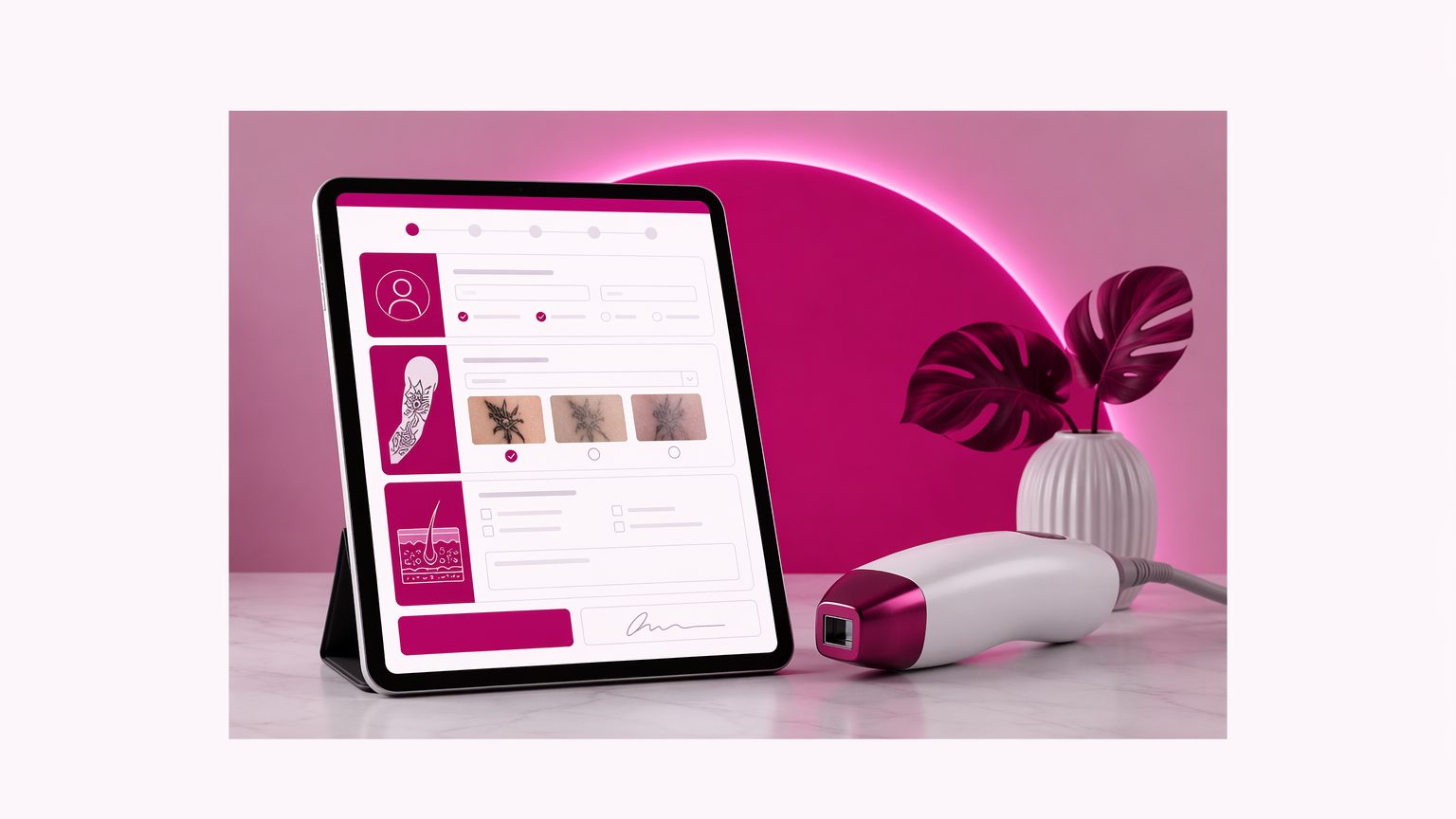
How to Create a Client Intake Form for Tattoo Removal Clinics That Screens for Skin History, Prior Ink, and Healing Expectations
A strong tattoo removal client intake form does more than collect a name and phone number. It helps your clinic gather the details you need before the appointment, prepare for a more focused consultation, and document client disclosures and consent in one place. Because tattoo removal often involves skin history, prior ink details, and realistic healing expectations, the intake usually needs to go deeper than a standard beauty service form. It can support better prep and clearer communication, but it does not replace clinical judgment or legal advice.
What makes tattoo removal intake different
A basic salon or spa intake form may cover contact details, allergies, and a short health checklist. A client intake form for tattoo removal clinics usually needs more.
Before the client arrives, providers often need to understand:
- Skin history and sensitivities
- Tattoo age, size, colors, and placement
- Prior cover-up or removal attempts
- Treatment goals and aftercare readiness
That extra detail reduces back-and-forth at check-in and gives staff a clearer picture before the consultation starts. A mobile-friendly tattoo removal intake form also makes the client experience easier, especially when clients can complete it on their phone before the visit.
Start with essential client details
Begin with the basics:
- Full name
- Date of birth
- Phone number
- Email address
- Emergency contact, if appropriate for your practice
You can also include a preferred communication method for reminders or follow-up instructions if your clinic uses them. If your policies require age confirmation or ID review, add a simple acknowledgment or upload prompt. End this section with a clear statement that the client is responsible for updating any changes to their information.
Include a focused skin history section
A skin history intake form for tattoo removal should stay practical and easy to answer. Ask about concerns that may affect provider review or treatment planning, such as:
- Skin sensitivity
- History of scarring or keloids
- Pigmentation concerns
- Eczema, psoriasis, or dermatitis
- Recent sun exposure or tanning
- Self-tanner use
- Current irritation in the treatment area
It also helps to ask about allergies, especially to topical products, numbing agents, adhesives, latex, or aftercare ingredients when relevant to your process.
Use checkboxes plus one short text field like “Please share details if needed.” That gives clients room to explain without turning the form into a wall of text. You can also add a neutral question about whether they are currently under the care of a physician or dermatologist for skin-related concerns.
Document medical and treatment-related history carefully
Your tattoo removal consultation form may also include a general health history section, but only to the extent that fits your clinic’s intake process and scope.
Consider asking about:
- Current medications
- Recent procedures in the treatment area
- Prior reactions to laser treatments, if applicable
- Anything that may affect healing or require provider review
If pregnancy or nursing is part of your clinic’s established screening process, include that question in plain language. Avoid jargon. Clients are more likely to answer accurately when questions are short and clear on mobile.
A simple acknowledgment can help here too: the client confirms they have disclosed relevant history completely and can discuss details further during the consultation.
Capture prior ink details in a tattoo history section
A dedicated tattoo history form is one of the most important parts of intake. This is where you learn what you are actually evaluating.
Ask for:
- Tattoo location on the body
- Whether the goal is full removal, fading for a cover-up, or partial removal
- Approximate age of the tattoo
- Professional or amateur application
- Known ink colors
- Approximate size
- Layering, cover-up history, or rework
Also ask whether the tattoo has been treated before, including previous removal attempts, fading methods, or cover-up work. If your system supports it, let clients upload photos in advance. That can make case review easier and lead to a more informed conversation when they arrive.
Ask about the current condition of the treatment area
The form should also screen for what is happening right now in the area to be treated. Keep this section neutral and practical.
Include questions about:
- Active irritation
- Broken skin
- Rash or infection concerns
- Recent shaving or waxing
- Healing issues in the area
- Recent use of creams, exfoliants, or numbing products, if relevant to your prep process
This part of the client consent form for tattoo removal helps flag when an area may need closer in-person review before proceeding.
Set healing expectations early
Good intake does not just collect history. It also helps surface expectations.
Add a section that asks what the client expects in terms of:
- Timeline
- Fading speed
- Comfort level
- Appearance between sessions
- End goal
Then include simple acknowledgment statements such as:
- Healing varies by person
- Multiple sessions may be needed
- Results depend on tattoo characteristics and skin response
- Aftercare instructions matter
A short-answer question like “What outcome are you hoping for?” can reveal unrealistic assumptions before the consultation. This section supports better conversations and helps make expectations around healing expectations tattoo removal more realistic from the start.
Add consent, policy, and signature sections
Your tattoo removal consent form should reflect your clinic’s process and be reviewed by legal or compliance counsel when needed. In many cases, the form should include acknowledgments for:
- Accuracy of the information provided
- Consent to treatment discussion
- Communication preferences
- Photo consent, if applicable
If you use photos for marketing or promotional purposes, keep that optional release separate from required treatment-related consent. Clients should be able to make clear choices.
Finish with:
- E-signature
- Printed name
- Date
Digital signatures are especially useful because records are easier to search, retrieve, and review later.
Use smart form design to improve completion
Even a thorough client intake form for tattoo removal clinics should feel easy to complete.
A few best practices help:
- Group questions into short sections
- Use conditional logic for follow-up questions
- Stick to checkboxes, dropdowns, yes/no toggles, and short text fields
- Add brief explanations next to more complex questions
- Keep the layout mobile-friendly
A drag-and-drop builder also makes updates easier as your workflow changes over time.
Common mistakes to avoid
Tattoo removal clinics often run into the same intake problems:
- Asking too few questions, then re-collecting details during the appointment
- Using vague questions that produce unusable answers
- Mixing required consent with optional marketing consent
- Forgetting to ask about cover-ups or prior removal attempts
- Skipping expectation-setting around healing and results
- Relying on paper forms that are hard to read, misplace, or search later
A better tattoo removal consultation form saves time on the front end and creates cleaner records on the back end.
Review your form before launch
Before finalizing your digital intake forms for clinics, check that every question serves a clear purpose. Review wording for clarity on small screens. Make sure the form matches your actual workflow from booking to consultation to aftercare. If needed, have legal or compliance counsel review your consent language. Then test the form with front-desk staff or practitioners so you can catch friction before it goes live.
Build a better tattoo removal intake process
A well-designed tattoo removal client intake form should screen for skin history, prior ink details, and healing expectations in a format that is easy for clients to complete and easy for staff to review. When your intake is clear and organized, consultations run smoother, records stay cleaner, and clients walk in better prepared.
If you want a simpler way to build a tattoo removal intake form, collect signatures, and keep records searchable in one place, GlowForms can help you create digital intake forms that fit your clinic’s workflow.