Client Consultation Forms For Beauty Salons
The consultation is where most salon chaos is born.
Not during the treatment. Not at checkout.
It starts right at the beginning, when you ask a client what they want and they say something like:
“I don’t know… just make it nice.”
Or worse:
“No allergies.” (Then you find out about a reaction halfway through.)
A good consultation form fixes that. Not by asking a million questions. By asking the right ones, at the right time, in a way people can actually answer.
And yep—GlowForms has client consultation forms built for exactly this.
What a consultation form is really for
Let’s strip the fluff away.
A consultation form should do three things:
Help you deliver a better result (preferences, goals, “don’t do this” boundaries)
Keep the client safe (allergies, sensitivities, contraindications)
Protect your time (so you’re not doing a mini-interview at reception)
That’s it. If your form doesn’t do one of those, it’s probably just noise.
The biggest myth: “Clients hate forms”
Clients don’t hate forms.
They hate:
forms that feel like homework
forms that don’t work on phones
forms they have to fill while you’re hovering
forms that ask irrelevant questions (that you clearly won’t use)
When a form is short, clear, and mobile-first, most clients actually like it. It makes them feel like you’re organized and taking them seriously.
The real-world problems consultation forms prevent
Here’s what I see over and over in studios that don’t use a proper form:
A client books a brow service and expects a totally different style.
A lash client “forgot” they started a new serum.
A facial client doesn’t mention actives until you’re already cleansing.
A new client arrives late and you lose 10 minutes to paperwork.
A regular assumes you remember everything—and you’re too busy to pretend you do.
Consultation forms catch these before they become awkward conversations.
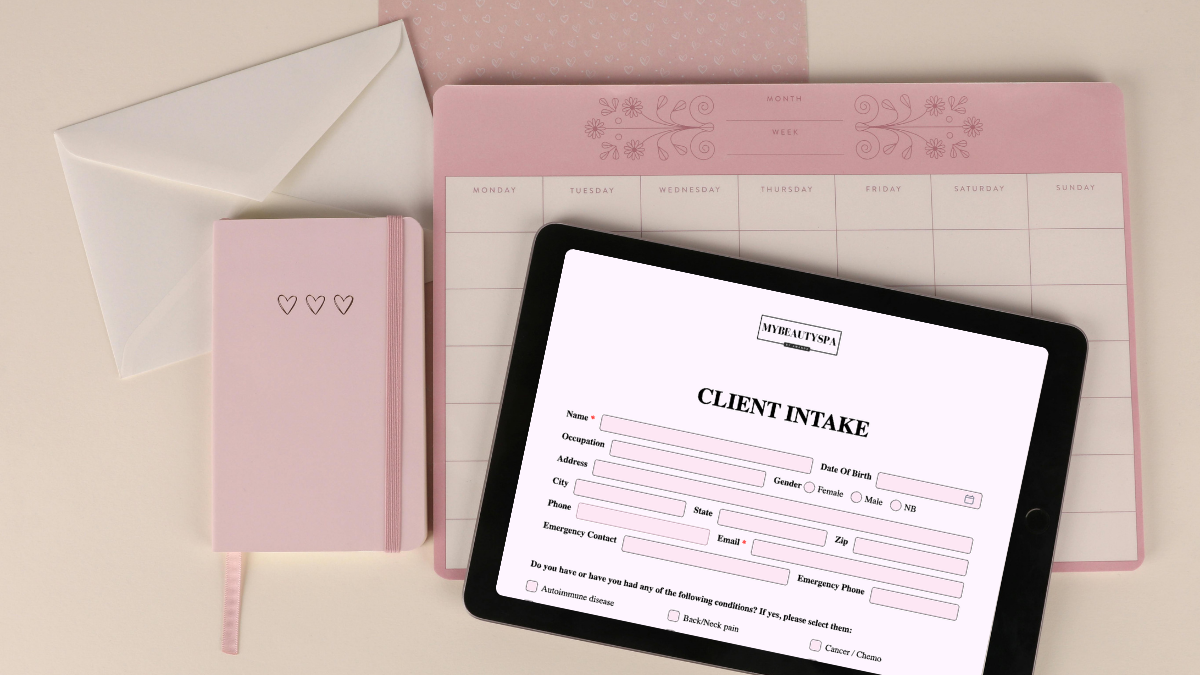
What to include (keep it lean)
A consultation form doesn’t need to be long. It needs to be useful.
The “result” section
This is the part that prevents disappointment.
What look are you going for? (natural / defined / full / dramatic)
Anything you definitely want to avoid?
Any reference photos? (upload)
One good preference question can save you an entire complaint later.
The “safety” section
This is where you protect the client and your business.
allergies or sensitivities (with examples)
new skincare/meds/treatments recently
past reactions to similar services
Don’t rely on a generic “any allergies?” question. People genuinely don’t know what counts.
The “experience” section
This is how clients feel “seen” without you having to guess.
quiet appointment? yes/no
fragrance sensitivity? yes/no
anything that helps you feel comfortable today?
These are small, but they create loyalty fast.
Why GlowForms forms work better than paper (and most generic builders)
Paper forms have three special talents:
people rush them
handwriting goes feral
they disappear exactly when you need them
GlowForms fixes those pain points because consultation forms are:
mobile-first (clients can finish on their phone)
easy to complete ahead of time (so you start on time)
saved to the client record (so details don’t live in someone’s memory)
And the underrated feature: intake reminders.
GlowForms reminders aren’t “don’t forget your appointment” messages. They’re gentle nudges to complete the form before arrival—so you’re not discovering key info with product open.
A tiny story that shows the difference
A new lash client arrives. Lovely, polite, says she’s “not sensitive.”
But because she completed the consultation form the night before, you already saw:
she’s been using a lash serum
she reacted to an adhesive once
she wants natural, not dark
So instead of doing the awkward chair interrogation, you simply say:
“Thanks for filling the form—because you’ve reacted before, we’ll use the gentler option and keep it soft.”
She relaxes instantly. That’s what forms are for. Calm.
How to introduce consultation forms without annoying clients
The key is framing.
Don’t call it “paperwork.” Call it what it is: prep.
A line that works:
“Please complete your quick consultation form before you arrive so we can tailor your treatment and keep everything safe.”
That’s professional. It also makes clients more likely to take it seriously.
The clean setup that works for most salons
Send the form link right after booking
Use GlowForms intake reminders to nudge completion if it’s not done
Keep a QR code at reception as backup
Review key flags before you start: allergies, actives, preferences
Add one or two notes after the service so next time feels effortless
No drama. No clipboards. No guessing.
Consultation forms aren’t about being “fancy.” They’re about doing great work consistently, even on your busiest day.