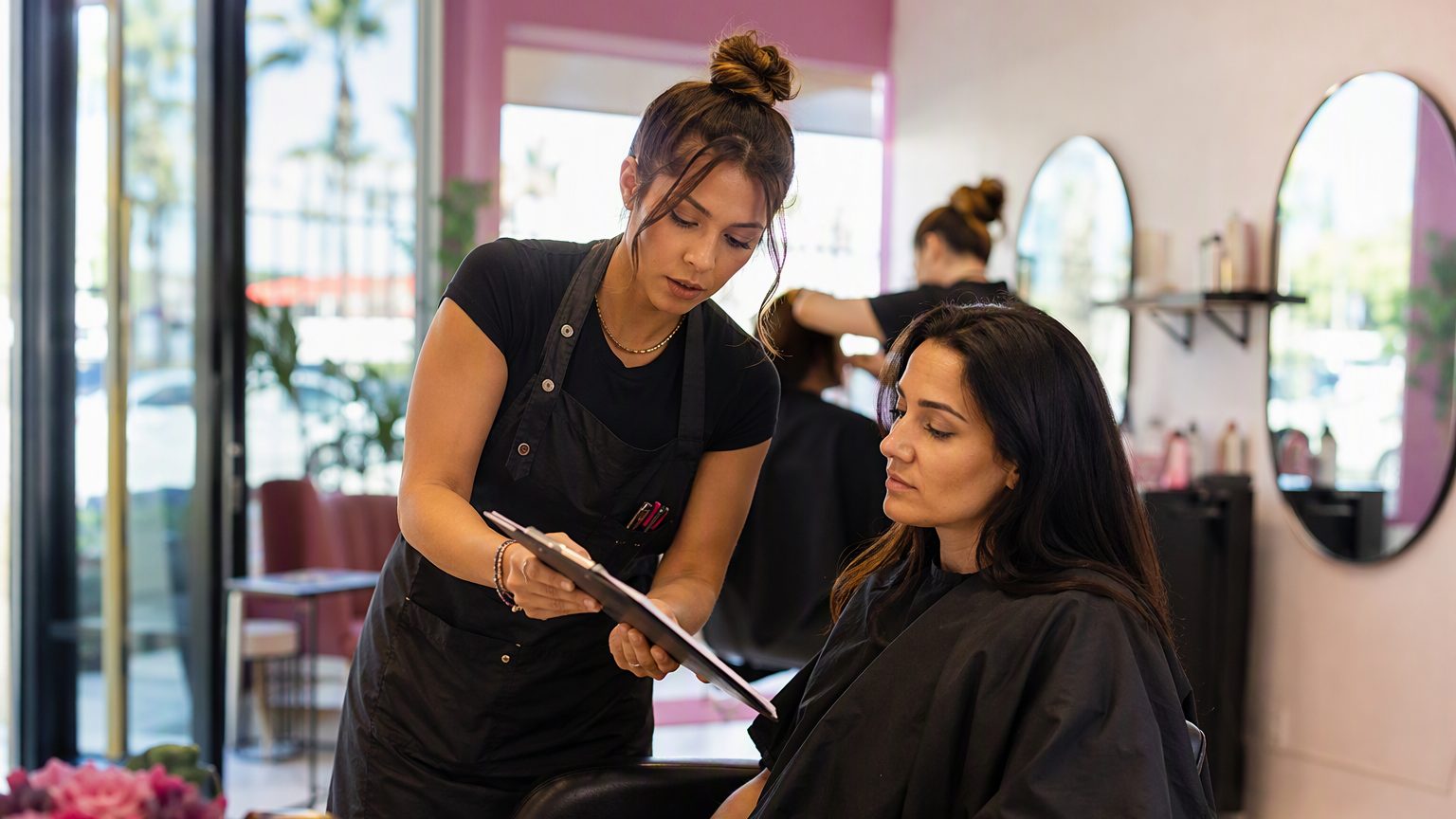
Why Booth Renters Need Their Own Client Forms Inside a Shared Salon
Working in a shared salon does not mean you share every part of the business. That is especially true with booth renter client forms. You may work under the same roof as other providers, but if you book the service, perform the treatment, and manage the client relationship, you need your own intake and consent process too.
For booth renters, paperwork is not just a front-desk task. It is part of how you collect the right information, document consent, and keep client records tied to your own services. A shared salon form can help with general check-in, but it often does not cover what you specifically need.
What booth renters are responsible for in a shared salon
Most booth renters run their own small business inside a larger space. That usually means you handle your own appointments, service menu, pricing, policies, and client communication.
Even in salons with a front desk, provider-level intake still matters. A lash artist may need sensitivity questions. An esthetician may need skin history. A nail tech may want to note allergies or previous product reactions. The salon may welcome the client, but you are still the person providing the service.
That is why independent beauty professional client forms should match the treatments you actually offer, not just the general operations of the salon.
Why shared salon forms are not always enough
A house form is often broad by design. It may collect basic contact information and a simple signature, but that does not always help you if your services require more detail.
One form rarely fits every specialty
Shared salon client intake can fall short when different providers offer very different services. A general form may miss questions that matter for:
- lashes and brows
- facials and skincare treatments
- nails
- massage
- PMU
- injectables
It may also leave out your own cancellation policy, refill window, photo consent language, or communication preferences. When forms are too generic, clients may not be clear on what they agreed to or which provider collected the information.
The biggest risks of relying only on house forms
Using only shared paperwork can create avoidable problems during a normal salon day.
Missing details before the appointment
If the form does not ask service-specific questions, you may not get important history before the client arrives. That can slow down the appointment and lead to back-and-forth at check-in.
Confusing signatures and consent
If a client signs one general salon form, it may be unclear what they consented to and whether it applies to your exact service. That is not ideal when you need clean records tied to your work.
Slower recordkeeping
When forms live in a shared binder, front-desk folder, or mixed filing system, it can be hard to find what you need quickly. Good beauty business recordkeeping depends on easy access to past forms and notes.
Blurred business boundaries
Shared intake can also create confusion around who owns the records and who should reference them later. If you operate independently, your records should support your own business, not disappear into a general salon pile.
When your services require your own intake questions
Some services need more tailored screening than others. That is where client forms for booth renters become especially important.
A lash artist may need to ask about eye sensitivity, contact lenses, or previous reactions. An esthetician may need skincare history, current products, medications, or recent exfoliation. A brow artist may want to know about skin sensitivity or past tint reactions. For PMU or similar services, consent and history questions may be even more specific.
Your form should fit your service flow. If you offer more than one treatment type, you may need separate forms or conditional questions that change based on what the client booked.
Why your own client forms improve the client experience
Clients feel more confident when the form they receive clearly matches their appointment. It feels organized, relevant, and professional.
Better forms create smoother check-in
Mobile-friendly digital intake forms for salon booth renters can be sent before the visit, so clients complete them on their phone instead of filling out paperwork in the chair. That shortens check-in and gives you time to review answers before the appointment starts.
Clear forms also help set expectations. You can include your service consent, aftercare notes, policies, and communication preferences in one place. That makes the whole visit feel more polished.
How separate forms help you stay organized
When your client records are separate, your workflow gets easier. You can keep forms, notes, and signed documents in one searchable place tied to your business.
That matters on repeat visits. Before a returning client arrives, you can quickly review their history, check previous notes, and prepare for the service. It also helps with rebooking, future recommendations, and consistent documentation over time.
Most importantly, you are not depending on someone else’s paper stack, filing cabinet, or memory.
What to include in a booth renter client form
Your salon booth rental paperwork should be specific to your services and simple for clients to complete. In most cases, include:
- basic contact information
- emergency contact, when relevant
- health or treatment-history questions related to your specialty
- consent language for the service
- photo release or marketing consent as a separate optional section
- your business policies, such as cancellation, late arrival, deposits, or refill timelines
- client signature and date
Review your forms regularly. As your services change, your intake questions should change too.
Paper vs digital client forms for booth renters
Paper forms are familiar, but they can be easy to lose, hard to update, and awkward to search later. If you work in multiple locations or rent part-time, carrying paper files around is even less practical.
Why paperless salon intake is easier to manage
With paperless salon intake, you can send forms before the appointment, collect signatures on mobile, and keep records organized in one place. That does not solve every business problem, but it does make intake faster and retrieval much easier.
For solo providers, digital forms often feel more professional and less chaotic than chasing paper around a shared salon.
How to handle client forms professionally inside a shared salon
You do not need a complicated system. You need a clear one.
Have your own branded intake flow, even if you work inside another business. Coordinate with the salon owner or front desk so clients know which forms belong to you. Keep your records clearly labeled by provider and separate from general salon paperwork.
A simple process works best: send forms before the appointment, review them before the service, and store them in one organized system.
Common questions booth renters ask
Do I still need my own form if the salon already has one?
Usually yes, if your services, policies, and client process are your own.
Can I use the same form for every service?
Only if it truly covers the relevant questions for each treatment. Many providers need different flows for different services.
What if I work in multiple locations?
That makes consistent personal recordkeeping even more important. Your forms should travel with your business, not stay tied to one salon.
Do clients mind filling out separate forms?
Usually not when the form is short, relevant, and clearly connected to the service they booked.
Conclusion: your forms are part of running your own business
Booth rental gives you independence, and your paperwork should reflect that. The right beauty client consent forms and intake records help you create clearer consent, better organization, smoother check-ins, and records that stay tied to your services.
If you want a simpler way to manage client intake forms for estheticians and other beauty providers, GlowForms helps you create digital forms, collect signatures, and keep client records organized in one place.