How to Reduce Appointment Gaps Without Extending Your Hours
A 45-minute gap at 2:15 p.m. doesn’t look dangerous.
Until it happens three times a week.
Then it becomes the weird leak in your business nobody talks about properly. You’re still working all day. You’re still at the salon. But parts of the day are too short to relax and too long to ignore. So you end up half-cleaning, half-snacking, half-worrying, and then staying “available” without actually earning.
That’s the trap.
Most salon owners don’t need to extend their hours first. They need to stop losing money inside the hours they already have.
And yes, this is fixable.
Appointment gaps are usually a systems problem
Not always. Sometimes it’s seasonality. Sometimes it’s cancellations. Sometimes Tuesday afternoon is just Tuesday afternoon.
But a lot of appointment gaps come from quieter problems:
services are booked in awkward combinations
new clients take longer because forms are done on arrival
your availability looks harder to book than it should
short services get stranded between bigger ones
you leave too much manual admin inside the appointment itself
That last one matters more than people think.
If every client needs check-in time, paperwork time, policy explanation time, or “hang on while I find your last record” time, you’re not just slowing down the appointment. You’re making your whole day harder to stack cleanly.
Stop treating every gap like dead time
Here’s where people usually get this wrong: they try to fill every single space with anything.
That sounds sensible. It isn’t.
Not every gap should be filled with a random booking at all costs. Some gaps are too short for a full service and too awkward for your setup time. Forcing the wrong treatment into the wrong slot can make the whole day late.
The better question is: what kinds of bookings fit your real schedule cleanly?
That means looking at your day in pieces.
A 15-minute gap might be useless.
A 30-minute gap might work for a brow tidy or gel removal.
A 45-minute gap might work beautifully for a repeat client with no extra consultation needed.
A 60-minute gap might be valuable only if the client is ready before they arrive.
That last part is the hinge.
Reduce the admin inside the appointment
One of the easiest ways to make more of your current hours is to stop using chair time for admin that could have happened earlier.
This is especially obvious with new clients.
If someone walks in and still needs to complete intake forms, consent forms, consultation questions, or medical history before you can begin, your appointment length is no longer just the treatment. It’s treatment plus paperwork plus waiting plus context switching.
That ruins your ability to use smaller spaces in the diary.
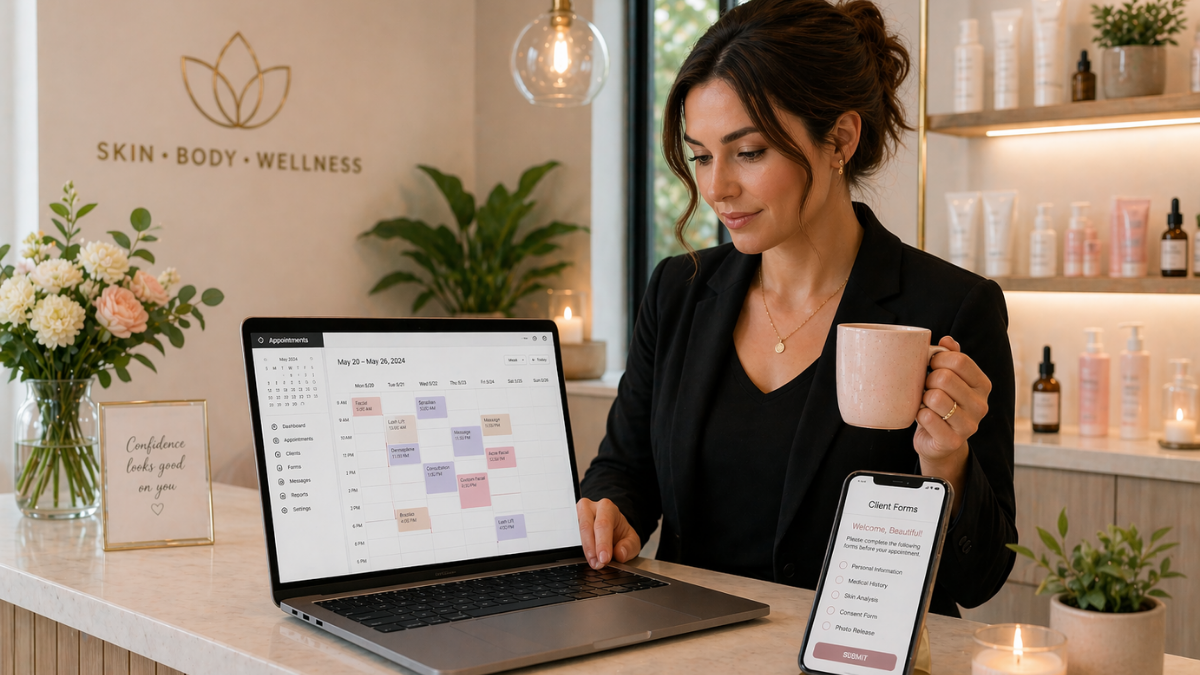
Glow Forms is built specifically for beauty professionals to move those forms out of the appointment and into a smoother pre-visit flow. It lets salons, spas, estheticians, nail techs, lash artists, PMU studios, and other beauty businesses send branded digital forms by link, email, QR code, or website button, then store completed records in one searchable place. It’s designed to replace paper forms and PDF chaos with a simple mobile-friendly system that feels manageable even for non-techy owners.
That matters because a client who has already filled everything out is easier to place into a tighter schedule.
Not in a gimmicky “hack your calendar” way. Just in a very practical way.
Use shorter services on purpose
A lot of salons accidentally bury their shortest services.
They list them. They offer them. But they don’t use them strategically.
Short bookings are how you plug awkward holes without wrecking the rest of the day. Things like:
fringe trims
brow shape-ups
lash removals
nail repairs
quick add-ons
review appointments
patch tests
small follow-up consultations
The key is not just offering them. The key is knowing which ones require almost no extra admin.
A repeat client coming in for something quick is easier to place than a brand-new client who still needs forms, policy info, and a full consultation.
So if you want tighter days, build your short-service options around low-friction bookings first.
Make your booking flow less clunky
Sometimes the gap isn’t in the diary. It starts before the client books.
If your process feels confusing, people delay. They message instead of book. They “mean to sort it later.” They ask a question and vanish. That hesitation creates gaps a week from now.
Your booking flow should feel obvious:
clear service names
realistic timings
simple next step
forms sent immediately when needed
no weird handoff between booking and paperwork
Glow Forms supports exactly that handoff by making forms accessible through email links, QR codes, and website buttons, with brand colours and logos included so the experience feels like your salon rather than some random third-party tool. That beauty-specific positioning matters because clients are more likely to complete the process when it feels clean and professional from the first tap.
And that means fewer half-booked situations sitting in limbo.
Build around repeat clients first
If your diary has holes, your regulars are usually the easiest place to start.
Not because you should discount yourself into panic-filling the week. And not because every regular wants more appointments.
But because repeat clients are faster to place.
You already know the service.
You already know the timing.
You already know whether they need extra notes or caution.
And ideally, you already have their records ready to go.
That’s one reason a searchable client database is so useful. Glow Forms stores completed forms digitally so you can pull up previous details, allergies, treatment history, and records without digging through piles of paper. For salons trying to run tighter schedules, that means less time lost between one appointment and the next.
The less mystery around a booking, the easier it is to fit into a gap.
Protect the first and last slots of the day
This sounds small, but it changes a lot.
The first slot sets the pace. The last slot controls whether you leave on time.
If those two bookings run messy, the middle of the day starts absorbing the damage. Tiny delays pile up, and suddenly your “gap” at 3:00 p.m. isn’t actually usable because you’re already behind from the morning.
So protect those edge slots.
Try to keep the first appointment clean, confirmed, and low-friction. Try to avoid putting something admin-heavy at the very end of the day unless there’s a good reason. And wherever possible, make sure paperwork is already handled before the client arrives.
That’s not glamorous advice. But it works.
Fill gaps with fit, not desperation
Let’s say you’ve got a 40-minute hole tomorrow.
The desperate version is posting “LAST MINUTE SLOT!!!” everywhere and hoping somebody bites.
Sometimes that works. Fine.
But the smarter version is knowing which service can genuinely fit, which client type is easiest to place, and whether the admin side is already sorted.
That might mean:
offering a quick repeat treatment
messaging a waitlist client who already knows the process
using a simple service that doesn’t need extra consultation
directing people to a form link right away so there’s no back-and-forth later
You’re not just filling time. You’re protecting flow.
There’s a difference.
What a tighter day actually looks like
Picture a normal midweek schedule.
You’ve got a facial at 10:00, a lash refill at 11:30, a 30-minute gap at 1:00, then brows at 1:30 and a consultation later in the afternoon.
A loose version of the day wastes that 30 minutes because no one can be slotted in easily, the consultation client still needs forms, and your refill starts late because you’re checking old notes manually.
A tighter version looks different.
The consultation forms were sent automatically after booking. The lash client’s previous record is easy to find. The 30-minute space is available for a quick repeat client because it doesn’t require extra paperwork. The day feels connected instead of patchy.
Same hours. Better use of them.
That’s the whole game.
You probably don’t need a longer day
You probably need fewer slow handoffs, fewer admin bottlenecks, and fewer bookings that arrive half-prepared.
That’s good news, honestly.
Because extending your hours is the hard way. It costs energy fast. And once clients get used to later evenings or earlier starts, it’s hard to pull that back.
A cleaner diary is better than a longer one.
Especially when it comes from small fixes that make the hours you already work feel sharper, calmer, and more profitable.