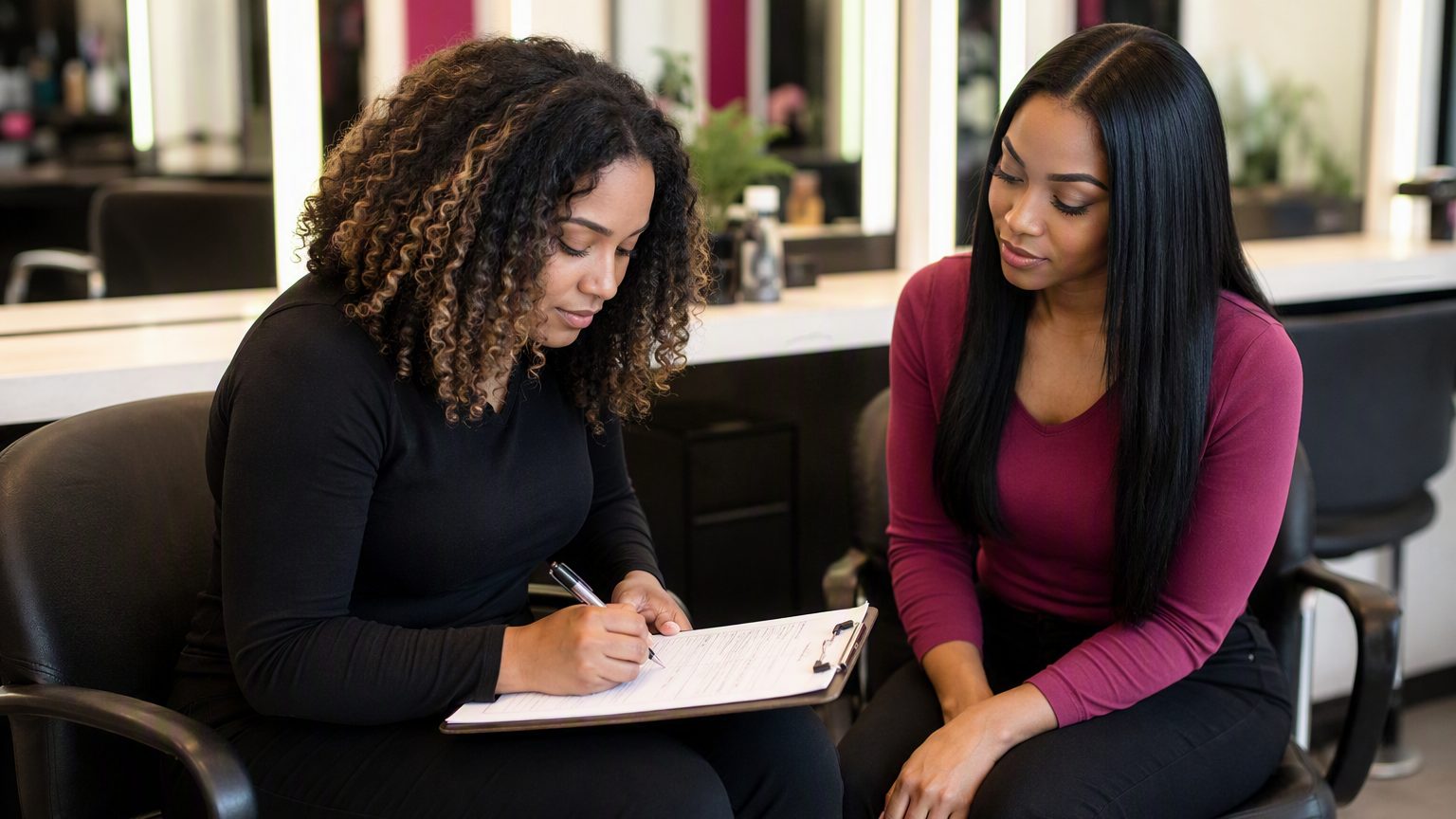
How to Create a Salon Client Intake Form for Hair Smoothing Treatments That Screens for Allergies, Prior Chemical Services, and Aftercare Restrictions
A salon client intake form for hair smoothing treatments should do more than collect contact details. These services usually need more screening than a standard haircut or blowout. Product ingredients, heat, recent color history, and aftercare rules can all affect whether the appointment should move forward as planned.
A structured form helps you gather the same important details every time, before the service starts. In this guide, you’ll see what to include around allergies, prior chemical services, aftercare restrictions, consent, and recordkeeping so your consultations stay clear and consistent.
Why hair smoothing services need a different intake form
Hair smoothing appointments are not one-size-fits-all. A client’s recent bleach, color, relaxer, or past smoothing treatment may change what is appropriate to offer. Even when the service is a fit, maintenance needs and expected results should be discussed clearly upfront.
That is why a dedicated hair smoothing intake form works as both a client-experience tool and an operations tool. It helps your team ask the right questions, document answers, and reduce missed details at check-in.
The goal of a hair treatment consultation form
The purpose of a hair treatment consultation form is simple: collect the information you need to decide whether to proceed, modify the service, postpone it, or have a deeper conversation first.
A strong form supports:
- more consistent consultations
- clearer client communication
- better service notes
- smoother handoff between team members
If multiple stylists perform smoothing services, one consistent process matters even more.
Core section 1: Client details and appointment basics
Start with the basics. This section should include:
- full name
- phone number
- emergency contact
- preferred communication method
- appointment date
- stylist name
- requested smoothing service
Then add a short question about the client’s main goal. For example:
- reduce frizz
- make blowouts faster
- create smoother texture
- cut down styling time
A final notes field can capture texture concerns, previous results, or special requests.
Core section 2: Allergy and sensitivity screening
Your salon allergy intake form section should use plain yes-or-no questions, followed by space for details.
Ask about:
- known allergies to hair products or ingredients
- fragrance sensitivity
- past scalp irritation during salon services
- skin reactions, eye sensitivity, or breathing discomfort
- current scalp tenderness or recent irritation
If they answer yes, include a short-answer field:
What happened, when did it happen, and what product or service may have caused it?
If your process includes patch testing, leave a field for patch test notes or follow-up consultation notes. Keep the wording simple so clients do not need industry knowledge to answer.
Core section 3: Prior chemical services history
This is one of the most important parts of a chemical service consultation form. Ask whether the client has had:
- color
- bleach or highlights
- toner
- relaxers
- perms
- keratin-style services
- other smoothing treatments
Use date-based questions. Ask what was done, when it was done, and whether it was done professionally or at home. If relevant to your process, include fields for boxed dye, henna, metallic salts, or corrective color history.
Also ask whether they have experienced breakage, unusual dryness, shedding, or damage after past chemical services. This section helps you assess compatibility and set realistic expectations before you begin.
Core section 4: Hair and scalp condition
Your form should document the current condition of both hair and scalp.
Include checkboxes or short answers for:
- dry
- fragile
- porous
- overprocessed
- coarse
- fine
- color-treated
- extensions
- highly textured hair
For scalp questions, ask about:
- cuts or abrasions
- irritation
- sunburn
- dandruff flare-ups
- psoriasis
- tenderness
Some salons also include optional questions about pregnancy, nursing, or other medical considerations if that fits their established consultation process and local requirements. If you include this, keep the wording respectful and optional where appropriate.
Core section 5: Aftercare restrictions and lifestyle fit
A hair service aftercare form section can prevent a lot of misunderstandings later. Ask whether the client can follow the required aftercare for the specific service you offer.
Depending on your protocol, that may include avoiding:
- washing for a certain period
- heavy sweating
- clips or ponytails
- saltwater or chlorine
You can also ask about habits that may affect longevity, such as:
- clarifying shampoo use
- frequent color services
- daily heat styling
- gym routines
Include a checkbox confirming the client understands aftercare affects results and maintenance. Keep the tone practical, not blaming.
Core section 6: Expectations, maintenance, and limitations
This section helps turn a basic keratin treatment intake form into a better consultation tool.
Ask what result the client expects. Then include a short acknowledgment that outcomes vary based on hair history, condition, and home care. This is especially useful when clients expect one universal result across every hair type.
You can also add a maintenance field covering:
- recommended products
- revisit timing
- planning future color services thoughtfully
This supports informed consent and reduces confusion later.
What consent language should be included
Your salon client consent form section should be clear and separate from optional marketing permissions.
Include:
- acknowledgment of the requested service
- confirmation that the information provided is accurate
- agreement to disclose allergies, sensitivities, and prior chemical services truthfully
- a note that the final service decision may change after in-person assessment
- signature and date
If you take before-and-after photos, use a separate optional photo release. Do not bundle that into treatment consent in a confusing way. And avoid presenting any form language as legal advice or a guarantee of compliance.
How to make the form easy to complete
The best beauty client intake form is easy to finish on a phone. Most clients will complete it between appointments, in the car, or at home.
A few formatting tips:
- use short sections with clear headers
- mix checkboxes, yes/no answers, and short text fields
- make only truly necessary questions required
- use plain wording instead of technical phrasing
- place signature and final confirmation at the end
For example, “Have you had bleach or color in the last 6 months?” is better than a dense, industry-heavy question.
Common mistakes to avoid
Avoid these issues when building your form:
- using one generic intake form for every chemical service
- asking “Any allergies?” without room for detail
- skipping dates for prior services
- hiding aftercare restrictions inside a long paragraph
- combining marketing consent with treatment consent
- storing records where staff cannot quickly search past answers
A strong layout is usually: client info, service request, allergies, chemical history, hair and scalp condition, aftercare fit, expectations, consent, signature.
Why digital salon intake forms work better
Digital salon intake forms make hair smoothing consultations easier to manage. You can send them before the appointment, review answers in advance, collect e-signatures, and keep records in one searchable place.
That matters for both first-time appointments and maintenance visits. It also gives your team a consistent template for every salon client intake form for hair smoothing treatments, without relying on paper files or memory.
Conclusion: Build a form that supports better consultations and clearer records
A strong intake form for hair smoothing services should cover allergies, prior chemical services, hair and scalp condition, aftercare restrictions, expectations, and consent. The best version is specific, easy to understand, and simple to complete on mobile.
If you want a faster way to create professional forms and keep client records organized, GlowForms can help you build digital intake forms, collect signatures, and store everything in one searchable place.