How to Create a Permanent Jewelry Consent Form That Covers Metal Sensitivities, Placement, and Removal Expectations
7 min read
A strong permanent jewelry consent form helps you set expectations before the spark ever flies. It gives clients a clear picture of the service, documents their choices, and creates a record you can reference later if they come back for an adjustment, repair, or removal.
For permanent jewelry appointments, that matters. Whether you offer bracelets, anklets, necklaces, or matching group appointments, a clear form supports a smoother experience. It is not about making the service feel intimidating. It is about helping clients feel informed and helping your business stay organized.
A jewelry consent form should explain the service in plain language and confirm what the client is agreeing to before you begin. For permanent jewelry, that usually means acknowledging that the piece is custom fit and welded closed on the body.
A good form also helps with consistency. If multiple staff members perform the service, a standardized permanent jewelry client form makes sure everyone covers the same key points every time.
Most importantly, it keeps the appointment clear and professional. Clients know what to expect. Your team has a written record. And if someone returns later with questions, you can quickly pull up what was selected and discussed.
Your permanent jewelry waiver does not need to be long. It does need to be specific.
At minimum, it should:
That way, the form functions as both communication and recordkeeping. It helps before the appointment, during the service, and after the client leaves.
Start your permanent jewelry intake form with the basics:
Some businesses also include an emergency contact for in-person services. If you work with minors, add a parent or guardian name and signature section based on your local rules and your own policy.
You can also add internal-use fields such as service location, chain style selected, clasp or weld notes, and appointment comments. These details can be useful later if the client wants a matching piece or a re-weld.
One of the most important sections in a metal sensitivity consent form is also one of the easiest to overcomplicate. Keep it simple.
Ask a direct question such as: Do you have any known metal sensitivities, allergies, or past skin reactions to jewelry? Then give the client space to describe:
You should also list the material being used for the appointment so the client can confirm they reviewed it before proceeding.
Use careful wording here. It is reasonable to acknowledge that skin responses vary by person and that clients should disclose any known sensitivities before welding. It is not appropriate to promise that a certain material will work for everyone. Avoid medical claims and avoid guarantees.
Placement matters more than many clients expect. A bracelet on the wrist, an anklet, or a necklace all wear differently in day-to-day life.
Your permanent jewelry release form should include a section where the client confirms the placement area. Then note that the jewelry is measured and fitted based on the client’s preference at the time of service.
If it fits your workflow, include a simple choice like:
That small detail can be helpful later if a client says the piece feels tighter or looser than expected. You can also add a note that swelling, body movement, and daily activity may affect how the fit feels after the appointment.
Some businesses keep internal notes, a quick diagram, or a photo reference. If you do, make room for that in the form or in the client record.
A lot of confusion around permanent jewelry happens after the appointment, not during it. That is why removal expectations deserve their own section.
State clearly that permanent jewelry is designed for continuous wear, but may need to be removed in certain situations. Common examples include:
Explain in simple language how removal usually happens, such as cutting the chain at a designated point. Then clarify your policy. Do you offer re-welding, reattachment, or replacement? Are there separate fees? Put that in writing before the service begins.
This part of the permanent jewelry client form helps clients think practically about their lifestyle and avoids surprise later.
Beyond sensitivities, placement, and removal, there are a few practical points worth confirming.
Your form can acknowledge that:
If you take photos for social media or marketing, keep that separate. A photo release should be optional and should not be bundled into the core consent.
Keep the signature section clean and easy to finish. Most forms should include:
Checkboxes can also help. For example, you might include short acknowledgments confirming the client reviewed material information, placement, fit, and removal expectations before signing.
The biggest problem with many permanent jewelry forms is vagueness. If the client cannot quickly understand what they are agreeing to, the form is not doing its job.
Common issues include:
A better permanent jewelry waiver is clear, specific, and easy to complete on a phone.
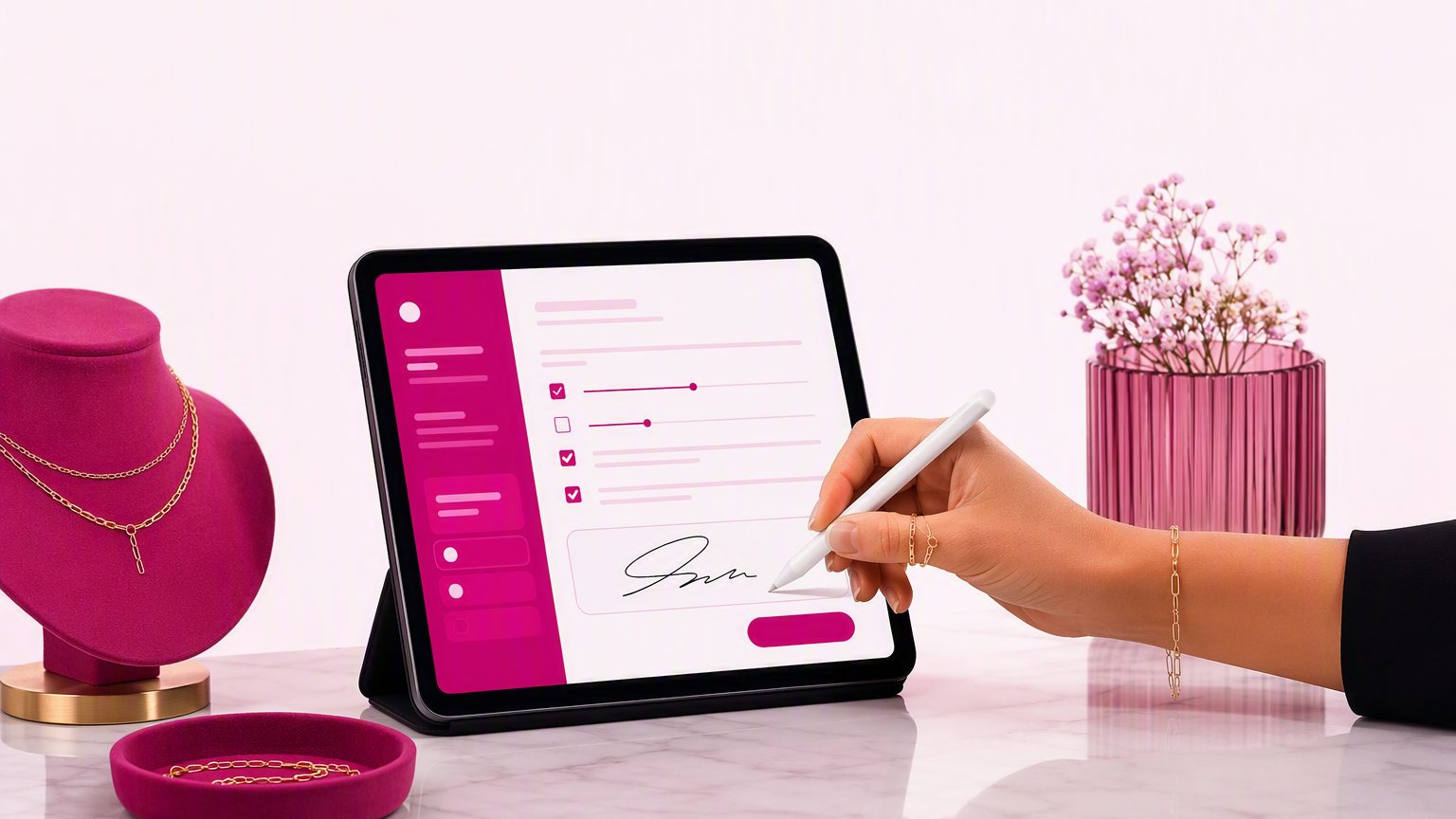
Paper forms can work, but digital forms are usually easier to manage. A mobile-friendly permanent jewelry intake form can be sent before the appointment, which reduces check-in time and gives clients a chance to review the service calmly.
Digital records also make follow-up easier. If someone returns for another piece, a repair, or removal, you can search their past form instead of digging through paper files.
For teams or multi-location businesses, digital consent forms for beauty businesses also help standardize wording, required fields, and signatures across staff members.
If you want a straightforward format, use this:
Name, contact information, appointment date, staff member, and any internal notes.
A short explanation that the jewelry is custom fit and welded closed on the body.
Known sensitivities, past reactions, and acknowledgment of the selected material.
Placement area, fit preference, and notes on daily wear considerations.
Possible removal scenarios, how removal works, and any re-weld or replacement policies.
Client confirmation, signature, and any guardian or staff signatures needed.
You can adapt the wording to your services and local requirements, but keep it readable and practical.
A well-built permanent jewelry consent form should be easy for clients to understand and easy for your team to use. The essentials are simple: document metal sensitivities, confirm placement and fit, and explain removal expectations before the service starts.
When those basics are covered clearly, the appointment feels smoother for everyone. And if you want to send mobile-friendly beauty intake forms, collect signatures, and keep consent records organized in one place, try GlowForms.

Loyal clients do not stay because you are the cheapest. They stay when the experience feels consistent, personal, professional, and worth coming back for.

GlowForms reminders aren’t “don’t forget your appointment” nags. They’re polite nudges to finish intake forms before clients arrive—so you start on time and sta

Clients remember the tiny things: the allergy you noticed, the coffee they like, the follow-up that did not feel copied and pasted.