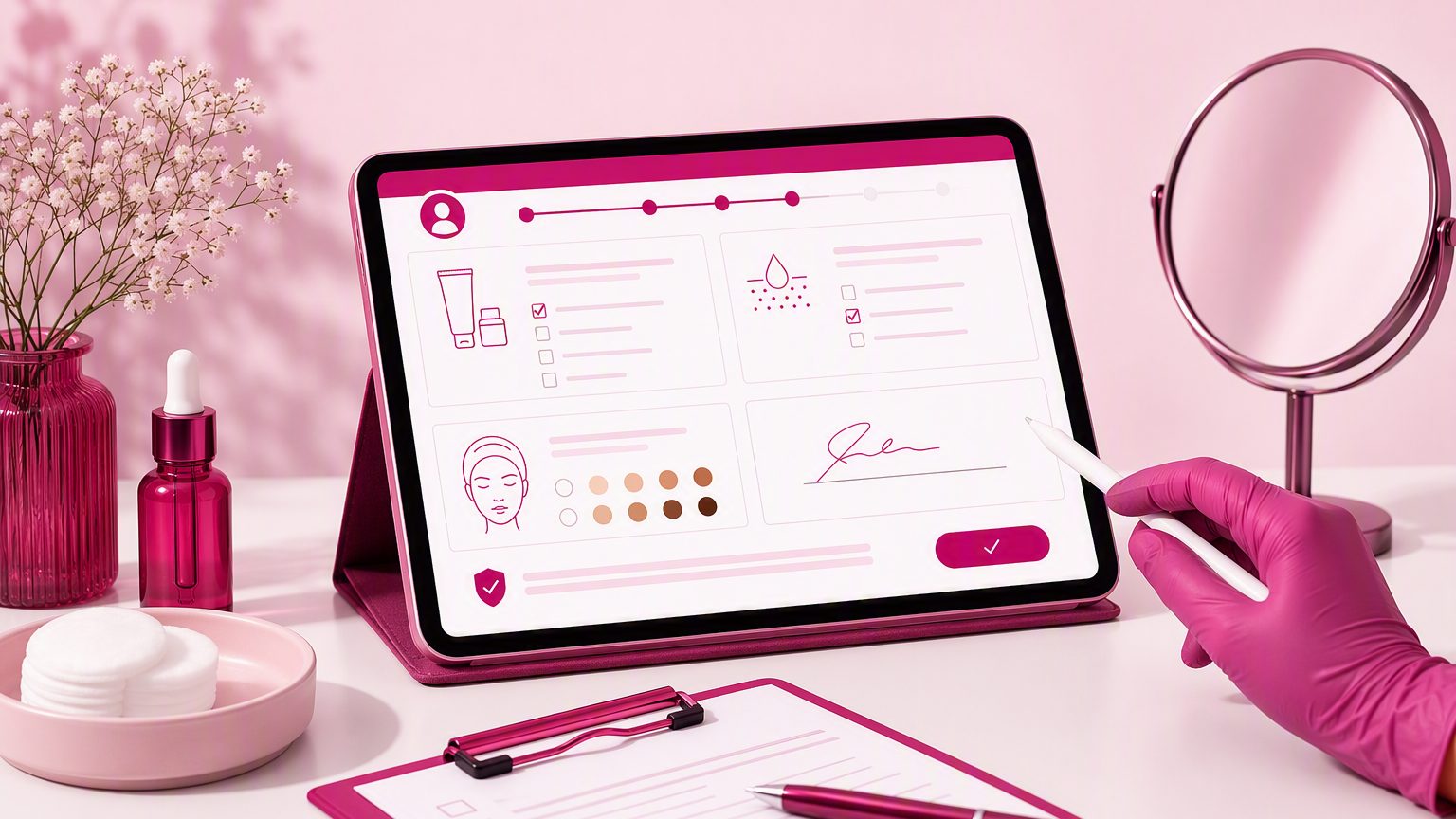
How to Create a Chemical Peel Consent Form That Screens for Retinoids, Recent Exfoliation, and Fitzpatrick Skin Type
7 min read
A chemical peel consent form should do more than collect a signature. It should help you screen for treatment readiness, document informed consent, and capture details you can review quickly before the appointment.
For most estheticians, three screening areas matter especially often: retinoid use, recent exfoliation, and Fitzpatrick skin type. When these questions are built into your intake process clearly, consultations are smoother, red flags are easier to spot, and follow-up is more consistent.
A basic waiver only confirms that a client agrees to treatment. A strong chemical peel intake form also helps you gather the information needed to decide whether to proceed, postpone, or ask more questions.
At minimum, your form should include:
A good chemical peel consultation form should also be easy to complete on a phone before the visit. Mobile-friendly forms tend to get more complete answers, and digital records are easier to search later.
Your form does not need to be long. It needs to be clear, organized, and easy to review.
Start with the basics:
If it fits your workflow, you can also include an emergency contact.
This section should cover:
Keep the wording client-friendly. Many people recognize product names more easily than ingredient names.
Include language confirming that the client:
This turns an esthetician consent form into a useful treatment record, not just a signed page.
Asking about retinoids before chemical peel treatment is essential. Recent use may affect skin sensitivity and can change whether you move forward, modify the service, or reschedule based on your protocol.
Avoid asking one vague question like “Are you using active skincare?” Instead, separate prescription and over-the-counter products so clients can answer accurately.
Use prompts such as:
Checkboxes plus a short text field usually work best. A required response is more reliable than an optional notes box.
Many clients may not identify with the word “retinoid,” but they may recognize names like Retin-A, Differin, or retinol serum. Including examples improves answer quality without making the form longer.
Questions about recent exfoliation before chemical peel treatment should be grouped together so clients can think through their recent routine all at once.
Include both at-home and professional examples, such as:
A clear question might be:
> In the last 7–14 days, have you used scrubs, exfoliating pads, AHAs, BHAs, enzyme products, dermaplaning, waxing, or had another facial treatment?
Timeframes matter. A simple yes/no answer often is not enough. Add checkboxes or date fields so the response is actionable. If needed, include a short notes field for provider review.
A Fitzpatrick skin type form section can support intake documentation and treatment planning. It is a standardized way to record how a client’s skin tends to respond to sun exposure.
This is not a diagnosis. It is a structured intake detail that can help guide treatment decisions and documentation.
Use a guided multiple-choice format with Types I through VI and short descriptions:
Place this section near the rest of the skin history so it feels like a natural part of the intake flow. If a client is unsure, review it together during the consultation.
Here are examples you can adapt for your chemical peel client questionnaire:
Always tailor your beauty treatment consent form to your services, training, and local requirements.
Clients give better answers when forms are short, specific, and simple to navigate. That is one reason digital client intake forms are often easier to manage than paper versions.
A few practical improvements can help:
For example, if a client answers yes to retinoid use or recent exfoliation, the form can reveal a few follow-up fields instead of making every client complete every question. That keeps the intake efficient while still collecting the information that matters.
Some forms capture a signature but miss key screening details. Common problems include:
A better chemical peel consent form gives you structured answers you can actually use.
Paper forms can work, but they are harder to read, easier to leave incomplete, and slower to retrieve. A digital chemical peel intake form can require answers, collect signatures, and attach each version to the client record automatically.
That makes it easier to review red flags before the appointment starts. It also helps with repeat visits, since you can compare responses over time instead of sorting through folders or photos of paperwork.
Before the service, scan the form for:
Document any follow-up questions so your process stays consistent across the team. The form supports professional judgment, but it does not replace an in-person review.
A well-designed chemical peel consent form does more than collect permission to treat. It helps you screen for common issues, set expectations, and keep documentation organized.
When your form clearly asks about retinoids, recent exfoliation, and Fitzpatrick skin type, you get better information before the appointment begins—and that leads to a smoother, safer intake process for both you and your client.
Loyal clients do not stay because you are the cheapest. They stay when the experience feels consistent, personal, professional, and worth coming back for.

GlowForms reminders aren’t “don’t forget your appointment” nags. They’re polite nudges to finish intake forms before clients arrive—so you start on time and sta

Clients remember the tiny things: the allergy you noticed, the coffee they like, the follow-up that did not feel copied and pasted.