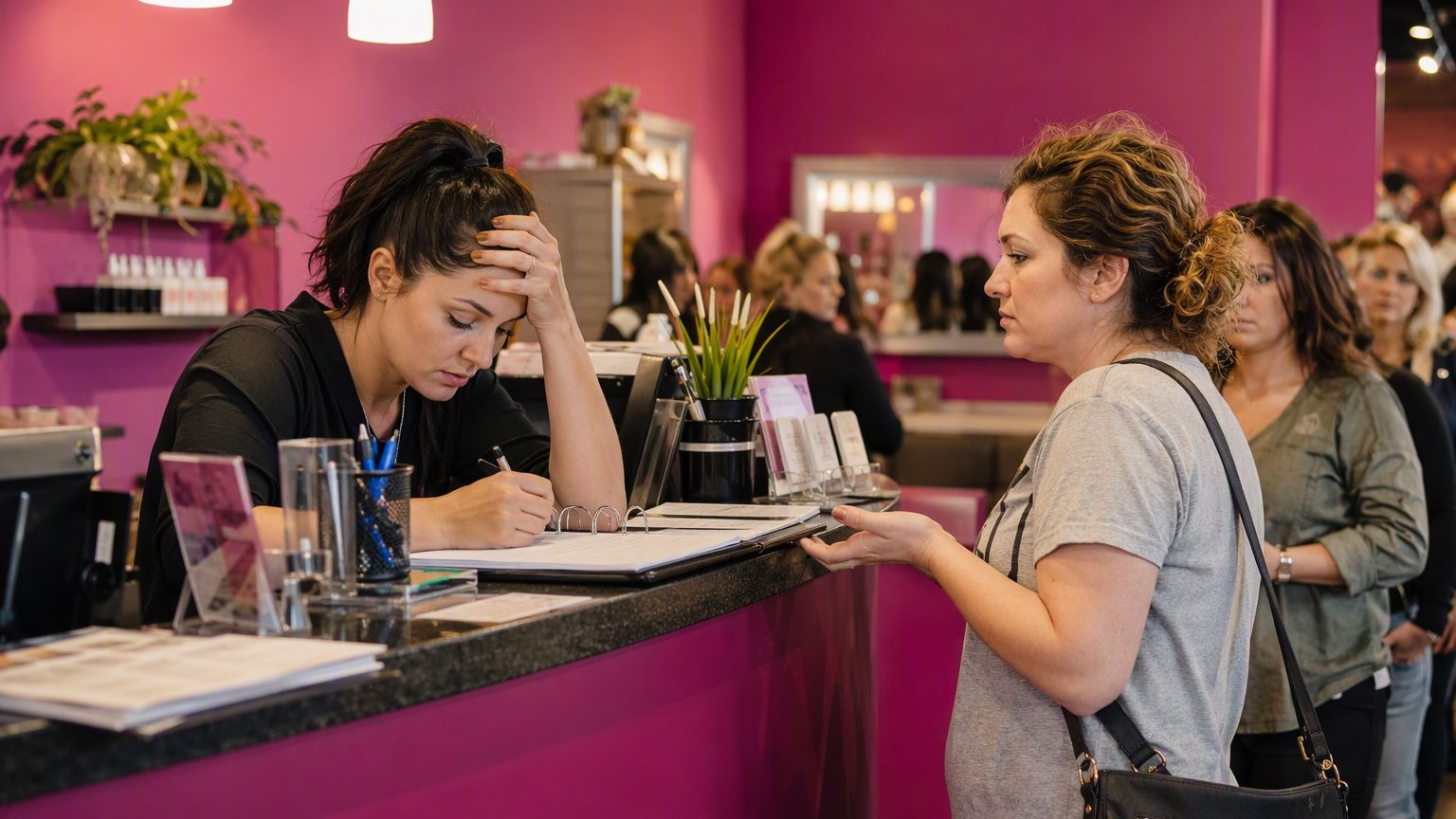
A Slow Front Desk Usually Starts With One Missing Step Before Check-In
A slow front desk before check-in usually does not start at the desk. It starts earlier, when clients arrive and are still being asked to fill out forms, answer basic questions, or sign paperwork that should have been handled before they walked in. In a busy salon, spa, lash studio, or treatment room, that one delay can ripple through the whole day. If your schedule starts slipping the moment two clients arrive at once, the problem may be your pre check-in forms, not your team. Here’s what the missing step is, how it creates bottlenecks, and how to fix it without making the client experience feel complicated.
What the missing step before check-in usually is
In most beauty businesses, the missing step is simple: sending and completing beauty client intake forms before the appointment instead of after arrival.
That usually includes contact details, client consent forms beauty business owners need for their services, health history questions where relevant, policy acknowledgments, and signatures. The issue is not just the form itself. It is the timing.
When intake only starts at check-in, the front desk becomes a catch-up station. Staff are no longer welcoming the client into the service. They are trying to collect missing information under time pressure. That is an operations problem, not a staff-effort problem.
How incomplete pre-check-in creates a slow front desk
The slowdown usually follows the same pattern:
- The client arrives.
- Staff look for paperwork or hand over a clipboard.
- The client starts filling it out on the counter.
- Questions come up.
- A signature is missing.
- Handwriting is unclear or details are incomplete.
- The appointment starts late.
One delay affects the next one. Now the provider is waiting, the next client is standing in line, and the waiting area feels more hectic than calm.
Paper intake makes this worse because clients are often rushed, distracted by their phones, or writing quickly. Later, someone on your team still has to read it, file it, and sometimes re-enter it. That is duplicate work. Even when the service itself is excellent, a messy salon check-in process can make the business feel less polished.
The beauty-business version of this problem
This looks different depending on the service, but the pattern is the same.
A lash client arrives and has never signed a consent form. A facial client needs to note skin sensitivities before treatment. A PMU client has more detailed paperwork than a quick walk-in service. A massage client is already late and still has forms to complete.
In many beauty businesses, there is no true front desk team. It might be one person handling everything, the provider themselves, or no dedicated desk at all. That is why small teams feel this problem so strongly. Every extra minute spent chasing intake is a minute taken from setup, service time, cleaning, or rebooking. In real beauty business operations, those minutes matter.
Why paper forms make check-in slower than it looks
Handing over a clipboard looks simple. The hidden work comes after.
Common paper-form friction points include:
- Missing signatures
- Skipped questions
- Hard-to-read writing
- Misplaced forms
- Filing delays
- Searching for older records later
Paper can feel fast in the moment because it is familiar. But it often slows down everything around the appointment. Finding the right file, checking whether a repeat client already signed something, or pulling up past notes is harder when records are stored in folders instead of searchable files.
That is why many businesses move toward paperless intake for salons. The goal is not to make things more technical. It is to make information easier to collect, review, and find later.
What a better pre-check-in workflow looks like
A better process is usually very simple.
The form gets sent after booking or before the appointment. The client opens it on their phone, completes it, signs it, and submits it before arriving. Staff can review the record in advance instead of collecting everything at the desk.
This is where digital intake forms for salons make a real difference. Clients already book, text, and confirm appointments on their phones. Mobile-friendly intake forms fit naturally into that behavior.
The result is a smoother handoff. The client walks in feeling ready, not surprised by paperwork. The team can focus on the service instead of playing catch-up.
The key information to collect before the appointment
Your forms should match your services and workflow, but common categories include:
- Basic contact information
- Appointment-related details
- Consent and acknowledgment
- Health history where appropriate
- Emergency contact if needed
- Photo or media release if your business uses one
Not every service needs the same fields. A nail appointment may require less detail than PMU or massage. Requirements can also vary by service type and local rules, so it is important to use forms that fit your business. Think of this as good preparation and good recordkeeping, not a one-size-fits-all checklist.
How to know if missing pre-check-in is your real bottleneck
You may have a pre-check-in problem if:
- Clients regularly fill out forms in the lobby
- Appointments start late because paperwork is unfinished
- Staff often chase signatures
- Records are hard to find
- Repeat clients are asked for the same information again
A simple test helps: look at the first 5 to 10 minutes of your appointments. Are you starting service, or still handling admin?
Do not judge based on one unusually busy day. Look for repeated friction. If the same delays keep showing up, your bottleneck is probably before the appointment, not at the front desk itself.
A simple fix without overcomplicating your process
You do not need to rebuild everything at once.
Start with one service category or one standard intake flow. Use one consistent template. Send pre check-in forms before appointments every time, and confirm completion before arrival when needed. Keep forms concise and relevant so clients are more likely to finish them.
It also helps to keep completed client records for beauty businesses in one searchable place. That way, your team can pull up what they need quickly instead of sorting through paper later.
Common concerns about digital pre-check-in
“My clients won’t complete forms ahead of time.”
Many will, especially when the form is easy to open on mobile and sent at the right time.
“Paper feels faster.”
Paper may feel faster at handoff. But across the full appointment lifecycle, digital usually reduces total admin time.
“I’m small, so I don’t need a system.”
Small teams often benefit the most because they have less room for delays.
“I don’t want intake to feel cold.”
A smoother process usually feels more personal, not less. Less admin at arrival means more attention on the client.
Front desk speed is really about client experience
A faster check-in is not just about efficiency. It changes how the business feels.
Clients spend less time answering repeated questions. They see that your process is organized. The arrival feels calmer. That sets the tone for the service.
The goal is not to rush people. It is to remove avoidable friction before they walk in.
Conclusion: The one step to fix before you blame the front desk
If your front desk feels slow, look one step earlier. In many cases, the real issue is that intake, consent, and signatures are still being handled after the client arrives.
Review your current arrival process and ask what is being collected too late. When the right information is gathered ahead of time, check-in gets simpler for both your team and your clients. If you want a cleaner way to handle digital intake, signatures, and searchable records in one place, GlowForms can help you set up a smoother workflow.